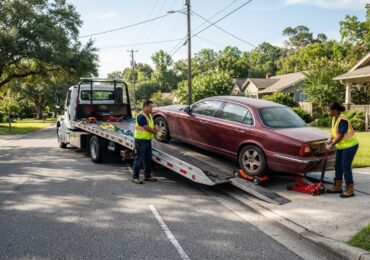

What if your PCS reporting date is just three weeks away, but you still haven’t figured out how to get your family’s second vehicle across the country without driving it yourself? Relocating is a tactical operation, and the stress of coordinating a move while managing your duties is something every service member understands. You’re likely facing the common dilemma of balancing a tight timeline with the need for a damage-free delivery. Navigating military car shipping can feel like deciphering a complex field manual, especially when you’re trying to distinguish between government-funded entitlements and a Personally Procured Move (PPM).
This guide will help you master these logistics, ensuring you understand the 2026 POV regulations and how to align your transport timeline with a reliable national carrier. We’ll provide a clear path through the confusion of weight allowances so you can focus on your new assignment. You’ll learn the differences between open and enclosed transport, how to utilize your MALT allowance, and the specific steps required to prepare your vehicle for a cross-country journey. By the end of this article, you’ll have the transparency and confidence needed to manage your vehicle relocation with precision.
Key Takeaways
- Learn how to distinguish between government-funded transport and when you’ll need a private carrier for your secondary vehicle during a PCS.
- Gain a clear understanding of 2026 POV regulations and the documentation required for seamless military car shipping across state lines.
- Compare the advantages of open and enclosed carriers to find a solution that balances your budget with your vehicle’s safety needs.
- Master a methodical 30-day preparation checklist to ensure your car is ready for inspection and transport before your reporting date.
- Discover how coordinating with a seasoned national provider helps you manage the logistical complexities of a relocation with confidence.
Understanding Military Car Shipping and the PCS Process
Military car shipping is the specialized transport of a Privately Owned Vehicle (POV) during a Permanent Change of Station (PCS). While the military is an expert in the broader field of Military logistics, the responsibility for moving a family’s secondary vehicle often falls on the service member. This process isn’t just about moving an asset. It’s about ensuring your family has the mobility they need the moment they arrive at a new installation. Choosing a carrier with established Interstate Vehicle Transportation capabilities is vital. You need a partner that understands the strict timelines and high stakes of a military relocation.
Many families find themselves in a position where the government won’t cover the cost of moving every vehicle. This is common for domestic moves or when a household has more than one car. In these cases, hiring a professional national carrier provides a level of security that driving the vehicle yourself cannot match. It eliminates the wear and tear on your car. It also removes the exhaustion of a multi-day cross-country drive during an already stressful transition. A Nationwide Transportation Services provider offers the stability required to keep your move on schedule.
The Role of POV Shipping in Permanent Change of Station (PCS)
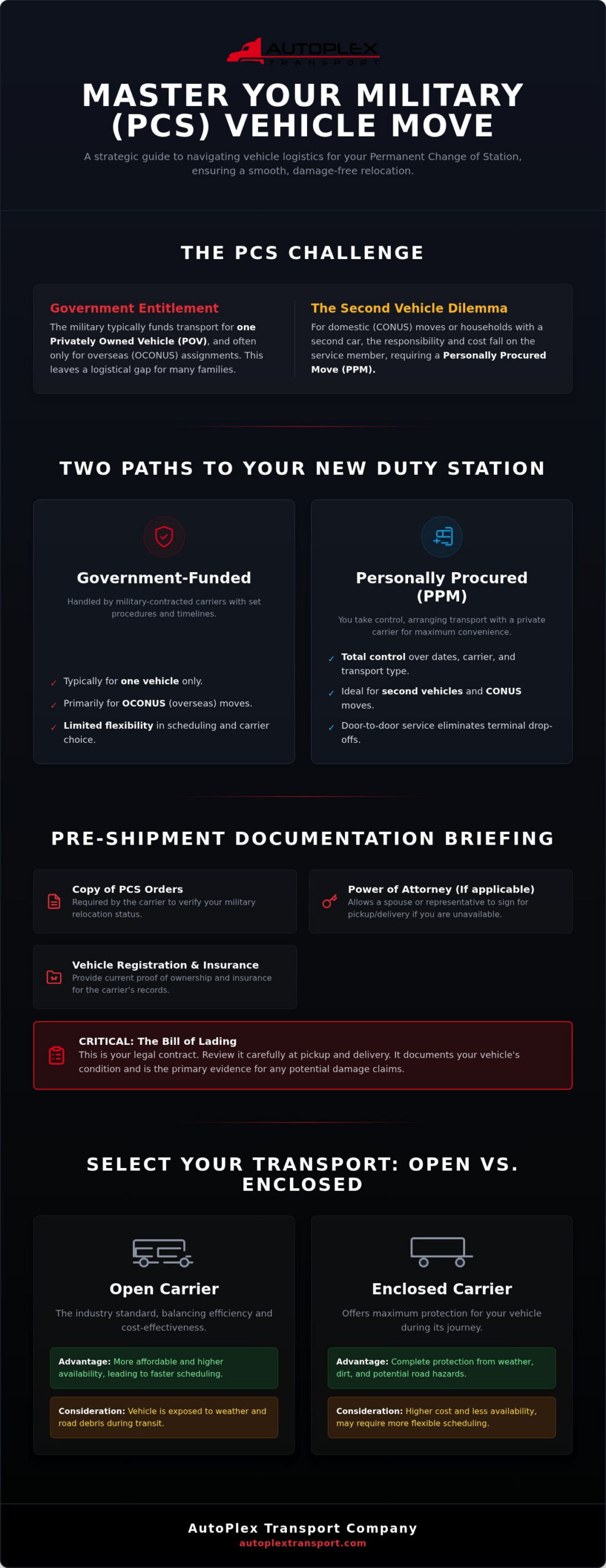
A PCS move is a complex puzzle with many moving parts. Vehicle transport fits into this framework as a key logistical hurdle. Most military families own two vehicles, yet government regulations typically only provide one shipping entitlement, and even then, usually only for OCONUS orders. This leaves a significant gap for domestic relocations. Utilizing a Door 2 Door Transportation service simplifies this. Instead of coordinating a trip to a distant port or terminal, your vehicle is picked up and delivered as close to your residence as possible. This convenience is essential for families who need to hit the ground running at their new duty station.
Government-Funded vs. Self-Funded Vehicle Moves
For families relocating to island destinations like Hawaii, where vehicle arrival may take longer than the flight, you can learn more about Rental Car Maui™ to ensure you have reliable transportation the moment you arrive at the airport.
Understanding the difference between a standard government move and a Personally Procured Move (PPM) is the first step in planning. In a PPM, you take full control of the logistics. While the government might offer a Monetary Allowance in Lieu of Transportation (MALT) for driving, it doesn’t always cover the full reality of a move. By booking a private interstate transport service, you gain flexibility that government-contracted carriers often lack. You can choose your own dates and carrier type. This control is often worth the investment, as it ensures your reporting date remains the priority. Engaging in private military car shipping allows you to manage your relocation with a level of transparency and precision that reduces the typical PCS anxiety.
Navigating Military Vehicle Transport Regulations and Requirements
Compliance is the backbone of a successful relocation. When you’re moving a vehicle across state lines, the process is governed by federal Department of Transportation regulations that ensure safety and accountability. The most important document in this regulatory environment is the Bill of Lading. This isn’t just a receipt; it’s a legal contract that details the exact condition of your vehicle at the moment of pickup and delivery. You must review this document carefully, as it serves as your primary evidence in the rare event of a damage claim. Entitlement rules for POVs under current military orders generally state that the government will fund the transport of one vehicle for OCONUS moves, while CONUS relocations are typically self-funded by the service member.
Essential Documentation for Military Auto Transport
Professional carriers require specific paperwork to initiate military car shipping services. You’ll need to provide a copy of your current PCS orders to verify your relocation status. If a deployment or training schedule prevents you from being present at the time of pickup or delivery, a Power of Attorney is absolutely necessary. This allows a spouse or designated representative to legally sign the Bill of Lading on your behalf. Additionally, ensure you have your vehicle registration and proof of insurance ready for the carrier’s records. Preparing your vehicle for shipment also means verifying that the name on the registration matches the service member’s orders or the Power of Attorney provided.
Understanding Entitlements for Privately Owned Vehicles
Entitlements vary significantly based on your destination. For overseas assignments, the government pays to ship one POV per service member, provided it doesn’t exceed 20 measurement tons. For domestic moves within the lower 48 states, the government usually doesn’t provide a shipping entitlement, though you may be eligible for mileage reimbursement if you drive. If you opt for a Personally Procured Move (PPM) to ship a second vehicle or a primary car during a CONUS relocation, meticulous record-keeping is vital. You’ll need to save your signed contract and final invoice to justify any travel-related claims at your new finance office. If you’re managing these logistics yourself, selecting Nationwide Transportation Services from a provider that understands military timelines can help you avoid the common pitfalls of self-funded moves.
Evaluating Your Shipping Options: Open vs. Enclosed Carriers
Deciding between carrier types is a critical step in your logistical planning. While both methods are professionally managed, they serve different needs and budget levels. For most families, the choice depends on the vehicle’s value and the specific environmental risks along your interstate route. A standard sedan or SUV used for daily commuting typically doesn’t require the same level of specialized protection as a vintage restoration project or a high-end luxury vehicle. Understanding the cost-to-benefit ratio of each option ensures you don’t overspend on your PCS budget while still protecting your asset.
Why Open Carrier is the Standard for Military Relocations
Approximately 95% of military families who ship a car choose an open carrier. This method involves transporting vehicles on a multi-car trailer, which is the same way manufacturers deliver new cars to dealerships. The primary advantage is the widespread availability on national routes. Because these trailers are common, scheduling a pickup that aligns with a tight reporting date is much easier. Choosing open transport car shipping is also the most cost-effective solution. It provides a high safety record for standard vehicles while keeping your relocation expenses manageable. While the vehicle is exposed to the elements, the structural integrity of these trailers offers significant protection against most road hazards.
When to Choose Enclosed Transport for Specialized Vehicles
There are specific scenarios where the extra investment in military car shipping via an enclosed trailer is justified. If you’re moving a classic car, a high-value luxury model, or a vehicle with low ground clearance, enclosed car transport provides a necessary shield. These trailers feature hard-sided or soft-sided walls that completely block out weather, road debris, and dust. This is a specialized logistical field that requires different equipment, such as hydraulic lift gates, to safely load exotic or low-profile cars. You should expect this service to cost between 40% and 60% more than a standard open carrier. This premium covers the increased insurance limits and the specialized handling required for high-value assets. For many collectors in the service, the peace of mind provided by a fully sheltered environment is worth the additional cost during a long-distance move.
Preparing for Your Move: A Step-by-Step Military Shipping Checklist
A successful relocation requires a methodical approach that begins well before your household goods are packed. For military car shipping, you should establish a timeline at least 30 days prior to your PCS reporting date. This lead time allows you to secure a slot on a carrier’s route and complete necessary vehicle maintenance. Managing the specifics of military car shipping requires attention to detail, starting with the “clean car” requirement. While it might seem cosmetic, a clean exterior is essential for a thorough condition report. It’s the only way for you and the driver to accurately document existing scratches or chips on the Bill of Lading. You can find more detail in our essential checklist for preparing a car for transport.
Coordinating Timelines with Your Reporting Date
Relocation logistics often involve a “window of arrival” rather than a guaranteed minute-by-minute schedule. National auto logistics are subject to traffic, weather, and other interstate variables. To avoid being without a vehicle at your new duty station, schedule your pickup a few days before you depart. This buffer ensures you’re present for the handoff. Stay in active communication with your carrier. A reliable partner will provide updates as the truck nears your location, allowing you to manage your final days on base without unnecessary guesswork.
Preparing Your Vehicle for National Interstate Transport
Your vehicle must be mechanically sound before it’s loaded onto a trailer. Check your battery charge, tire pressure, and ensure there are no active fluid leaks. Carriers generally won’t transport vehicles that leak oil or brake fluid, as it can damage other cars on the rack. Regarding fuel, regulations require you to have no more than a 1/4 tank. This reduces weight and minimizes safety risks during transit. Finally, remove all personal items. Household goods belong in your PCS shipment, not your car. Items left inside aren’t insured and can add weight that exceeds carrier limits.
If you’re ready to align your transport with your reporting date, you can request a quote for interstate vehicle transportation to begin your planning today.
Why AutoPlex Transport is the Trusted Choice for Military Families
AutoPlex Transport Company positions itself as a seasoned industry veteran with a proven history of success in managing complex relocations. We understand that your vehicle is one of your most valuable assets, and its safe delivery is essential for your family’s transition. By focusing on a “reliable partner” approach, we prioritize building trust through every step of the logistics process. Our commitment to transparency ensures that every quote is direct and comprehensive, with no hidden fees to complicate your PCS budget. Choosing a provider that values safety as much as you do provides a necessary sense of security during a high-stakes move.
Reliable National Coverage for Every Major Installation
Our Nationwide Transportation Services network is designed to support service members regardless of where their new orders lead. We have extensive experience navigating the logistical challenges common in long-distance moves, ensuring that your vehicle arrives in alignment with your reporting timeline. The convenience of our Door 2 Door Transportation model simplifies the move-in process significantly. Instead of spending your first days at a new post traveling to a terminal, your car is delivered as close to your residence as local regulations and safety allow. This level of service is a hallmark of our Interstate Vehicle Transportation capabilities, providing a stable and experienced hand to manage your move.
Professional Support for Stress-Free Military Logistics
The support team at AutoPlex maintains a steady, confident tone that reflects our methodical approach to military car shipping. We believe that clear, step-by-step communication is the best way to reduce the anxiety often associated with a PCS. From the initial inquiry to the final inspection at delivery, we lead you through a logical progression of information. This allows you to focus on your mission and your family while we handle the technical complexities of carrier schedules and route planning. We take pride in being a comprehensive resource that understands the personal needs of our military clientele. If you’re ready to secure your vehicle’s spot on a reliable carrier, we invite you to request a vehicle shipping quote to begin your transition with confidence.
Securing Your Vehicle for the Next Mission
Relocating your life and your vehicle is a major undertaking, but it doesn’t have to be a source of stress. You’ve now gained a thorough understanding of how to align your PCS timeline with professional transport standards. By following the 30-day preparation checklist and choosing the carrier type that fits your specific needs, you’re ensuring a smooth transition to your new duty station. We understand the high stakes involved in military car shipping and are here to act as your reliable partner throughout the entire process.
With our A+ National Logistics Network and dedicated door-to-door service, we provide the expertise in military POV regulations necessary for a damage-free delivery. Our team is ready to manage the logistical details so you can focus on settling into your new installation. Take the next step in your relocation planning and Get a Professional Military Car Shipping Quote from AutoPlex Transport today. We look forward to supporting your move and making this your most organized PCS yet.
Frequently Asked Questions
Does the military pay for car shipping during a PCS?
The government typically pays to ship one POV for overseas assignments, known as OCONUS moves, but it doesn’t usually cover shipping costs for moves within the continental United States. For domestic relocations, service members often pay for private carriers out of pocket. You might receive a Monetary Allowance in Lieu of Transportation at a rate of $0.205 per mile if you drive, but this is a mileage reimbursement rather than a direct payment for shipping services.
Can I ship personal items inside my car during a military move?
You shouldn’t leave personal items inside your vehicle during transport. Carriers are restricted by Department of Transportation regulations regarding weight and safety, and their insurance policies don’t cover household goods left in the car. It’s best to remove all electronics, documents, and loose items. Only the spare tire, jack, and factory installed equipment should remain to ensure a smooth inspection and safe interstate transit. Keeping the car empty also helps maintain the required fuel levels.
How far in advance should I book my military car shipping?
You should aim to book your military car shipping at least 30 days before your PCS reporting date. This lead time is essential for securing a spot on a carrier’s route that aligns with your specific timeline. Booking early allows for better coordination of the pickup window, reducing the risk of being without a vehicle for an extended period. If your orders are short notice, contact a carrier immediately to check for available national network slots and specialized transport options.
What happens if my car arrives before I reach my new station?
If your vehicle arrives before you reach your destination, you’ll need a designated representative to accept the delivery. This person must be authorized to sign the Bill of Lading and conduct the final inspection. If no one is available to receive the car, the carrier may have to move it to a local terminal or storage yard, which often results in additional fees. Coordinating your travel schedule with the carrier’s estimated arrival window is vital for a seamless handoff at your new installation.
Is my vehicle insured while being transported by a private carrier?
Yes, professional carriers provide insurance coverage for your vehicle while it’s in their possession. This typically covers damage caused by equipment failure, driver negligence, or road hazards during transit. You should always verify the specific coverage limits and deductible information before signing a contract. It’s also a good idea to notify your personal auto insurance provider about the move. They may offer supplemental protection or specific advice for vehicles being moved across state lines by a professional transport service.
What is a Personally Procured Move (PPM) for vehicle shipping?
A Personally Procured Move occurs when a service member chooses to manage their own logistics rather than using government contracted services. In the context of military car shipping, this means you select a private carrier, pay for the transport, and handle the scheduling yourself. You may be able to use your travel allowances to offset these costs, but the primary benefit is gaining full control over the carrier choice, the type of trailer used, and the specific delivery timeline.
Do I need a Power of Attorney to ship my spouse’s car?
You’ll need a Power of Attorney if the person listed on the vehicle’s registration or the military orders isn’t present at the time of pickup or delivery. This legal document authorizes a spouse or representative to sign the Bill of Lading and other shipping paperwork on the service member’s behalf. Professional carriers require this documentation to comply with federal regulations and to ensure the vehicle is being released to an authorized individual during the relocation process at either end of the trip.
Are there weight limits for shipping a car during a PCS?
For government funded OCONUS moves, there is a limit of 20 measurement tons for a single POV. A compact car usually measures around 9 measurement tons, while a full size SUV can reach 15. If you’re using a private carrier for a CONUS move, there aren’t strict government weight limits, but the size and weight of the vehicle will directly impact your quote. Heavier vehicles require more fuel and space on the trailer, which affects the total service fee for the move.