
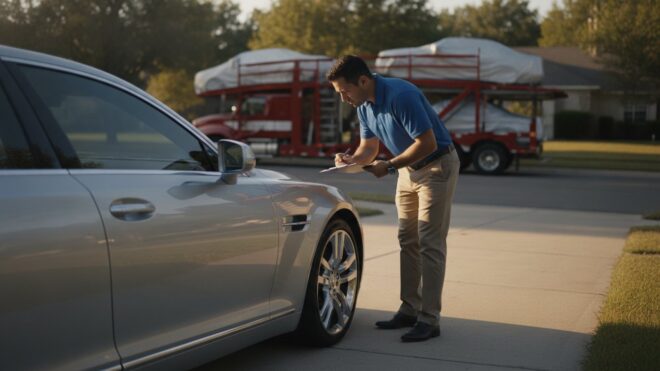
What if the difference between a seamless vehicle delivery and a frustrating insurance claim wasn’t the carrier you chose, but the twenty minutes you spent in your driveway before the truck arrived? Mastering how to prepare car for shipping is the most effective way to protect your investment and ensure a stress-free transport experience. We understand that handing over your keys can feel daunting, especially when you’re worried about missed exterior scratches or potential mechanical issues during the loading process.
This guide provides a methodical 2026 checklist to help you ready your vehicle for nationwide door-to-door transport. We’ll walk you through the essential steps to ensure your car passes inspection quickly and remains fully covered by insurance for the duration of the trip. From clarifying personal item weight limits to mastering the Bill of Lading process, you’ll gain the knowledge needed to act as a prepared partner in your vehicle’s journey. By following these professional standards, you’ll have the confidence to secure your car for its journey with total peace of mind.
Key Takeaways
- Learn why the “Clean Car Rule” is vital for identifying pre-existing damage and ensuring an accurate inspection by your transport driver.
- Discover how to prepare car for shipping by adhering to the 100lb personal item limit to maintain valid insurance coverage during transit.
- Master the logistical requirements of the “Quarter-Tank Rule” to minimize carrier weight while keeping your vehicle ready for immediate use upon arrival.
- Understand the necessity of high-resolution photo documentation to create a definitive condition report before your vehicle is loaded onto the carrier.
- Identify the specific preparation differences between open and enclosed transport services to provide the best protection for your specific vehicle type.
Understanding the Importance of Vehicle Shipping Preparation
Preparing a vehicle for transport is often viewed as a simple chore; however, it’s actually a vital series of safety and legal protocols. These steps ensure that both the owner and the transport company remain protected throughout the journey. When you understand how to prepare car for shipping, you’re doing more than just cleaning a seat. You’re establishing a baseline for the vehicle’s condition that serves as your primary legal shield. In the 2026 logistics environment, where precision is paramount, arriving at the pickup window with a fully prepped vehicle prevents unnecessary delays during the driver’s initial inspection. A well-prepared car is a sign of a responsible partner in the shipping process.
The Legal and Financial Stakes of Preparation
The documentation you create during preparation is the foundation of your insurance coverage. If a car is handed over with layers of road salt or dirt, a driver cannot accurately document existing chips or dents on the Bill of Lading. This lack of clarity can lead insurance providers to deny claims later. They may argue the damage existed prior to transport because it wasn’t visible during the initial walk-around. Additionally, preparation involves managing the vehicle’s weight. Carriers must adhere to strict Department of Transportation weight limits to maintain fuel efficiency and safety. Overloading a car with personal belongings doesn’t just risk your items; it can compromise the trailer’s balance and the safety of other vehicles on the load. Proper prep keeps the entire shipment within legal and physical safety margins.
Timeline: When to Start Your Prep
Success in auto logistics depends on a methodical schedule. We recommend starting your mechanical checks at least seven days before your scheduled pickup. This window allows you to address fluid leaks or battery issues that might otherwise cause a driver to reject the vehicle at the curb. Logistics professionals prioritize safety. A car that cannot safely be driven onto a trailer is a liability that most carriers want to avoid.
As you get closer to the date, focus on the interior and exterior details:
- 7 Days Out: Schedule a basic mechanical inspection and check for leaks.
- 48 Hours Out: Wash the exterior and vacuum the interior to ensure a clear inspection.
- 24 Hours Out: Remove all non-permanent accessories like bike racks or GPS units.
Learning how to prepare car for shipping also involves coordinating the Door 2 Door Transportation window. By having your paperwork and keys ready the day before, you ensure the handover is professional and efficient. This preparation allows the driver to stay on their strict interstate schedule while giving you total peace of mind.
Step 1: Physical Preparation of the Exterior and Interior
The physical condition of your vehicle at the time of pickup directly influences the accuracy of the carrier’s inspection. We refer to this as the “Clean Car Rule.” It’s a standard practice because road grime, mud, and dust can easily hide small dents or paint chips. If these aren’t documented on the Bill of Lading during the initial walk-around, you lose your ability to prove they occurred during transport. When you’re researching how to prepare car for shipping, start with a thorough wash. This simple step ensures that both you and the driver have a clear, undisputed view of the vehicle’s surfaces.
Exterior Cleaning and Accessory Removal
Pay special attention to the lower body panels and wheel wells. These areas are most susceptible to road debris and are often the most overlooked during a quick wash. Beyond cleanliness, you must secure or remove any non-permanent external features. Protruding items can be damaged by wind or debris, especially on an open carrier. If you’ve opted for Enclosed Transport Services, clearance is less of an issue, but securing loose parts remains a safety priority.
- Fold in side mirrors and retract or remove antennas.
- Remove bike racks, luggage racks, or specialized spoilers that aren’t factory-installed.
- Ensure any custom modifications, like low-clearance body kits, are disclosed to your coordinator to prevent loading issues.
Interior Clearing and Safety
The interior requires just as much attention as the exterior. While it’s tempting to use your car as an extra moving box, industry standards generally limit personal items to 100lbs. These items must be stored in the trunk or below the window line to maintain the driver’s visibility. It’s vital to remember that a carrier’s insurance policy covers the vehicle itself, not the contents left inside. This is a critical detail in how to prepare car for shipping effectively.
Remove toll tags like E-ZPass or SunPass from the windshield. If left active, these devices may trigger charges as the carrier passes through automated toll gantries across state lines. You should also store charging cables, loose GPS units, and spare change in the glovebox or center console to prevent them from tossing around during transit.
The Keys and Alarms Protocol
Finally, address your vehicle’s security and access. You must disable your car alarm before handing over the keys. An active alarm that triggers during transport can drain your battery, leaving the car dead upon arrival and complicating the unloading process. Ensure you provide the driver with one full set of keys. This should include the ignition fob and any specialized keys for locking gas caps or wheel nuts. This methodical approach to physical prep guarantees a smoother transition during the door-to-door handover.
Step 2: Mechanical Checks and Logistical Requirements
While your vehicle will spend the majority of its journey stationary on a trailer, its mechanical health remains a critical factor in the transport process. The driver must be able to start, steer, and brake the car to position it safely on the carrier. Learning how to prepare car for shipping involves more than just aesthetics; it requires a focus on the vehicle’s internal systems. A car that fails to start or has a soft brake pedal during loading creates a safety hazard for the driver and potential delays for everyone else on the route.
The Quarter-Tank Fuel Standard
One of the most common logistical errors is leaving a full tank of gas in the vehicle. Professional carriers require that your fuel level be at approximately one-quarter tank. This standard exists for two primary reasons: weight and safety. A full tank of gasoline can add over 100 pounds to the vehicle’s tare weight. When a carrier is moving ten vehicles across state lines, that cumulative weight can push the trailer over the legal limits set by the Department of Transportation. Additionally, reducing fuel levels minimizes the risk of fumes or leaks in the enclosed or multi-car environment.
Electric vehicles (EVs) require a different approach. Because battery health can be impacted by temperature extremes and long periods of inactivity, we recommend a charge level between 45% and 50%. This ensures there is enough power for the driver to move the vehicle without the risk of the battery reaching a critically low state during transit.
Leak Detection and Mechanical Integrity
Before the transport truck arrives, inspect the pavement under your car for any signs of fresh fluid. Carriers are very strict about leaks involving oil, transmission fluid, or brake fluid. A leaking vehicle is a significant liability on an open carrier; fluid from a car on the upper deck will likely drip onto and damage the paint of the vehicles positioned below it. If your car has a known leak, you must disclose this during the quoting process so the driver can attempt to place it on the bottom row.
- Battery Health: Ensure your battery is fully charged and the terminals are secure. A dead battery at the point of delivery can make unloading extremely difficult.
- Tire Pressure: Check that all tires are inflated to the manufacturer’s recommended PSI. A rolling vehicle is easier to control and less likely to shift on the trailer.
- Inoperable Vehicles: If the car does not run, it requires specialized equipment like a winch or forklift for loading.
Understanding these logistical requirements is a core part of how to prepare car for shipping for a long-distance journey. By addressing these mechanical details early, you ensure the safety of the driver and the integrity of every vehicle on the trailer.
Step 3: Documentation and the Pre-Shipment Inspection Process
Documenting the state of your vehicle is the final, essential step in codifying the physical work you have already completed. While the driver will perform their own assessment, your personal records serve as a primary legal shield. When you understand how to prepare car for shipping, you recognize that paperwork is not just a formality. It is the evidence required to ensure your insurance remains valid and your interests are protected. Having your documents organized before the carrier arrives ensures a professional handover and prevents last-minute stress.
Effective Vehicle Documentation Photography
High-resolution photography is your most reliable tool for proving the pre-shipment condition of your car. We recommend using the “Clockwise Method” to ensure no angle is missed. Start at the front driver-side corner and take clear, overlapping photos as you walk around the entire perimeter. You should capture at least 10 to 15 images in total. This methodical approach leaves no room for ambiguity if a claim arises later.
- Capture wide-angle shots of all four sides and the roof.
- Take detailed close-ups of any existing paint chips, glass cracks, or wheel scuffs.
- Photograph the odometer to record the exact mileage at the time of pickup.
- Ensure your camera settings have time-stamps enabled to provide a definitive record of when the photos were taken.
These photos work in tandem with the physical inspection. For a detailed breakdown of the entire process, you can consult our guide on How to prepare a car for transport: The 2026 Essential Checklist.
Mastering the Bill of Lading (BOL)
The Bill of Lading is the most important legal document in the auto transport industry. It functions simultaneously as a formal receipt, a service contract, and a condition report. When the driver arrives, they will perform a walk-around inspection and mark any existing damage on the BOL. You must participate in this process actively. Do not feel rushed. Compare the driver’s notations against the photos you just took. If you see a scratch that the driver missed, or if they mark a “dent” where you only see a “smudge,” speak up immediately.
Before you sign the BOL, ensure that all fields are accurate, including the pickup and delivery addresses and the current mileage. Once you sign, you are agreeing to the driver’s assessment of the vehicle’s condition. This document is your safety net; if the car arrives with new damage, the BOL is what you will use to prove the carrier’s liability. Gathering your Photo ID, proof of insurance, and vehicle registration alongside a signed BOL completes the logistical requirements of how to prepare car for shipping. If you are ready to begin your journey, you can request a transparent quote from our team today.
Selecting the Right Service for Your Prepared Vehicle
Choosing the specific service level for your vehicle is the final decision in the preparation process. While the fundamental steps of how to prepare car for shipping remain the same, the carrier type you select will dictate your final priorities. Whether you’re moving a standard sedan or a delicate vintage model, matching your prep efforts to the logistical environment ensures that your car remains protected throughout its nationwide journey.
Open vs. Enclosed Transport Preparation
If you select open transport car shipping, your vehicle will be exposed to varying weather and road conditions. This makes the “Clean Car Rule” mentioned earlier even more vital, as it allows for a precise comparison of the exterior condition upon arrival. For those utilizing enclosed car transport, the focus shifts slightly toward clearance and specialized handling. Owners of low-profile or exotic cars should ensure that the driver is aware of any specific requirements for using hydraulic lift gates or specialized ramps during the loading process.
The AutoPlex Transport Company Advantage in Nationwide Shipping
Door 2 Door Transportation offers significant convenience, but it requires a final bit of logistical planning. Large interstate carriers often struggle with narrow residential streets or low-hanging trees. We recommend identifying a nearby accessible location, such as a large parking lot, if your street can’t accommodate an 80 foot trailer. This proactive step in how to prepare car for shipping prevents unnecessary delays and provides a safe, level environment for the final Bill of Lading inspection.
At AutoPlex Transport Company, we act as your expert partner from the initial quote to the final delivery. Our professional drivers are trained to assist with the condition report, ensuring that every detail you’ve documented is verified and signed. This commitment to transparency and methodical care is what provides our clients with total peace of mind. When you’re ready to start your move, Request your professional vehicle shipping quote today and experience the difference that a dedicated logistics partner provides.
Secure Your Vehicle for the Journey Ahead
Mastering how to prepare car for shipping transforms a complex logistical task into a controlled and predictable process. By following the 2026 checklist, you’ve ensured your vehicle is mechanically sound, legally documented, and physically ready for its interstate journey. These steps protect the integrity of your asset and provide the necessary evidence to support your insurance coverage. You now have the knowledge and the documentation required to act as an informed partner in the transport process.
As an A+ rated auto logistics expert, AutoPlex Transport Company is dedicated to maintaining the high standards you’ve set through your preparation. We specialize in nationwide interstate vehicle transportation and offer professional door-to-door service that prioritizes the safety of your car. Our experienced drivers act as reliable partners, guiding you through the final inspection to ensure a transparent and secure handover for every mile of the trip.
Get a transparent, nationwide car shipping quote from AutoPlex Transport Company today. With your car fully prepped and our team at the wheel, you can move forward with total confidence and peace of mind.
Frequently Asked Questions
Can I leave personal items in my car when it is being shipped?
You can generally leave up to 100 pounds of personal items in the trunk or below the window line. However, these items are not covered by the carrier’s cargo insurance and must not obstruct the driver’s view during loading. It’s best to remove all valuables and electronics, as the transport company is only liable for the vehicle itself. Understanding these limits is a key part of how to prepare car for shipping safely.
How much gas should I leave in the tank before transport?
You should maintain a fuel level of approximately one-quarter tank for the duration of the trip. This amount provides enough fuel for the driver to load and unload the vehicle while keeping the carrier’s total weight within legal limits. A full tank adds unnecessary weight to the trailer and can lead to safety concerns regarding fuel vapors in enclosed environments.
Does my car insurance cover the vehicle while it is on the carrier?
The carrier’s cargo insurance provides the primary coverage for your vehicle while it is in transit. While your personal auto insurance may offer some secondary protection, you should verify this with your provider before the trip begins. Most professional transport companies carry substantial liability and cargo policies to protect your asset from the moment of pickup until final delivery.
What happens if the driver finds damage during the initial inspection?
Any existing damage identified during the initial walk-around will be documented on the Bill of Lading. This ensures that you and the driver agree on the vehicle’s starting condition before it is loaded. If a discrepancy arises, you should discuss it immediately and ensure the report is accurate before signing. This step is vital for how to prepare car for shipping with full legal protection.
Do I need to be present for the vehicle pickup and delivery?
You or a designated representative over the age of 18 must be present at both the pickup and delivery locations. This presence is required to hand over the keys, perform the joint inspection, and sign the Bill of Lading. If you cannot be there personally, ensure your representative understands the inspection process and has the authority to sign legal documents on your behalf.
Is it necessary to wash my car before the shipping company arrives?
Yes, washing your car is a requirement for a successful pre-shipment inspection. A clean exterior allows the driver to see every panel clearly and document any existing chips or scratches. If a car is too dirty, the driver may not be able to perform a thorough inspection, which could complicate any future insurance claims you might need to file for damage.
Should I disable my car alarm before it is loaded onto the truck?
You must disable your car alarm or provide the driver with clear instructions on how to turn it off. The vibrations and movements of the transport trailer can easily trigger sensitive security systems. An active alarm will drain your battery during the trip, which can cause significant delays and mechanical issues during the unloading process at your destination.
What documents do I need to provide to the car transport company?
You will typically need to provide a copy of your vehicle registration, proof of insurance, and a valid photo ID. While the carrier does not usually need the original title, having these documents ready ensures the driver can verify ownership quickly. These requirements are standard for nationwide interstate transportation and help maintain a clear legal record of the shipment from start to finish.