What if you viewed the transport of your seven-figure supercar not as a simple delivery, but as a complex engineering feat where every millimeter of clearance counts? You’ve likely spent years curating your collection, and the thought of a standard carrier handling your low-clearance investment is enough to cause genuine anxiety. It’s a common concern among collectors who fear that inadequate insurance or inexperienced brokers might put their high-value assets at risk. You deserve a logistical partner that treats your vehicle with the same level of precision that went into its manufacture.
Choosing professional exotic car shipping services is about more than just moving a car from one point to another. It’s about specialized equipment like hydraulic lift gates and soft-tie down systems that eliminate the risk of structural or cosmetic damage. This guide will help you discover the specialized logistics and security protocols required to safely transport exotic and supercars across the country. We’ll walk through how to validate comprehensive insurance coverage and utilize real-time tracking to ensure your vehicle arrives exactly as it left, providing you with total peace of mind throughout the journey.
Key Takeaways
- Professional transport for supercars requires enclosed carriers to eliminate risks from road salt, inclement weather, and UV rays.
- You’ll learn why hydraulic liftgates are the gold standard for loading low-profile vehicles without the mechanical strain caused by traditional ramps.
- It’s essential to verify a provider’s cargo insurance limits against current 2026 valuations to ensure your high-value asset is fully protected.
- Utilizing specialized exotic car shipping services provides access to real-time tracking and dedicated logistics designed for limited-edition models.
- Proper vehicle preparation, including condition documentation and battery maintenance, ensures a seamless transition for nationwide door-to-door delivery.
What Defines Professional Exotic Car Shipping Services?
Professional exotic car shipping services represent a specialized tier of logistics tailored specifically for vehicles with extreme valuations and unique mechanical requirements. While standard auto transport focuses on volume and efficiency, exotic logistics prioritizes the preservation of a vehicle’s mechanical integrity and resale value. For supercars and limited-edition models, standard shipping is often insufficient because it lacks the precision and protective measures required for assets that appreciate rather than depreciate. A single mistake during loading can lead to diminished value that far exceeds the cost of the transport itself. This emphasis on expert care and technical precision is a hallmark of the supercar industry, shared by elite providers like Delta Rentals Dubai who manage some of the world’s most sensitive high-performance vehicles.
Identifying a professional provider involves looking for specific indicators of expertise that go beyond basic licensing. These include:
- Advanced Equipment: The use of specialized enclosed trailers featuring climate control and air-ride suspension to mimic a stable garage environment.
- Operator Training: Drivers must be trained in handling complex paddle-shift transmissions, electronic parking brakes, and sensitive interior surfaces.
- Comprehensive Insurance: Cargo policies must be validated to cover 2026 market valuations, which often reach into the millions of dollars per load.
The Difference Between Luxury and Exotic Transport
It’s vital to distinguish between luxury and exotic transport. Luxury cars are typically high-end daily drivers, such as a premium sedan or SUV. While these vehicles require care, they don’t possess the extreme mechanical sensitivity or the “investment-grade” status of an exotic. Exotic vehicles, like a Ferrari SF90 or a Koenigsegg, are often built with unique dimensions and materials. The extreme tire width and delicate carbon fiber underbody of these cars require more than a standard car carrier trailer designed for mass-market vehicles. Exotic transport serves as the gold standard of vehicle logistics by merging advanced engineering with white-glove handling protocols.
Why Ground Clearance is the #1 Risk Factor
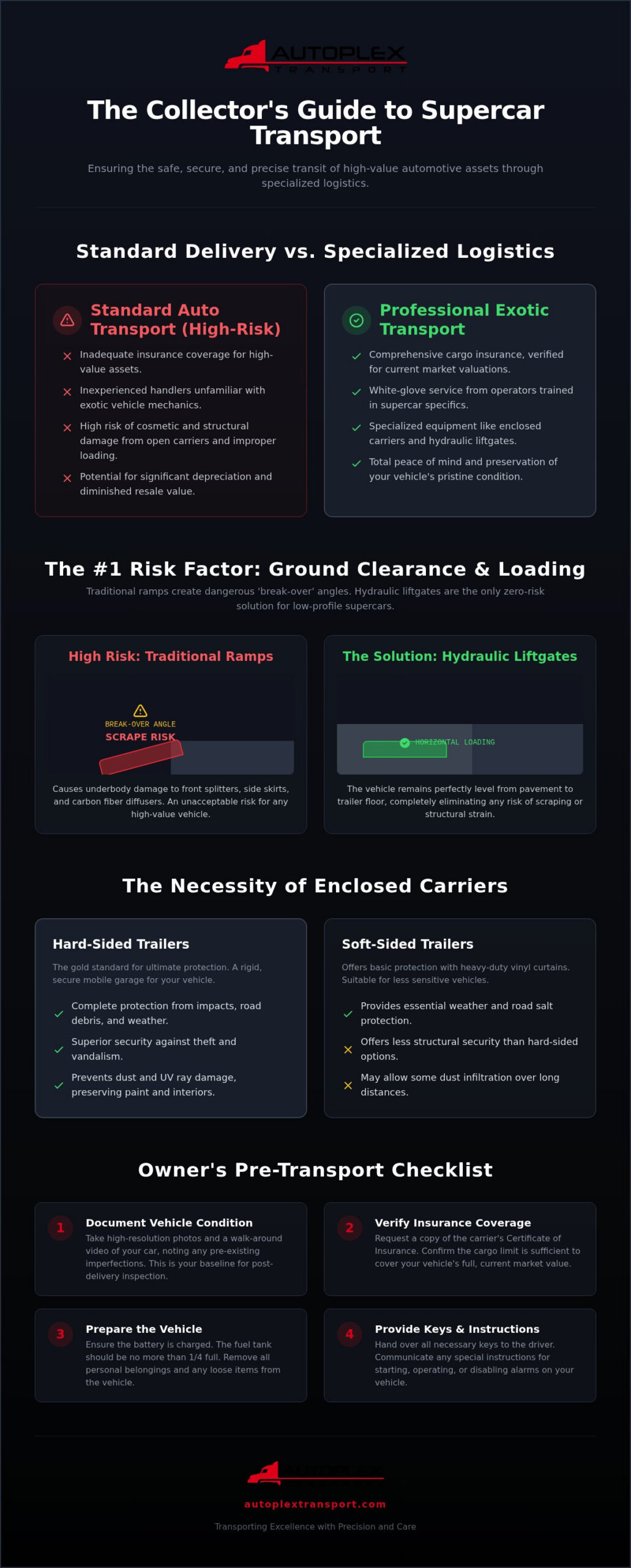
Ground clearance is the most significant physical obstacle when moving high-performance vehicles. Components like front splitters, side skirts, and rear diffusers are incredibly vulnerable during the loading process. Traditional ramps create steep “break-over angles,” which is the point where the car’s underbelly might scrape the peak of the ramp. Professional exotic car shipping services prioritize horizontal loading to eliminate this risk entirely. By utilizing hydraulic liftgates, the vehicle remains perfectly level from the pavement to the trailer floor. This method ensures that low-profile components never make contact with any surface, preserving the aerodynamic and structural integrity of the car.
The Necessity of Enclosed Carriers for High-Value Logistics
For owners of high-value assets, enclosed transport isn’t just an upgrade; it’s a fundamental requirement. While the cost to ship a car in an open carrier might be lower, the risks to a supercar’s finish are immense. Exotic car shipping services utilize fully sealed environments to shield your vehicle from road salt, gravel, and acidic rain. These elements can cause micro-abrasions on delicate paintwork or damage exposed carbon fiber components. UV rays are another often overlooked threat; prolonged sun exposure during cross-country trips can fade interior leather and degrade sensitive sealants. Beyond physical protection, professional exotic car shipping services provide essential privacy. Keeping a rare vehicle out of public view during transit prevents unwanted attention and enhances overall security.
When researching enclosed car transport, it’s important to understand the technical specifications of the equipment involved to ensure your vehicle receives the highest level of care.
Hard-Sided vs. Soft-Sided Enclosed Trailers
Hard-sided trailers feature solid metal walls that offer a rigid barrier against external forces. In contrast, soft-sided trailers use heavy-duty vinyl curtains. While soft-sided units provide basic weather protection, hard-sided trailers are the superior choice for exotics. They prevent dust infiltration and offer significantly better structural security against theft or vandalism. For vehicles with delicate finishes, a hard-sided unit acts as a mobile clean room. This level of environmental control is necessary for maintaining the showroom condition of the vehicle throughout its interstate journey.
The Benefits of Multi-Car vs. Single-Car Enclosed Units
Choosing between a multi-car and a single-car unit depends on your specific needs for exclusivity. Multi-car enclosed carriers are highly efficient and use specialized racking systems to keep vehicles separated and secure. However, a single-car trailer offers the ultimate level of dedicated care. This setup eliminates the need to load or unload other vehicles during the trip, which significantly reduces the risk of accidental contact during transit stops. If you’re moving a one-of-a-kind investment, our enclosed transport services offer the customized protection your vehicle requires. We focus on a methodical approach to ensure that your asset remains undisturbed from the moment it’s secured until it reaches its destination.
Specialized Equipment: How Exotic Vehicles are Safely Loaded
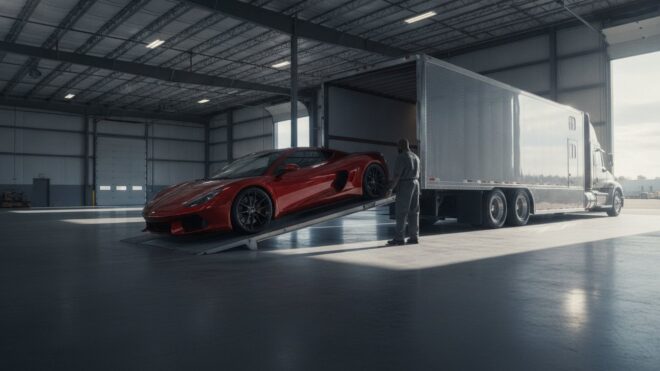
Loading an exotic vehicle is a high-stakes operation where precision is mandatory. While standard transport relies on metal ramps, professional exotic car shipping services utilize specialized engineering to eliminate the risk of physical contact between the car and the equipment. Traditional ramps, even those with extensions, create a steep incline that is often incompatible with the low-profile splitters and diffusers found on modern supercars. If the approach angle isn’t perfectly managed, the front lip of the car will scrape the ramp before the tires even make contact. This mechanical reality is why industry veterans have transitioned to more sophisticated loading technologies.
To achieve a “perfect load,” professional operators follow a methodical sequence that prioritizes the vehicle’s structural safety. You’ll typically see the following process during a high-value pickup:
- Staging: The vehicle is positioned on level ground behind the trailer to ensure a straight approach.
- Platform Alignment: The hydraulic liftgate is lowered until it sits flush with the pavement.
- Precision Entry: The car is driven or carefully winched onto the platform, maintaining zero incline.
- Vertical Ascent: The liftgate rises vertically, keeping the car perfectly level until it reaches the trailer floor height.
- Final Positioning: The vehicle is moved into its designated bay within the enclosed unit.
Hydraulic Liftgates: The Gold Standard
Hydraulic liftgates are the defining feature of premium exotic car shipping services. By keeping the vehicle horizontal throughout the entire loading process, the “ramp angle” problem is removed from the equation. This is particularly crucial for vehicles equipped with active suspension systems or front-axle lift kits. Even if a car’s electronics are powered down, the level platform ensures that the chassis remains unstressed. Professional drivers manage this process with extreme care, often using spotters to verify that tire alignment on the platform is perfect before the ascent begins.
Air-Ride Suspension and Soft-Tie Securement
Once the vehicle is inside the trailer, the focus shifts to protecting it from the rigors of the road. Air-ride suspension is a critical trailer feature that uses compressed air to absorb road vibrations and shocks. This prevents the constant “micro-bouncing” that can damage sensitive electronics or loosen delicate interior trim. Securement methods have also evolved. Instead of traditional metal chains that can mar the chassis or snap under tension, we use nylon soft-tie downs. These straps are looped through the wheels or over the tires, allowing the car’s own suspension to move naturally while the vehicle remains firmly anchored. This “wheel-only” method ensures that no metal components ever touch the vehicle’s frame or painted surfaces.
Evaluating Exotic Car Transport Companies and Insurance
Selecting exotic car shipping services involves a detailed audit of a provider’s legal and financial protections. While many companies claim to be “fully insured,” the reality of 2026 valuations means that standard coverage often falls short for a multi-million dollar supercar collection. You should always request a Certificate of Insurance (COI) directly from the carrier’s agent rather than accepting a photocopied document. This allows you to verify that the policy is active and that the cargo limits specifically cover high-value automotive assets. Verifying these details ensures that the company has the financial backing to handle a high-stakes transport.
The Bill of Lading (BOL) serves as your primary legal protection document. It functions as both a receipt and a comprehensive condition report. Before the driver leaves with your vehicle, every existing mark or mechanical detail must be documented. At delivery, a second inspection is performed. If any discrepancy exists, it must be noted on the BOL before you sign, as this is the document an insurance adjuster will prioritize during a claim. This level of detail is just as crucial for vintage investments, which you can explore in our guide on professional classic car transport.
Cargo Insurance Limits and Deductibles
Reputable enclosed carriers typically maintain cargo insurance limits between $500,000 and $3,000,000. However, if your vehicle’s fair market value exceeds these amounts, you must confirm that the carrier can secure a policy rider for that specific trip. In a total loss scenario, exclusions for “acts of God” or certain mechanical failures can complicate claims. You should prioritize working with a provider that offers a zero-deductible policy for the vehicle owner. This ensures that any damage costs are handled entirely by the carrier’s insurance provider without out-of-pocket expenses for you.
Direct Carriers vs. Brokers: Managing Your Risk
It’s essential to understand whether you’re speaking with a direct carrier or a broker. A direct carrier owns the trucks and employs the drivers, providing a clear line of accountability throughout the journey. Brokers act as intermediaries and often hold “contingent” liability insurance, which only pays out if the actual carrier’s insurance fails. Exotic owners generally prefer direct carriers because it eliminates the risk of your shipment being sub-contracted to a third party you haven’t vetted. This structure ensures a direct line of communication with the dispatcher. If you’re ready to secure a partner that prioritizes these rigorous safety standards, you can request a quote from AutoPlex Transport today.
Preparing Your Exotic Vehicle for Nationwide Transport
Preparing for exotic car shipping services is a methodical process that begins long before the carrier arrives at your driveway. Unlike standard vehicles, supercars often feature complex electronics and sensitive finishes that require specific attention. A well-prepared vehicle ensures that the driver can focus entirely on the logistics of the move rather than troubleshooting mechanical quirks. For a complete overview of general requirements, you can review our guide on how to prepare a car for transport. We recommend maintaining less than a quarter tank of fuel to minimize weight and comply with safety standards for interstate transit.
Documentation and Pre-Transport Maintenance
High-resolution documentation is your best insurance against disputes. You should take clear photos and videos of the entire vehicle, specifically focusing on the undercarriage, front splitter, and wheel rims. These areas are most susceptible to handling errors on low-clearance models. It’s also necessary to manage the vehicle’s onboard technology. Many exotic models feature sensitive aftermarket security systems or GPS trackers that can drain the battery or trigger alarms during transit. If your vehicle will be in transit for several days, ensure the battery is fully charged. For long-haul interstate trips, providing a battery tender can prevent electronic failures upon arrival.
The Delivery Inspection: Ensuring a Perfect Handover
The door-to-door delivery process is designed for maximum convenience, but it requires your active participation during the final handover. When the vehicle arrives, you must conduct a thorough inspection after it’s lowered from the hydraulic liftgate. Check the paintwork under bright, natural light and verify that the interior remains pristine. The Bill of Lading (BOL) is the final legal record of the transaction. By signing this document, you’re confirming that the vehicle was delivered in the condition described. AutoPlex Transport Company maintains a commitment to methodical, safe delivery protocols, ensuring that our drivers walk you through every step of the inspection process. This transparent approach protects your investment and reinforces the trust we build as your logistical partner.
Securing Your Investment for the Long Haul
Transporting a high-value vehicle in 2026 requires more than just a truck and a trailer; it demands a partnership rooted in technical precision and transparent communication. By prioritizing specialized equipment like hydraulic liftgates and hard-sided enclosed units, you eliminate the physical risks inherent in standard logistics. Validating your carrier’s insurance limits and following a methodical preparation checklist further ensures that your asset remains protected from door to door.
When you choose professional exotic car shipping services, you aren’t just moving a car. You’re investing in the preservation of an asset that represents significant personal and financial value. Our team provides the specialized enclosed carriers and fully insured logistics necessary to manage these complex requirements across the country. We invite you to Get a Professional Exotic Car Shipping Quote from AutoPlex Transport to see how our nationwide door-to-door service can offer you total peace of mind. Your collection deserves the highest standard of care, and we’re here to provide it.
Frequently Asked Questions
How much do exotic car shipping services cost in 2026?
The total cost for exotic car shipping services depends on several variables, including the total distance, the specific vehicle dimensions, and the current fuel market. While enclosed transport typically carries a premium of 40% to 60% over open carriers, the investment protects against much higher repair costs. Factors such as peak seasonal demand or specialized equipment requirements also influence the final quote. We recommend requesting a personalized estimate to account for your vehicle’s unique valuation.
Is enclosed transport really necessary for exotic cars?
Enclosed transport is considered essential for exotics because it provides a fully sealed environment that shields the vehicle from road debris, weather, and UV rays. Standard open carriers expose your car to gravel, road salt, and potential environmental hazards that can damage delicate paint or carbon fiber. For vehicles with high valuations, the privacy and security of a hard-sided trailer are non-negotiable. It ensures your asset arrives in the same showroom condition it was in at pickup.
What is the difference between a liftgate and a ramp for car shipping?
The primary difference lies in the approach angle used during the loading process. A hydraulic liftgate keeps the vehicle perfectly horizontal while raising it from the ground to the trailer floor, which is critical for low-clearance supercars. Traditional ramps create a steep incline that often causes front splitters or rear diffusers to scrape the surface. By utilizing a liftgate, we eliminate the risk of undercarriage damage and ensure the car’s suspension remains unstressed during entry.
How much insurance coverage do I need for a supercar shipment?
You should ensure that the carrier’s cargo insurance policy meets or exceeds the current fair market value of your vehicle. While reputable enclosed carriers often provide coverage between $500,000 and $3,000,000, you must verify the specific limits for your shipment. It’s also important to confirm that the policy is a primary cargo policy rather than a contingent one. Always request a Certificate of Insurance to validate that the coverage is active and specifically applies to high-value assets.
Can I track my exotic car while it is in transit?
Yes, modern logistics standards allow for transparent communication and real-time updates throughout the journey. We prioritize keeping you informed by providing direct access to dispatchers or utilizing GPS tracking technology when available. This ensures you know the exact location of your vehicle during its interstate transit. Consistent updates help alleviate the anxiety associated with moving a high-value asset and allow you to prepare for the door-to-door delivery at your destination.
How long does it take to ship an exotic car across the country?
Transit times generally depend on the total mileage and the specific route requirements. A coast-to-coast trip typically takes between 7 and 10 days, while shorter interstate moves may be completed in 3 to 5 days. Factors such as driver rest mandates, weather conditions, and the number of stops in a multi-car trailer can influence the schedule. We focus on a methodical pace that prioritizes safety over speed, ensuring your vehicle is never rushed through the process.
Should I wash my car before exotic car shipping services arrive?
We recommend washing your vehicle before exotic car shipping services arrive to ensure an accurate condition report. A clean exterior allows both you and the driver to identify any pre-existing scratches, chips, or dents during the initial inspection. Utilizing a professional detailing service like Nanak Car Wash ensures that every surface is pristine, making the documentation process as accurate as possible. This clarity is vital for the Bill of Lading, which serves as the official record of the car’s state at pickup. It also ensures that no abrasive dirt is trapped under protective covers or soft-tie downs during the journey.
If you notice any damage upon delivery, you must document it immediately on the Bill of Lading before signing. This document is the legal foundation for any insurance claim. You should take timestamped, high-resolution photos of the new damage while the driver is still present. Once the discrepancy is noted on the BOL, you can contact the carrier’s insurance provider to initiate the claims process. Our handling protocols are designed to prevent these scenarios entirely.