
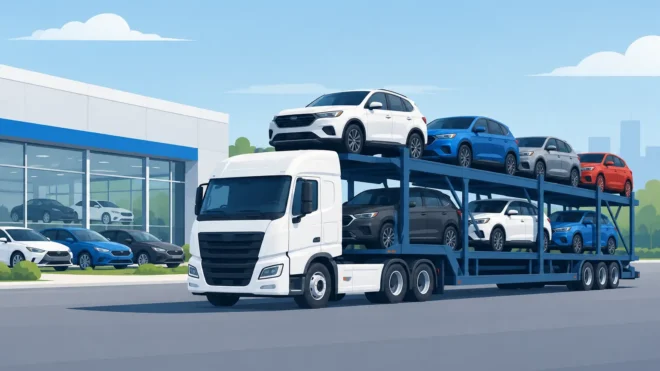
A sold vehicle sitting on the wrong lot can hold up a customer delivery, tie up working capital, and create avoidable pressure on your team. Dealership transport solutions give dealers a reliable way to move inventory between auctions, stores, reconditioning centers, and customer locations without assigning staff to long-distance drives.
For a single rooftop dealership or a multi-location dealer group, the goal is the same: get the right vehicle where it needs to be, in the condition expected, on a schedule that supports the sale. The right transport partner helps turn a complicated handoff into a clear, managed process.
What Dealership Transport Solutions Should Accomplish
Vehicle logistics is more than getting a car from Point A to Point B. A dealer may need to replace a fast-selling model from another store, bring in an auction purchase, move a trade-in for appraisal, or deliver a sold vehicle to a buyer in another state. Each situation has different timing, vehicle-protection, and loading requirements.
A dependable transport plan should reduce downtime without forcing your team to accept unnecessary risk. It should provide realistic pickup and delivery coordination, careful vehicle handling, clear communication, and service options that match the vehicle and route.
Open carrier transport is often the practical choice for standard inventory. It gives dealerships an efficient way to ship sedans, trucks, SUVs, and everyday vehicles across the country. For premium, classic, low-clearance, or specialty vehicles, enclosed transport adds protection from road debris and weather during transit. Neither option is automatically better. The best choice depends on the vehicle’s value, condition, customer expectations, and delivery deadline.
Common Times Dealers Need Vehicle Transport
Inventory movement rarely follows a single pattern. A dealer may need regular lane coverage between nearby markets, while another may only need transport after an out-of-state auction purchase. The common thread is that staff time and vehicle condition both matter.
Dealerships frequently arrange shipping when acquiring vehicles through wholesale channels, balancing inventory across locations, transferring vehicles for service or reconditioning, or completing remote customer deliveries. Transport can also help when a dealer accepts an out-of-state trade, purchases specialty inventory, or needs to move several units at once.
Driving vehicles long distances may appear less expensive at first, but the real cost can add up quickly. Labor, fuel, hotel stays, mileage, road exposure, and missed time on the sales floor all affect the decision. Professional shipping gives the dealership a defined plan and allows employees to stay focused on customers and operations.
Auction Purchases and Wholesale Inventory
Auction vehicles often need prompt pickup and organized delivery. Delays can lead to storage charges, added coordination, and slower reconditioning. Providing the pickup location, available release details, vehicle condition, and destination early helps the carrier plan effectively.
If multiple auction purchases are headed to the same market, multi-vehicle transport may offer a more efficient option than arranging each vehicle separately. Timing still matters. A carrier route is influenced by distance, capacity, location access, and seasonal demand, so a realistic pickup window is usually more useful than assuming same-day service is always available.
Dealer Trades and Store-to-Store Transfers
Dealer trades can protect a sale that might otherwise be lost. Once the deal is agreed upon, transport becomes the next critical step. The vehicle needs to arrive safely, and both teams need a clear understanding of the pickup and delivery timing.
For transfers within a regional network, open carrier shipping is commonly the best fit. For a high-value performance vehicle or collector unit, enclosed transport may better align with the vehicle’s condition and the expectations attached to the sale. The right service level protects both the unit and the customer experience.
Choosing the Right Shipping Method for Your Inventory
There is no one-size-fits-all transport method for dealerships. The most useful option comes down to the vehicle, route, urgency, and level of protection required.
Open carrier shipping is efficient for most dealership inventory. These carriers are built to move multiple vehicles and are widely available on major transport routes. Because vehicles are exposed to normal outdoor conditions, it is generally best suited for late-model used inventory, new vehicles, work trucks, and other standard units.
Enclosed transport is designed for vehicles that need added protection. Dealers often choose it for luxury models, classics, exotics, restored vehicles, and units with very low ground clearance. It typically costs more than open shipping, but that added cost can be reasonable when protecting a vehicle with a higher value or a sensitive finish.
Expedited transport can be helpful when a buyer’s delivery date, an event, or a fast-moving deal leaves little room for delay. However, expedited service may cost more and depends on carrier availability for the route. When timing is flexible, standard scheduling often provides more options and more predictable pricing.
Information That Makes Scheduling Easier
Accurate details help prevent surprises. Before requesting a quote, confirm the year, make, model, running condition, pickup location, delivery location, and desired timing. Let the transport advisor know if the vehicle has modifications, oversized tires, roof racks, low clearance, mechanical issues, or any damage that affects loading.
Pickup and delivery access also deserve attention. Full-size carriers need room to maneuver, and some dealership lots, residential streets, auction facilities, or urban areas may not be suitable for direct loading. In those cases, a nearby open location can be arranged for a safer, more practical handoff.
Dealers should also identify the right contact at each end of the shipment. A missed call, unavailable gate code, or unclear release authorization can delay a pickup that was otherwise ready to go. Simple coordination before the carrier arrives helps keep the schedule intact.
Protecting Vehicles From Pickup Through Delivery
Condition documentation is a basic but essential part of professional auto transport. At pickup, the driver performs an inspection and records the vehicle’s visible condition on the bill of lading. The receiving party should inspect the vehicle again at delivery before signing final paperwork.
This process is not about expecting a problem. It is about creating a clear record for everyone involved. Dealers can make the process easier by removing personal items, securing loose accessories, confirming the battery is charged, and keeping the fuel level low enough for safe loading. A vehicle that runs and rolls is generally easier to transport, although non-running vehicles can often be accommodated with advance notice.
For dealership teams, consistent inspection practices are especially valuable when several employees handle a vehicle between acquisition and retail delivery. Photos taken before pickup and at delivery provide another useful reference for internal records.
A Better Way to Manage Recurring Transport Needs
Dealerships that ship regularly benefit from treating transport as an operational relationship, not a last-minute task. Sharing typical routes, expected volume, preferred pickup windows, and vehicle mix gives a transport provider better context for recommending the right service.
A dedicated advisor can help coordinate standard shipments, special handling requests, and time-sensitive moves without making your staff start from scratch every time. That is particularly useful for dealer groups moving inventory across state lines or balancing vehicles among several rooftops.
AutoPlex Transport works with dealerships that need dependable nationwide vehicle shipping, whether the request involves a single sold unit, auction inventory, or multiple vehicles moving between locations. The focus is straightforward: match the shipment to the right carrier option, communicate clearly, and help protect the vehicle from pickup through delivery.
Request a Quote Before the Vehicle Becomes a Bottleneck
The best time to arrange transport is when the deal, purchase, or transfer is confirmed, not after the vehicle has already become a scheduling problem. Early planning gives you more carrier options and allows your team to choose the balance of speed, cost, and protection that fits the shipment.
Have the vehicle details and route ready, then speak with a transport advisor about your timeline and service needs. A reliable shipping plan keeps inventory moving, gives your staff more time for customers, and helps the next vehicle arrive ready for its next step.
