
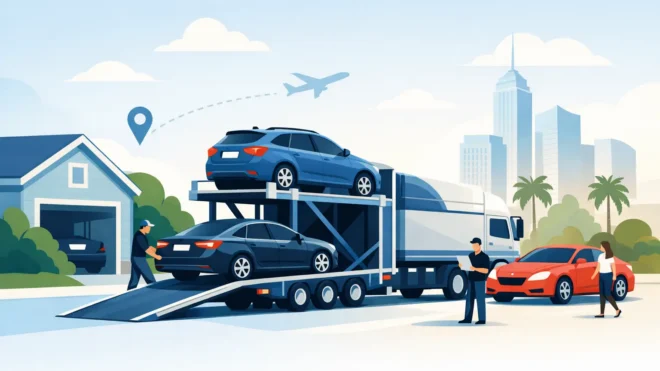
A cross-country drive can add thousands of miles, hotel stops, fuel costs, and days away from work or family. This door to door shipping guide explains how professional vehicle transport brings the carrier as close as safely possible to your pickup and delivery locations, so you can move your car without taking on the trip yourself.
For a relocation, an online vehicle purchase, a seasonal move, or a dealership transfer, door-to-door service keeps the process focused on two key moments: a coordinated pickup and a carefully documented delivery. Knowing what happens between those points helps you book with confidence and avoid last-minute surprises.
What door-to-door auto shipping means
Door-to-door shipping means the carrier picks up and delivers your vehicle at or near the addresses you provide. The goal is maximum convenience, but it does not always mean a tractor-trailer can physically stop in your driveway. Auto carriers are large commercial vehicles, and some residential streets have tight turns, low branches, weight limits, narrow entrances, or restrictions on commercial traffic.
When direct access is not safe or permitted, the driver will coordinate a nearby meeting point. This may be a wide shopping center lot, a large gas station, or another accessible location close to your home. It is still door-to-door service because the pickup and delivery are arranged around your location rather than requiring you to take the vehicle to a distant terminal.
This approach is especially useful for customers who are relocating on a fixed schedule, buying a vehicle from another state, or protecting a collector car from unnecessary mileage. You avoid long-distance driving fatigue while a professional carrier handles the route.
How the door-to-door shipping process works
The process is straightforward when the details are accurate from the start. Your route, vehicle type, availability dates, and transport preference all affect scheduling and price.
1. Request a quote with the right vehicle details
Begin with the pickup and delivery ZIP codes, the year, make, and model of the vehicle, and the dates when it will be available. Let your transport advisor know whether the vehicle runs and drives, whether it has modifications, and whether it needs special loading considerations.
A lifted truck, oversized SUV, low-clearance sports car, or non-running vehicle may require additional planning. Clear information helps match your shipment to the right carrier and reduces the chance of a price adjustment later. If you need the vehicle by a specific date, ask about expedited transport early rather than waiting until the final few days.
2. Choose open or enclosed transport
Open carrier transport is the most common option for standard cars, trucks, and SUVs. Vehicles are secured on an open multi-car trailer, which is an efficient and dependable choice for most domestic moves. It generally offers the best balance of cost and availability.
Enclosed transport provides added protection from road debris and weather. It is often the preferred choice for classic cars, exotic vehicles, luxury models, or any vehicle with a finish that needs extra protection. Enclosed shipping typically costs more and may have fewer available carriers on certain routes, but for high-value vehicles, the added care can be worthwhile.
3. Confirm pickup availability
Once your shipment is scheduled, stay reachable by phone. Carrier timing can change because of traffic, weather, loading delays, and federal driving-hour rules. A reputable transport coordinator will keep you informed, but flexibility around the pickup window makes the process easier.
You or an authorized adult should be available at pickup. If someone else will meet the driver, provide that person’s name and phone number in advance. The same preparation applies at delivery, especially if you will already be at your new home while the vehicle is still in transit.
4. Complete the vehicle inspection and bill of lading
At pickup, the driver inspects the vehicle with you and records its condition on the bill of lading. This document is the official condition report for the shipment. Review it carefully before signing, and take your own clear, dated photos of all sides of the vehicle, wheels, roof, glass, and any existing damage.
The driver then loads and secures the vehicle for transport. You will receive delivery coordination as the carrier approaches the destination. At delivery, inspect the vehicle again before signing the final paperwork. Compare its condition with the pickup report and photos, and note any concerns on the bill of lading before the driver leaves.
How to prepare your vehicle for shipping
A little preparation protects your vehicle and keeps pickup moving on schedule. Clean the exterior so the inspection is accurate, then remove personal belongings, loose accessories, and valuables. Federal transport regulations and carrier insurance policies generally do not cover personal items left inside a vehicle.
Keep the fuel level at roughly one-quarter tank. That gives the driver enough fuel to load and unload the vehicle without adding unnecessary weight. Check that the battery is charged, tires are properly inflated, and there are no active leaks. If the vehicle has an alarm, disable it or provide simple instructions for managing it.
Fold in mirrors if possible, retract or remove antennas, and secure removable spoilers or specialty parts. Tell your advisor about any clearance issues, custom wheels, or mechanical concerns. For non-running vehicles, explain whether the steering and brakes work and whether the tires hold air. These details determine the equipment needed for safe loading.
You should also keep one set of keys for yourself and provide the carrier with the required key. Do not send original ownership documents inside the car unless your advisor specifically instructs you to do so.
What affects door-to-door shipping cost
There is no one flat rate for vehicle shipping because every route and shipment has its own conditions. Distance matters, but it is only one part of the quote. Popular routes with regular carrier traffic may be more competitively priced than remote pickup or delivery locations.
The size and weight of the vehicle also matter. A full-size truck or large SUV uses more trailer capacity than a compact sedan. Transport type affects cost as well, with enclosed service generally priced above open carrier shipping. Inoperable vehicles, modifications, seasonal demand, and short-notice scheduling can also increase the price.
The lowest quote is not always the best value. A realistic quote should account for your vehicle, route, service level, and timeline. Be cautious if a price seems far below other estimates, particularly if the provider cannot clearly explain the pickup window, payment terms, or service conditions. Reliable coordination and proper carrier matching are worth more than an attractive number that later changes or results in delays.
Common door-to-door shipping questions
Can the carrier pick up from my home?
Often, yes. The driver will pick up from your home when the street is safe and accessible for the carrier. If it is not, you will meet nearby at a location that gives the driver room to maneuver and load safely.
How long does vehicle transport take?
Timing depends on distance, route demand, weather, and carrier schedules. Shorter regional moves may take a few days, while coast-to-coast shipments commonly take longer. Your advisor can provide a practical estimate based on your route and dates, but transport windows are more realistic than guarantees unless you arrange an expedited service.
Can I put personal items in my car?
It is best not to. Personal property can shift during transport, add weight, and may not be covered by carrier insurance. Remove valuables, electronics, paperwork, and loose items before pickup.
What if my delivery address changes?
Contact your transport coordinator as soon as possible. A nearby change may be easy to accommodate, while a different city or ZIP code can affect the route, carrier schedule, and final cost. Early notice gives the team more options.
Book with clear expectations
The best door-to-door shipment starts with an honest conversation about your vehicle, route, schedule, and preferred level of protection. Share special requirements early, be available during the pickup and delivery windows, and keep your inspection paperwork until the shipment is complete.
AutoPlex Transport can help you choose the service that fits your vehicle and timeline, whether you need standard open transport, enclosed protection, or expedited coordination. Request a quote or speak with a transport advisor before your moving dates become tight. With the right plan in place, your vehicle can arrive ready for the next chapter without asking you to spend days behind the wheel.
