
A cross-country drive can add thousands of miles, road debris, weather exposure, and unnecessary wear to a vehicle you care about. When comparing enclosed transport vs open carrier, the right choice comes down to your vehicle, your route, your timeline, and how much protection you want while it is in transit.
Both options can move a car safely across the country without asking you to spend days behind the wheel. The difference is not simply whether the trailer has walls. It is the level of exposure, the type of equipment used, availability on your route, and the price you can expect to pay.
Enclosed Transport vs Open Carrier: The Core Difference
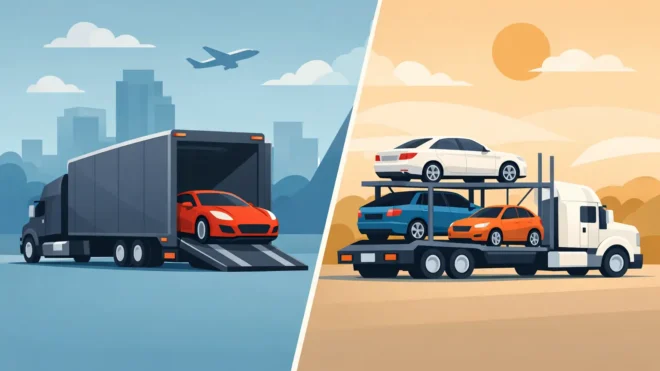
Open carrier shipping is the familiar multi-level trailer seen on highways carrying several vehicles at once. Your vehicle is secured to an open trailer and transported alongside other cars, trucks, or SUVs. It is the most common form of auto transport in the United States because it is widely available and typically the more budget-friendly option.
Enclosed transport uses a covered trailer that shields vehicles from rain, snow, road grime, dust, and flying debris. These carriers generally handle fewer vehicles than an open trailer, and they are often selected for classic cars, luxury vehicles, exotic models, specialty builds, and vehicles with low ground clearance.
Neither service is automatically right for every shipment. Open shipping provides dependable transportation for many everyday vehicles. Enclosed shipping provides an extra layer of protection when the vehicle’s value, condition, or owner preference calls for it.
When Open Carrier Shipping Makes Sense
For standard sedans, SUVs, pickup trucks, and daily drivers, open carrier transport is usually the practical choice. It gives you professional long-distance shipping without the added cost of a covered trailer. If you are relocating, buying a vehicle online, sending a car to a family member, or moving south for the season, open transport can keep the process simple and cost-conscious.
Your vehicle will be exposed to normal outdoor conditions during the trip, much like it would be while parked or driven on public roads. That can include rain, dust, and road dirt. A reputable carrier secures the vehicle properly, documents its condition at pickup, and transports it according to the scheduled route. Exposure does not mean careless handling. It simply means the vehicle is not inside a fully covered trailer.
Open carriers also tend to offer more routing flexibility because there are more of them on the road. That can be helpful when you need pickup and delivery coordinated around a move, a closing date, a work assignment, or a dealership schedule. For many customers, the combination of availability and value makes open shipping the clear fit.
When Enclosed Auto Transport Is Worth It
Enclosed transport is designed for customers who want the highest level of protection from the elements during shipping. The trailer’s covered structure keeps the vehicle out of direct weather and away from road debris. For an expensive or highly maintained vehicle, that added protection can bring valuable peace of mind.
Classic and collector vehicles are common candidates for enclosed shipping. A restored car may have rare paint, original trim, or a finish that the owner prefers not to expose to a long highway journey. The same applies to exotic and luxury vehicles, especially when ground clearance is limited or the vehicle has a premium finish that deserves extra care.
Enclosed service can also be a smart choice for a newly purchased vehicle that has not yet been driven much, a custom build headed to a show, or a vehicle being moved during harsh winter conditions. It is not only about the price of the vehicle. It is about its condition, purpose, and the level of risk you are comfortable accepting.
Some enclosed carriers use equipment intended to make loading more manageable for low-profile vehicles. If your car has a lowered suspension, extended front splitter, custom body kit, or other clearance concerns, mention that before booking. Accurate vehicle details help your transport advisor match the shipment with appropriate equipment.
Cost: Why Enclosed Shipping Usually Costs More
Enclosed shipping generally costs more than open carrier transport. Covered trailers have fewer available spots, serve a more specialized market, and may require additional handling considerations. The exact price difference depends on the route, vehicle size, season, pickup and delivery locations, and current carrier availability.
A compact car moving between major metro areas may have a different price gap than a full-size SUV moving to a rural destination. Expedited timing, inoperable vehicle status, and changes to the route can also affect either service. That is why a quote based on your actual shipment details is more useful than relying on a flat national estimate.
The better question is not whether enclosed transport costs more. It does. The question is whether the added protection is worth the difference for your vehicle and your priorities. For a daily driver, the savings from open transport may matter more. For a collector car or premium vehicle, enclosed service may be the easier decision.
Protection, Timing, and Availability
Weather protection is the most visible advantage of enclosed shipping, but it is not the only factor to consider. Carrier availability can influence your pickup window and overall planning. Open carriers serve more routes and move more vehicles, so they can often provide broader scheduling options. Enclosed trailers may require additional coordination, particularly for less common routes.
That does not mean enclosed shipping is unreliable. It means advance planning is helpful. If you have a firm delivery date for a vehicle auction, relocation, event, or seasonal move, request a quote as early as possible. A transport advisor can review the route and help you choose a service level that matches your time frame.
Door-to-door service is often available with both open and enclosed transport. In practice, the driver will get as close to your address as safely and legally possible. Residential streets with low branches, tight turns, parked cars, or local restrictions may not accommodate a large carrier. In those cases, pickup or delivery may happen at a nearby open location, such as a wide shopping center lot or another accessible meeting point.
How to Choose the Right Carrier for Your Vehicle
Start with the vehicle itself. A dependable daily driver with normal clearance is usually well suited to open carrier shipping. A rare, restored, luxury, exotic, or highly customized vehicle may justify enclosed protection. Then consider the route and season. A long winter route or a trip through regions with frequent severe weather may influence your preference.
Next, think about your budget and delivery needs. If keeping shipping costs manageable is a priority and your vehicle does not require a covered trailer, open transport is often the sensible solution. If avoiding exposure to weather and road debris is your main concern, enclosed transport offers the stronger protection level.
Before pickup, remove personal belongings, document your vehicle’s condition with clear photos, and let the transport team know about any special details. This includes non-running status, oversized tires, modified suspension, roof racks, low clearance, or loose exterior parts. Clear information at the beginning helps prevent delays and supports a smoother pickup-to-delivery experience.
A Simple Way to Move Forward
You do not need to become an auto shipping expert to make a confident decision. Provide the pickup and delivery locations, vehicle year, make, model, condition, and preferred timing. From there, your transport options can be reviewed based on real availability and the level of protection you want.
AutoPlex Transport helps customers coordinate open and enclosed vehicle shipping nationwide with straightforward guidance and dedicated support. Whether you are moving a family SUV, buying a car from out of state, or arranging protected transport for a prized vehicle, the goal is the same: a safe, worry-free move without the burden of a long drive.
If you are unsure which option fits, start with the vehicle’s condition and what would give you the most confidence when it arrives. A clear quote and a quick conversation can turn a complicated logistics decision into a plan you feel good about.
