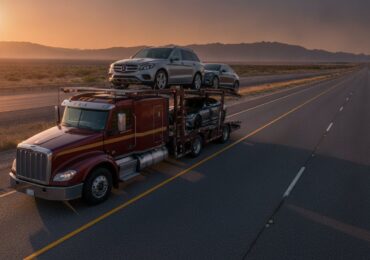
Choosing the lowest bidder to move your high-value vehicle feels like a win until the first rock chip or road salt stain appears. While the initial enclosed auto transport cost is higher than an open carrier, this premium is actually a form of preventative insurance for your car’s showroom finish. It’s understandable to feel anxious about trusting a third party with your asset, especially when market rates seem to shift overnight. You likely find yourself wondering if you are paying for actual safety or simply a luxury upsell.
We’re here to demystify these rates and show why the extra expense is often the most cost-effective way to protect your investment. This article provides a clear breakdown of shipping rates in 2026 and explains why that price gap is a strategic choice for long-term vehicle health. We’ll examine how new 2026 regulations, such as stricter broker financial responsibilities and digital CDL medical verifications, are shaping the current landscape. You will gain a thorough understanding of what you are paying for and the confidence that your vehicle will arrive in showroom condition.
Key Takeaways
- Enclosed shipping isn’t just for supercars; it’s a strategic choice for any vehicle where maintaining a clean Carfax and showroom condition is a priority.
- Understand that the enclosed auto transport cost reflects specialized equipment like hydraulic lift gates and lower-capacity trailers designed for maximum security.
- Evaluate the total cost of ownership rather than just the sticker price, because enclosed transport prevents environmental damage that often leads to expensive detailing.
- Learn how route density and vehicle dimensions influence your final quote, which helps you time your shipment for the best value on popular interstate routes.
- Discover how AutoPlex Transport ensures peace of mind through a rigorous carrier vetting process and a commitment to transparent pricing without hidden fees.
Myth: Enclosed Auto Transport Cost Is Only Justified for Exotic Cars
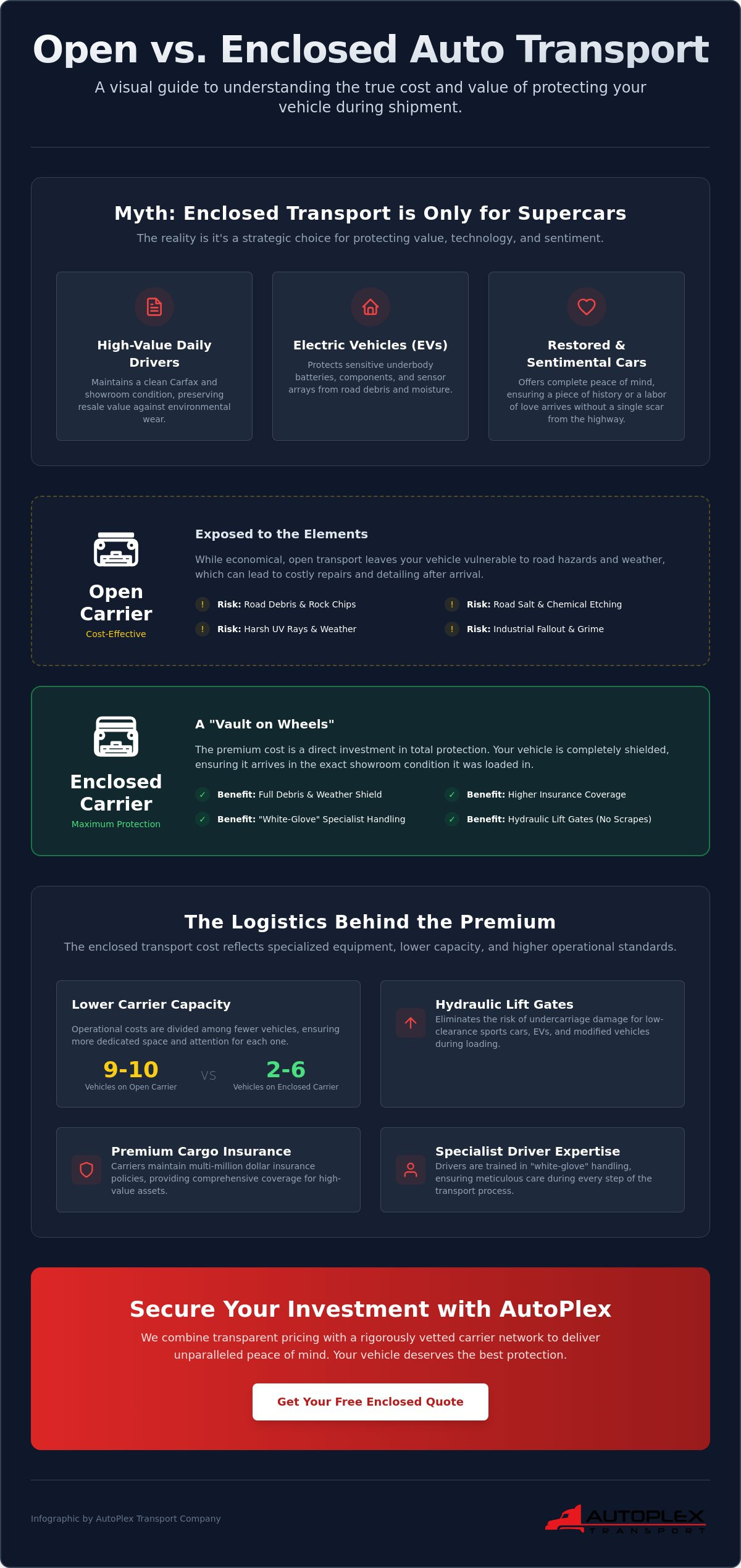
Many car owners assume that choosing an enclosed trailer is an unnecessary expense reserved for six-figure supercars. This perspective often leads to a narrow view of what an enclosed auto transport cost actually represents. In reality, enclosed shipping is a fully shielded logistics solution designed to protect any vehicle from the unpredictable hazards of the open road. Whether you are moving a high-end luxury vehicle or a well-maintained daily driver, the decision involves more than just status. It’s about selecting the right tool for the job. The common “luxury tax” perception ignores the reality of paint repair costs. Repainting a single panel or performing a deep paint correction to remove swirl marks from road grit can easily exceed the cost of the shipping upgrade.
The rise of electric vehicles (EVs) has shifted this conversation significantly. Modern EVs carry sensitive underbody components and complex sensor arrays that are vulnerable to high-velocity road debris. Protecting these electronics is a functional necessity rather than a luxury. For EV owners, the enclosed auto transport cost becomes a strategic investment in the longevity of these high-tech systems, preventing road salt and moisture from infiltrating sensitive battery housings during cross-country transits.
The Reality of Environmental Wear During Transit
When deciding between open or enclosed carriers, it’s helpful to look at the mechanical differences. Open carriers expose your car to industrial fallout, road salt, and harsh UV rays for thousands of miles. This isn’t just about surface dirt; it’s about chemical etching on your clear coat. If you choose an open trailer, you should factor in the price of a professional paint correction and detail upon arrival. Enclosed delivery offers a “ready-to-drive” experience. The car rolls off the truck in the exact same condition it was loaded, saving you the time and expense of post-delivery restoration.
Sentimental Value and the Cost of Regret
Financial value isn’t the only metric that matters. Family heirlooms, your first major vehicle purchase, or a car you’ve spent years restoring all carry a significant emotional weight. The psychological stress of managing a damage claim for a rock chip or cracked windshield on an open carrier often far outweighs the initial price difference. Enclosed transport serves as a physical and mental barrier against both extreme weather and common road debris. It ensures your piece of history remains intact. Choosing this method means you aren’t just paying for transport; you’re paying for the certainty that your vehicle will arrive without the scars of the highway.
The Logistics Behind the Price: Why Enclosed Carriers Cost More
Understanding why the enclosed auto transport cost sits at a premium requires a look into the physics and economics of the trailer itself. Most open carriers are designed for maximum density, frequently hauling nine to ten vehicles at once to spread out operational costs. In contrast, enclosed trailers are built for protection rather than volume, typically carrying only two to six cars. This reduced capacity means that the fixed expenses of the trip, such as fuel, tolls, and driver wages, are shared by fewer units. You aren’t just paying for a roof; you’re paying for the dedicated space and the specialized attention that comes with a smaller, more manageable load.
Insurance and driver expertise also play a significant role in the pricing structure. Enclosed carriers often maintain cargo insurance limits that are significantly higher than those of standard open carriers, sometimes reaching into the millions. This ensures that even the most valuable assets are fully covered against any eventuality. Following the Federal Motor Carrier Safety Administration (FMCSA) guidelines is a standard part of our vetting process to ensure every partner maintains these high standards. Drivers in this sector are specialists trained in “white-glove” handling, possessing the skills to manage delicate loading procedures that standard drivers rarely encounter.
Hydraulic Lift Gates vs. Standard Ramps
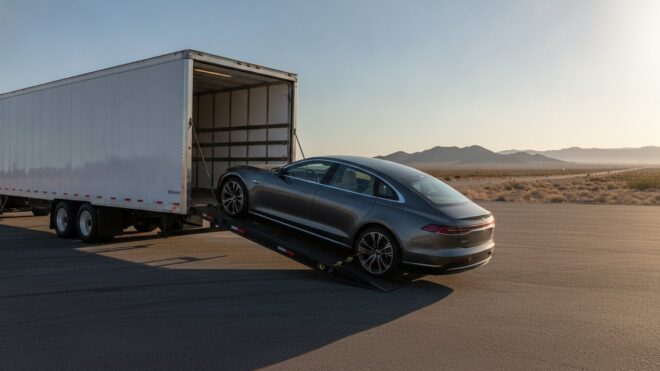
Standard ramps on open carriers often create steep angles that can scrape the undercarriage of sports cars, EVs, or modified vehicles. Enclosed trailers utilize hydraulic lift gates, which act like an elevator to keep the car perfectly level during the loading and unloading process. Maintaining this technology is expensive, but it’s a non-negotiable feature for modern vehicles with low ground clearance. If you are concerned about your car’s physical safety, exploring Enclosed Transport Services can provide the peace of mind you need to avoid costly underbody repairs.
Soft-Tie Down Systems and Interior Protection
While open carriers often use metal chains that can stress a car’s frame or scratch the wheels, enclosed services utilize soft-tie down systems. These nylon straps secure the vehicle by the tires rather than the chassis, preventing structural tension and finish damage. Premium providers also include interior protection like floor mats and seat covers to ensure the cabin remains spotless. These small details are integrated into the enclosed auto transport cost, ensuring that the car arrives in the same pristine condition it left, without the hidden “cleaning costs” associated with open-air transit.
Open vs. Enclosed: Comparing the Total Cost of Ownership
When you evaluate a quote for vehicle shipping, it’s easy to focus solely on the “sticker price.” This number, however, rarely reflects the total cost of ownership. While The Comprehensive Guide to Open Transport Car Shipping in 2026 explains why open carriers are a popular and budget-friendly choice, they come with externalized costs. A “cheap” shipping option often results in unforeseen expenses that narrow the gap between open and enclosed services. To understand the true enclosed auto transport cost, you must factor in the condition of the vehicle upon arrival and its long-term market value.
Consider the scenario of shipping a $50,000 SUV across the country. On an open carrier, that vehicle acts as a shield for everything the highway throws at it. By the time it reaches its destination, the “savings” from the lower shipping rate are often consumed by the need for immediate restoration. Choosing an enclosed trailer is a one-and-done expense that eliminates these variable post-delivery costs. It ensures the price you see on the quote is the final amount you spend to get your car home in showroom condition.
The Hidden Detailing Bill of Open Shipping
A 2,000-mile journey on an open rack exposes your paint to industrial fallout, tire rubber, and road salt. These contaminants don’t just wash off with a standard garden hose. They often require professional paint correction to remove etching and microscopic scratches. Industry professionals frequently report that a thorough detailing and stage-one paint correction can cost between $300 and $500. When you add this to the initial shipping price, the perceived savings of an open carrier begin to vanish. For a complete breakdown of what drives the open carrier transport cost and how those variables compare to enclosed pricing, reviewing the full logistics picture can help you make the most informed decision. Enclosed shipping keeps the vehicle in a climate-controlled, debris-free environment, delivering a car that is ready to drive immediately.
Resale Value Preservation
Vehicle depreciation is a significant factor in the total cost of ownership. “Road rash,” which consists of dozens of tiny rock chips on the hood and bumper, can significantly lower a vehicle’s trade-in value or private sale price. For those managing a lease return, these chips might even result in “excessive wear and tear” charges from the dealership. Maintaining original factory paint is essential for collectors and high-end car owners. By investing in the enclosed auto transport cost upfront, you are effectively buying a small insurance policy that protects your car’s equity and ensures its Carfax remains as clean as its finish.
Variables That Influence Your Enclosed Auto Transport Quote
Calculating the enclosed auto transport cost isn’t a matter of a fixed fee. Several logistical variables dictate the final number on your quote. Distance is the most obvious factor, but route density is equally influential. Carriers prefer routes where they can predictably find backhaul loads. High-traffic interstate corridors often see more competitive pricing because carriers can efficiently fill every spot in the trailer with minimal detour time. If you’re moving a car between major hubs, you’ll likely find more options than someone shipping to a remote rural location. For example, those planning car shipping Texas to Florida will find this a well-traveled corridor with competitive enclosed transport options.
The physical footprint of your vehicle also matters. Enclosed trailers have rigid dimensions, unlike the adjustable racks found on open carriers. A large SUV or a heavy electric vehicle takes up more “weight capacity” and physical space. Since EVs are notably heavier than internal combustion vehicles, they require more fuel to transport and can limit how many other cars the trailer can legally carry. If your car is non-operational, expect an additional fee for the specialized winching equipment and labor required to safely load it into a confined enclosed unit without the use of its own power.
Seasonal shifts create predictable price fluctuations. The peak season typically runs from June through September, where high demand can push prices 15% to 30% higher than off-season rates. Winter relocations for “snowbirds” also tighten capacity on north-to-south routes, particularly along the East Coast. Recent 2026 regulatory updates, such as the February enforcement of Electronic Logging Device (ELD) compliance, have also influenced carrier availability by ensuring only fully compliant, safe operators are on the road. These standards protect your vehicle but also mean that top-tier carriers are in high demand.
Distance and Fuel Dynamics in 2026
Fuel remains a volatile expense that directly impacts per-mile rates for heavy enclosed trailers. Regional transport over a few hundred miles often carries a higher per-mile cost because the time spent loading and unloading represents a larger portion of the trip. Cross-country hauls benefit from economies of scale, even though the total fuel surcharge is naturally higher. Popular interstate routes often see lower individual quotes because carriers can efficiently fill every spot in the trailer with minimal detour time.
Scheduling and Lead Time
Securing the best value requires foresight. Booking your shipment two to three weeks in advance allows dispatchers to slot your vehicle into the most efficient route, which helps stabilize your costs. If you need expedited service, you’ll pay a premium for the carrier to deviate from their standard schedule or prioritize your pickup. For a deeper look at the process, read The Professional Guide to Getting a Vehicle Shipping Quote in 2026. If you’re ready to see how these factors apply to your specific route, you can explore our Nationwide Transportation Services for a detailed consultation.
Securing the Best Value: Why AutoPlex Transport Leads the Industry
AutoPlex Transport Company approaches every shipment with the mindset of a protective partner. We understand that the enclosed auto transport cost is a significant investment, and we believe you deserve total clarity from the start. Unlike some providers who might surprise you with hidden fuel fees at delivery, we provide a transparent quote that covers the entire journey. This commitment to honesty helps build the foundation of trust required to handle your most valuable assets. Our nationwide network ensures that we can maintain reliable timelines regardless of the season, giving you a predictable experience from start to finish.
Our leadership in the industry is backed by a rigorous vetting process for our carrier partners. We only work with professionals who share our commitment to safety and high-value asset handling. Door-to-door convenience is a standard feature of our Nationwide Transportation Services, not a premium add-on. This means we manage the logistics from your specific pickup point to the final destination, removing the stress of terminal drop-offs. We take pride in being a seasoned industry veteran that understands the personal needs of our clients.
The AutoPlex Reassurance Policy
Our methodical approach begins with a comprehensive vehicle inspection at both pickup and delivery. We document every detail to ensure absolute accountability throughout the transit. Our customer support team acts as a helpful guide, providing steady updates and answering your logistical questions with professional confidence. We position ourselves as a reliable partner, offering a stable and experienced hand to manage your vehicle with the care it deserves. This proactive communication is designed to offer peace of mind throughout the entire logistics chain.
Ready to Protect Your Investment?
Moving from the inquiry stage to a scheduled shipment is a simple process. If you’ve been researching the enclosed auto transport cost, you now have the tools to see that this service is a calculated investment in your car’s future value. Our team is ready to help you move forward with a tailored quote that meets your specific requirements. For more information, please consult Enclosed Car Transport: The Definitive Buying Guide for 2026. We look forward to ensuring your vehicle arrives in showroom condition.
Protecting Your Vehicle’s Future and Your Peace of Mind
Deciding on the right shipping method involves looking beyond the initial quote to see the long-term value of your asset. You now understand that the enclosed auto transport cost is a calculated choice to avoid the hidden expenses of paint correction, road salt damage, and environmental wear. By prioritizing specialized equipment like hydraulic lift gates and soft-tie down systems, you ensure your vehicle remains in factory condition throughout its journey. This strategic decision protects both your car’s finish and its future resale value, proving that the highest level of protection is often the most economical path.
AutoPlex Transport Company provides a nationwide network of vetted carriers and includes comprehensive cargo insurance with every enclosed shipment. Our A+ rated customer support team is here to guide you through every interstate move with professional transparency and care. When you’re ready to secure your vehicle’s protection, we’re here to help you move forward with confidence. Get Your Instant Enclosed Transport Quote from AutoPlex Today and experience the reliability your car deserves. We look forward to being your trusted partner on the road ahead.
Frequently Asked Questions
Is enclosed auto transport worth the extra cost for a daily driver?
Choosing this method is often worth the investment for daily drivers because it prevents the accumulation of “road rash” and chemical etching from road salt. While often associated with luxury cars, the protection offered is a practical way to maintain the vehicle’s trade-in value. You also save the time and expense of a professional paint correction, which is frequently required after a long journey on an open rack.
How much more does enclosed car shipping cost compared to open transport?
The enclosed auto transport cost typically represents a 30% to 60% increase over standard open carrier rates. This premium reflects the lower vehicle capacity of the trailers and the specialized equipment used to secure the cargo. Since fewer vehicles share the operational expenses of the trip, the individual rate is higher. However, this cost is a fixed investment that eliminates the variable risks of environmental damage during transit. Understanding the full breakdown of open carrier transport cost in 2026 can help you accurately measure this price gap and determine which method delivers the best value for your specific vehicle.
Does enclosed transport provide better insurance coverage for my vehicle?
Yes, enclosed carriers generally carry significantly higher cargo insurance limits than their open-air counterparts. These policies are designed to cover high-value assets, often reaching into the millions of dollars. We ensure that our vetted partners maintain these rigorous standards to provide a complete safety net for your vehicle. This higher level of financial protection is a core component of the premium service you receive when choosing this option.
Can I ship personal items inside my car during enclosed transport to save money?
Most carriers discourage shipping personal items because they aren’t covered by the transporter’s cargo insurance. Additionally, extra weight can impact the trailer’s legal load limits and fuel efficiency. If a carrier does allow a small amount of luggage, it must typically be secured below the window line. It’s best to discuss specific requirements with your coordinator to ensure compliance with DOT regulations and maintain safety protocols.
What factors cause enclosed auto transport prices to fluctuate throughout the year?
Seasonal demand and fuel price volatility are the main factors that cause the enclosed auto transport cost to fluctuate. During the peak summer months and the winter “snowbird” season, carrier capacity tightens, which leads to higher rates on popular routes. Recent 2026 regulatory changes, such as stricter broker financial requirements and digital medical certifications for drivers, also influence market availability. These factors combine to create a dynamic pricing environment.
How do I know if a company is providing a “real” enclosed trailer or just a tarped open rack?
A legitimate enclosed service uses hard-sided or soft-sided trailers specifically engineered for full protection. You can verify this by asking about the equipment specs, such as the presence of hydraulic lift gates. Reputable providers will be transparent about their fleet and vetting processes. Avoid “curtain-side” options if you require total isolation from the elements, as these don’t always offer the same seal as a hard-sided unit.
What is the average timeline for nationwide enclosed vehicle delivery in 2026?
For a cross-country move, the average timeline is typically seven to ten days once the vehicle is loaded. Regional shipments over shorter distances might take between three and five days. These timelines account for mandatory driver rest periods and 2026 ELD compliance standards. While enclosed transport sometimes takes slightly longer due to lower route density, the focus remains on the safe and methodical delivery of your asset.
Are there specific vehicle types that MUST be shipped via enclosed carrier?
Vehicles with low ground clearance, such as modern sports cars or modified sedans, must use enclosed trailers equipped with hydraulic lift gates. Electric vehicles also benefit greatly from this protection to shield their sensitive underbody battery arrays from road debris. Additionally, any car with a matte finish or custom wrap should avoid open carriers, as these surfaces are notoriously difficult to repair if chipped or stained during transit. Owners planning car shipping Texas to Florida with these vehicle types will find enclosed transport especially valuable given the long interstate distance involved.