Why does shipping a full-size pickup often feel like a different industry entirely compared to transporting a standard sedan? If you’ve been researching the cost to ship a truck, you’ve likely noticed that standard car shipping calculators often fail to account for the actual physical footprint of your vehicle. It’s frustrating to receive an initial estimate only to have it balloon once a carrier realizes your truck has a lift kit, oversized tires, or significant curb weight. We understand that your truck is a high-value asset that requires specialized handling and transparent communication rather than vague estimates that change at the last minute.
This guide provides a professional look at the logistical realities of 2026, showing you exactly how to secure a binding, all-inclusive quote that protects your investment. You’ll learn how to navigate common industry pitfalls like hidden height fees and unreliable carrier networks that aren’t equipped for heavy pickups. We will break down the impact of 2026 fuel surcharges and vehicle dimensions, ensuring you have the confidence to choose a reliable partner for your nationwide transport needs. By understanding these technical factors, you can move forward with a clear pickup and delivery timeline.
Key Takeaways
- Understand how vehicle dimensions and weight specifically influence the cost to ship a truck, often resulting in rates 20-40% higher than standard sedans.
- Learn to account for 2026 fuel price volatility and route geography when calculating your total transportation budget.
- Determine whether open carrier car transportation or enclosed services provide the right level of protection for your specific truck model.
- Protect your investment by verifying a provider’s DOT license and identifying hidden fees before committing to a quote.
- Discover how methodical logistics and route stability ensure a predictable timeline for your interstate shipment.
Breaking Down the Cost to Ship a Truck: Why Weight and Dimensions Matter
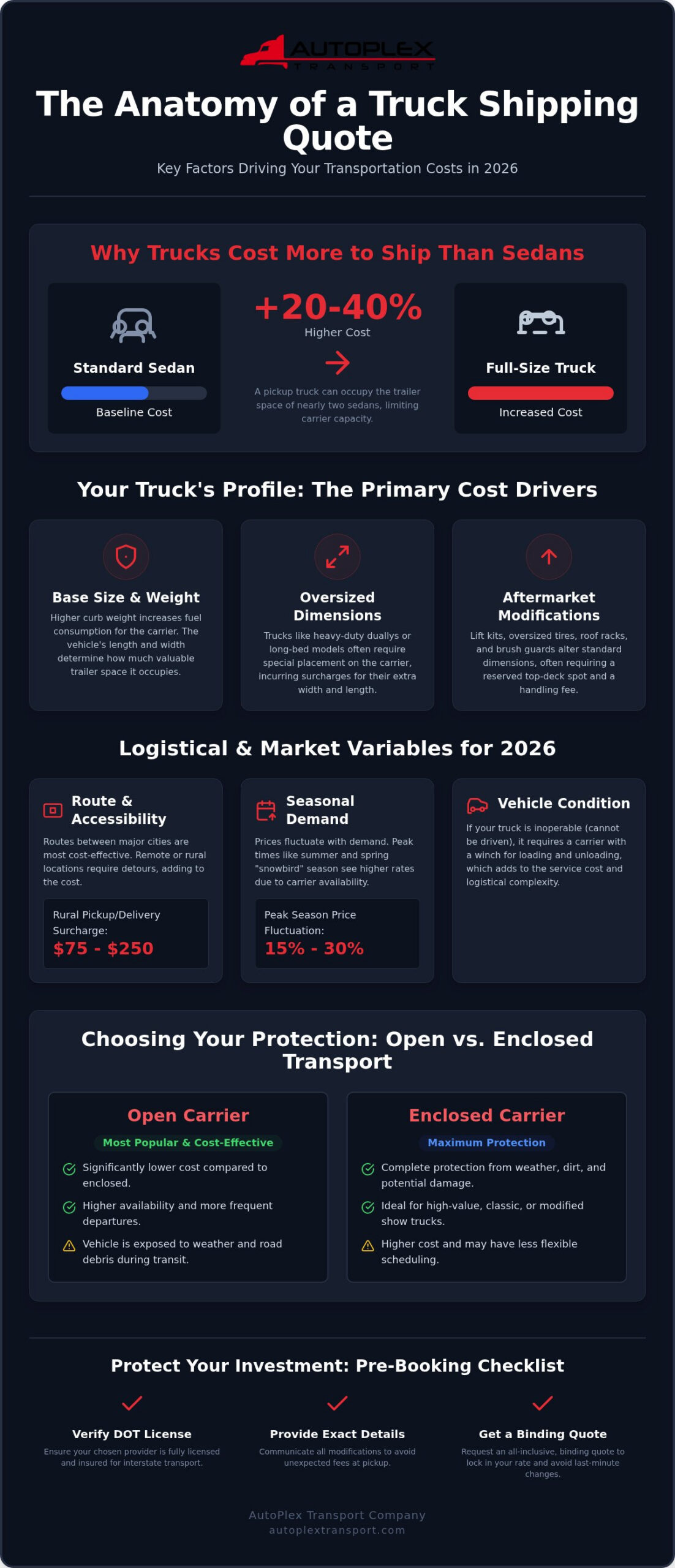
The cost to ship a truck is a comprehensive estimate calculated based on the vehicle’s curb weight, physical dimensions, and the specific logistics of the chosen route. Unlike shipping a compact car, transporting a truck involves managing a much larger physical footprint. On average, you can expect the cost to ship a truck to be roughly 20-40% higher than transporting a standard sedan. This price difference exists because a large pickup can occupy the trailer space of two smaller vehicles, limiting the carrier’s total capacity for other loads. Understanding the role of an auto transport broker is helpful here, as these professionals coordinate with carriers to find equipment capable of handling these larger dimensions. Ultimately, a truck shipping quote serves as a binding logistical agreement between the carrier and the owner, ensuring all parties understand the requirements before the vehicle is loaded.
Standard Pickups vs. Oversized Trucks
Curb weight plays a significant role in determining your final price. Heavier vehicles increase a carrier’s fuel consumption and can push a trailer close to its legal gross weight limit. While a mid-size truck is relatively straightforward to move, a heavy-duty dually presents unique challenges. The extra width of dually fenders and the increased length of long-bed models require precise measurements. If a truck exceeds standard width or height, it may require a specialized trailer or a specific position on a standard carrier to avoid clearance issues. This is why providing exact make and model details is the first step in securing an accurate quote.
How Vehicle Modifications Impact Your Quote
Aftermarket modifications often lead to an “oversized” surcharge because they change how a vehicle interacts with the transport equipment. Lift kits, roof racks, and heavy-duty bumpers don’t just add weight; they alter the vehicle’s center of gravity and clearance. For example, a lifted truck might not fit on the lower deck of an open carrier, forcing the dispatcher to reserve a specific spot on the top deck. This is why non-standard dimensions require professional dispatcher oversight. Automated online calculators often miss these details, leading to price hikes at the point of pickup. By providing exact measurements of your modifications, you ensure the quote remains accurate and the carrier arrives with the correct equipment.
- Lift Kits: Increases height and may require specialized ramps.
- Oversized Tires: Adds width and weight, potentially requiring more trailer space.
- Brush Guards and Winches: Increases the total length of the vehicle.
Key Variables Influencing 2026 Truck Transportation Rates
Understanding the variables that dictate the cost to ship a truck requires looking beyond simple mileage. While distance is a primary factor, the specific geography of your route and the current economic climate play equally significant roles. For example, seasonal demand shifts can lead to price fluctuations of 15 to 30 percent during peak periods, such as the summer months or the spring snowbird season. Additionally, the physical condition of the truck matters. If a vehicle is inoperable and cannot be driven onto the trailer, it requires specialized winching equipment, which adds to the logistical complexity and the final price. Securing a quote from a specialist in nationwide transportation services helps you lock in these variables early and avoid unexpected adjustments.
Distance and Route Accessibility
Routes between major metropolitan hubs offer the most competitive pricing because carrier availability is highest in these areas. Carriers prefer staying on high volume corridors to minimize “deadhead” time, which refers to miles driven with an empty trailer. If your pickup or delivery location is in a remote rural area, carriers must deviate from their primary route. This detour typically adds between $75 and $250 to the total cost. Proximity to major interstates lowers the logistical burden, allowing drivers to maintain their schedules and reduce fuel consumption. Carriers must also adhere to strict FMCSA transportation regulations regarding driving hours, so efficient routes are always prioritized in their pricing models.
Fuel Surcharges and Economic Trends in 2026
Fuel price volatility remains a significant factor in 2026 transportation rates. Most professional quotes now include a tiered fuel surcharge to provide transparency. If diesel fuel remains under $3.50 per gallon, the surcharge typically ranges from 8 to 12 percent of the base rate. However, if prices climb between $3.50 and $4.50, that surcharge moves to 12 to 18 percent. Prices exceeding $4.50 per gallon can result in surcharges of 18 to 25 percent. These tiers protect both the carrier and the customer from sudden market shifts. Beyond fuel, the industry continues to manage driver shortages and inflationary pressure on maintenance costs. This makes binding quotes essential; they ensure that the price you are quoted is the price you pay, protecting you against mid-transit hikes caused by shifting economic trends. By working with a reliable partner, you gain a clear understanding of how these nationwide factors influence your specific shipment.
Open vs. Enclosed Transport: Choosing the Right Carrier for Your Truck
Deciding between open and enclosed transport is a critical step that directly impacts the final cost to ship a truck. For the vast majority of truck owners, open transport is the logical choice due to its availability and cost-effectiveness. On average, enclosed transport carries a premium of 40% to 60% over open-air options. This price gap reflects the specialized equipment and lower vehicle capacity of enclosed trailers. While the extra protection is valuable for certain assets, most modern pickups are designed to withstand the elements, making the open-air method the industry standard for everyday transport.
The Efficiency of Open Carrier Truck Shipping
Roughly 90% of nationwide truck shipments utilize open carrier car transportation. This preference isn’t just about the lower cost to ship a truck; it’s also about physical practicality. Open trailers offer significantly more flexibility for taller vehicles, oversized tires, and wide wheelbases. Since these trailers don’t have rigid walls or ceilings, they can accommodate modified pickups that simply wouldn’t fit inside a standard enclosed container. For more details on this process, you can explore The Comprehensive Guide to Open Transport Car Shipping in 2026. Carriers also run these routes with higher frequency, which means shorter wait times for pickup and delivery.
When to Pay More for Enclosed Truck Transport
There are specific scenarios where the investment in enclosed transport is necessary. If you’re moving a classic 1950s pickup or a high-end custom show truck, protecting the paint from road debris and weather is a top priority. However, you must verify the physical limitations of the trailer first. Many modern heavy-duty trucks are too tall or too wide for standard enclosed units. If your vehicle has a significant lift or dually wheels, a professional dispatcher must confirm clearance before you book. For those with luxury or vintage assets, Enclosed Car Transport: The Definitive Buying Guide for 2026 provides a thorough breakdown of what to expect during the specialized loading process. This method offers peace of mind for high-value assets that require a sheltered environment during transit.
How to Evaluate and Compare Truck Shipping Quotes Accurately
Comparing estimates for your vehicle transport requires a methodical approach that looks beyond the bottom line. When you’re determining the cost to ship a truck, you must ensure that every quote accounts for the specific logistical requirements of a heavy vehicle. A legitimate quote must balance cost with comprehensive insurance to provide true peace of mind. To evaluate your options effectively, follow these four professional steps:
- Step 1: Verify Licensing. Confirm the company’s DOT and MC license numbers through the federal database to ensure they have active authority to operate nationwide.
- Step 2: Identify Hidden Fees. Check if the price is truly all-inclusive or if the company adds surcharges for oversized dimensions or weight after the initial booking.
- Step 3: Analyze Insurance Limits. Verify that the carrier’s policy limits are high enough to cover the full replacement value of a heavy-duty asset.
- Step 4: Review Price Consistency. Look for recent feedback from other truck owners to see if the final price matched the original estimate.
Red Flags in Low-Cost Truck Shipping Quotes
Quotes that fall significantly below the market average often indicate a “bait and switch” tactic. In these scenarios, a company provides an artificially low estimate to secure your booking, only to demand more money once a carrier is actually assigned. You should also be wary of lead generators. These sites don’t actually ship vehicles; they simply sell your contact information to unvetted carriers. Many of these low-cost options lack the specialized equipment, such as reinforced ramps or heavy-duty trailers, required to safely haul a full-size pickup. If a deal feels too good to be true, it likely lacks the logistical stability needed for a successful shipment.
Verifying Insurance and Liability Coverage
A professional cost to ship a truck quote should always include a clear breakdown of liability. Before the driver loads your vehicle, you’ll sign a Bill of Lading. This document is a legal record that must detail the truck’s condition and any pre-existing damage. You have the right to request a Certificate of Insurance (COI) directly from the carrier to verify their coverage levels. To make this process smoother, you can follow How to Prepare a Car for Transport: The 2026 Essential Checklist to ensure your vehicle is ready for inspection. For a transparent and reliable experience, request a binding quote from AutoPlex Transport Company today.
Securing a Reliable Nationwide Quote with AutoPlex Transport
AutoPlex Transport approaches every vehicle shipment as a unique logistical puzzle that requires precision and experience. When we calculate the cost to ship a truck, we look beyond basic mileage to evaluate the specific height, weight, and modification requirements of your pickup. This detail-oriented methodology ensures that the assigned carrier is fully equipped for your vehicle’s physical footprint. By maintaining a robust network for interstate vehicle transportation, we provide a level of route stability that smaller brokers often struggle to match. Our commitment to door 2 door transportation brings professional logistics directly to your driveway, offering ultimate convenience for owners of heavy-duty assets.
Our Methodical Quoting Process for Trucks
Our logistics experts don’t rely on automated guesses or generic calculators. We analyze real-world market data from 2026, including current diesel price tiers and regional carrier density, to provide a steady and confident price. This methodical process removes the stress of “hidden fees” for the customer. As a seasoned industry veteran, AutoPlex understands that nationwide transportation services require constant oversight. Our dispatchers stay in direct communication with carriers to manage every mile of your truck’s journey. This ensures that the quote you receive reflects the actual operational costs of a safe and reliable delivery, protecting you from the price hikes common with unvetted lead generators.
Next Steps: Moving from Quote to Booking
Moving from a quote to a confirmed booking is a straightforward and transparent process. Once you’ve reviewed your binding estimate, our team works with you to finalize pickup and delivery dates that align with your schedule. Since trucks often require specific positions on a trailer to maintain clearance, securing your spot early is essential for maintaining a predictable timeline. During the pickup of an oversized vehicle, the driver will perform a detailed inspection as part of the Bill of Lading process we discussed earlier. We guide you through these technical steps so you know exactly what to expect when the carrier arrives at your location. Request your professional auto transport quote from AutoPlex today to begin your journey with a partner you can trust.
Take the Next Step Toward a Secure Truck Shipment
Managing the logistical variables of 2026 requires more than just a basic calculator. As we have explored, the physical footprint of your vehicle and current economic trends are the primary drivers of the cost to ship a truck. By prioritizing transparency and verifying carrier authority, you can avoid the common pitfalls of hidden fees and unreliable service. It’s a significant commitment to move a heavy-duty asset, but the process remains manageable when you have a partner who values methodical planning and clear communication.
AutoPlex Transport is ready to handle these complexities for you. We provide nationwide door-to-door service using fully insured and licensed carriers to ensure your peace of mind. Our team is committed to transparent pricing with no hidden fees, giving you the confidence to plan your budget accurately. Whether you are moving a standard pickup or a modified heavy-duty truck, we offer the expertise needed for a smooth transition. Get your accurate truck shipping quote from AutoPlex today and experience a professional approach to vehicle logistics. We look forward to supporting your transport needs with care and reliability.
Frequently Asked Questions
How much does it cost to ship a truck per mile in 2026?
Per-mile rates in 2026 vary significantly based on the total distance of the route. For long-distance cross-country trips exceeding 2,500 miles, the cost typically averages between $0.45 and $0.65 per mile. Shorter regional shipments under 500 miles often see rates climb above $2.00 per mile because of the fixed logistical costs involved in loading and unloading. When calculating the total cost to ship a truck, these per-mile averages serve as a helpful baseline for your budget.
Does my truck shipping quote include door-to-door service?
Most comprehensive quotes from professional providers include door-to-door service as a standard feature. This means the carrier will pick up and deliver your truck as close to your specified addresses as legally and safely possible. In some cases, narrow residential streets or low-hanging trees may require meeting the driver at a nearby large parking lot. This service eliminates the need for you to drop off or pick up your vehicle at a distant terminal.
Will my quote change if my truck has a lift kit or oversized tires?
Yes, any modifications that alter the standard manufacturer dimensions of your vehicle will impact the final price. Lift kits, roof racks, and oversized tires increase the total height and width of the load, which may require a specific spot on the trailer. Carriers often apply a surcharge for these modifications because they limit the number of other vehicles that can fit on the same trailer. Providing exact measurements ensures your quote remains binding and accurate.
How long is a truck transport quote valid for?
Truck transport quotes are generally valid for a period of 7 to 14 days, though this can vary based on market volatility. Because the cost to ship a truck is heavily influenced by fluctuating diesel prices and seasonal demand, carriers cannot hold pricing indefinitely. If you receive a quote during a peak season or a period of high fuel surcharges, it’s best to book within the specified window to lock in the current logistical rate.
Is insurance included in the initial vehicle shipping quote?
A legitimate shipping quote from a professional company must include basic cargo insurance coverage. This insurance protects your asset against damage during the loading, unloading, and transit phases. It’s always a professional practice to ask for a Certificate of Insurance (COI) to verify the policy limits and ensure they cover the full market value of your truck. You should also confirm that there are no hidden deductibles that you’d be responsible for paying.
Are there extra fees for shipping an inoperable truck?
Shipping an inoperable truck does incur additional fees because it requires specialized equipment. If a truck cannot be driven onto the trailer, the carrier must use a winch or a forklift to load and unload the vehicle safely. This process takes more time and labor, which typically adds between $100 and $200 to the base transport rate. You must inform your logistics provider of the vehicle’s condition upfront to ensure the carrier arrives prepared.
Why is shipping a dually truck more expensive than a standard pickup?
Dually trucks are more expensive to ship because their increased width and weight consume more trailer capacity. A standard pickup truck fits within a single car spot, but a dually’s flared fenders often encroach on adjacent space or require a specialized trailer configuration. Additionally, the extra weight of a heavy-duty dually increases the carrier’s fuel consumption. These logistical factors mean carriers must charge a higher rate to offset the reduced space available for other vehicles.
Do I need to pay a deposit when I receive my truck shipping quote?
While some companies may request a small deposit at the time of booking, you shouldn’t be required to pay the full amount upfront. In many cases, a deposit is only processed once a carrier has been officially assigned to your route and a pickup date is scheduled. This ensures that the logistics provider is actively working on your shipment. Always review the terms and conditions to confirm that any deposit paid is refundable if the company fails to assign a carrier.