
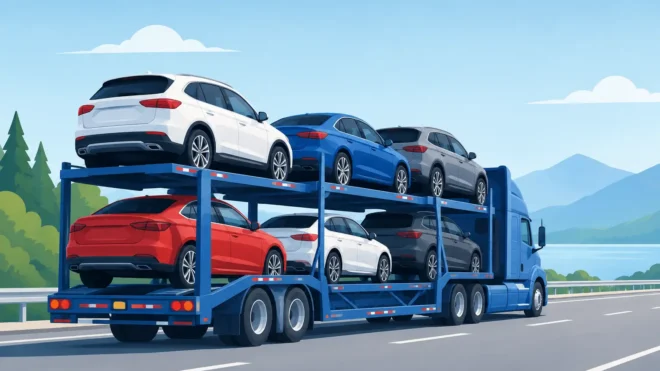
A cross-country drive can add thousands of miles, multiple hotel stops, and unnecessary wear to your vehicle. Open carrier shipping offers a practical alternative: your car is loaded onto a professional multi-vehicle trailer and transported to its destination while you focus on your move, purchase, or schedule.
For most standard vehicles, it is the most available and cost-effective way to ship nationwide. It is also the type of transport you see every day on highways, carrying new vehicles from manufacturers to dealerships. Understanding how it works can help you book with confidence and choose the service level that fits your vehicle.
What Is Open Carrier Shipping?
Open carrier shipping means your vehicle travels on an open-air trailer, usually alongside several other cars, trucks, or SUVs. The trailer is not fully enclosed, so vehicles are exposed to normal road and weather conditions during transit.
That exposure is the main difference between an open carrier and an enclosed trailer. An enclosed trailer provides more protection from weather and road debris, but it generally costs more and has less frequent availability. Open transport is designed for dependable, efficient movement of everyday vehicles, including sedans, SUVs, pickups, family cars, and many dealership vehicles.
An open trailer may be a single-level or double-level carrier. Your transport coordinator considers the vehicle’s size, ground clearance, route, and pickup location when arranging the right equipment. Larger trucks and SUVs may require specific placement, while lowered or modified vehicles may need additional loading care.
Why Many Customers Choose an Open Carrier
Cost is often the first reason customers choose open transport. Because one carrier can move multiple vehicles on the same route, the operating costs are shared. This typically makes open shipping more affordable than enclosed transport for a comparable distance.
Availability matters, too. Open carriers run on major routes throughout the country every day. That broader capacity can make scheduling easier, particularly for relocation moves, online vehicle purchases, college moves, and seasonal travel. It can also be a smart choice for dealerships moving several vehicles at once.
Open shipping does not mean casual handling. Professional carriers use secure loading procedures, vehicle inspections, and tie-down systems designed to keep vehicles stable in transit. Your vehicle is documented before loading and again at delivery, giving you a clear record of its condition at each stage.
The trade-off is straightforward: your vehicle is protected by professional equipment and experienced handling, but not by an enclosed trailer. Normal dust, rain, snow, or road grime can reach the vehicle. For a daily driver or standard vehicle, that is usually an acceptable trade-off. For a rare collectible, exotic vehicle, or freshly restored classic, enclosed transport may be the better fit.
How the Open Carrier Process Works
Shipping a vehicle should not require complicated logistics on your end. Once you request a quote, the process begins with the details that affect pricing and scheduling: the year, make, and model; pickup and delivery locations; vehicle condition; timing; and any special requirements.
Pickup Planning and Vehicle Inspection
After your shipment is scheduled, you receive pickup coordination based on the carrier’s route and availability. Door-to-door service means the carrier will get as close to your pickup address as safely and legally possible. Because open carriers are large commercial trucks, a narrow residential street, low tree branches, tight turns, or local restrictions may require meeting at a nearby wide street, parking lot, or shopping center.
At pickup, the driver performs a condition inspection and records visible marks, dents, or scratches on a bill of lading. Take your own dated photos as well. This is a simple, useful step that gives you a clear baseline before the vehicle is loaded.
Loading and Transit
The driver loads the vehicle onto the trailer, secures it, and begins the planned route. Transit time depends on the distance, route demand, weather, traffic, required driver rest periods, and other scheduled deliveries. A cross-country shipment naturally takes longer than a move between neighboring states.
A reliable transport experience includes realistic communication rather than promises that ignore road conditions. If timing is especially important, ask about expedited options when requesting your quote. Not every route can support the same pickup or delivery window, so sharing your deadline early helps your advisor recommend the right plan.
Delivery and Final Check
Before delivery, the driver or transport team coordinates the final handoff. Be available to inspect the vehicle in daylight whenever possible. Compare its condition with the pickup inspection, note any concerns before signing paperwork, and make sure you receive the completed delivery documentation.
Preparing Your Vehicle for Open Transport
A few simple steps make pickup safer and easier. You do not need to perform major maintenance, but the vehicle should be ready to start, steer, brake, and roll unless you have arranged transport for an inoperable vehicle.
Before the carrier arrives, remove personal belongings and valuable items from the cabin and trunk. Transport regulations and weight limits can restrict what may travel inside a vehicle. Keep the fuel level at roughly one-quarter tank, which is enough for loading while avoiding unnecessary weight.
Also check the battery, tire pressure, and fluid levels. Fold in mirrors, remove loose exterior accessories, and tell your coordinator about alarms, modifications, low ground clearance, leaks, or mechanical issues. Accurate information helps the carrier bring the proper equipment and prevents avoidable delays.
If you are shipping a convertible, secure the top. If you have an oversized truck, roof rack, or custom equipment, provide those dimensions when booking. Details that seem small can affect trailer placement and price.
When an Open Carrier Is the Best Choice
Open transport is usually the right choice when you are shipping a standard vehicle and want dependable service at a competitive rate. It works well for families relocating to another state, snowbirds moving between seasonal homes, military or professional moves, students, and buyers who have purchased a vehicle from out of state.
It is also a practical solution for dealerships, auctions, and fleet customers that need efficient multi-vehicle transportation. If your priority is reducing road miles, avoiding a long drive, and receiving your vehicle through a professionally coordinated process, open shipping meets that need well.
The answer changes when the vehicle’s value, condition, or protection needs are unusually high. Consider enclosed transport if the vehicle is a collector car, luxury model, exotic vehicle, antique, show car, or a newly restored vehicle that should avoid outdoor exposure. Enclosed shipping can also make sense when extra privacy or added protection is worth the higher price.
What Affects Open Carrier Shipping Costs?
There is no single flat price for every shipment because each route has its own demand and operating conditions. Distance is a major factor, but it is not the only one. A short route to a remote area can cost more than a longer shipment between two major cities with frequent carrier traffic.
Vehicle size and weight affect the quote, especially for large SUVs, heavy-duty pickups, and oversized vehicles. Inoperable vehicles, difficult pickup locations, seasonal demand, rapid scheduling needs, and rural delivery points can also affect the final price.
The best quote is not simply the lowest number. It should reflect the vehicle, route, service type, and realistic timing. Ask what is included, confirm whether your vehicle has any special requirements, and make sure the pickup and delivery plan works for your schedule. Clear details upfront lead to a smoother shipment.
Get the Right Transport Plan for Your Vehicle
Open carrier shipping is a proven way to move a vehicle across the country without putting the miles, fuel costs, and stress of a long road trip on your shoulders. It offers a strong balance of affordability, availability, and professional handling for most cars, trucks, and SUVs.
AutoPlex Transport can help you compare your options based on your vehicle, route, timing, and protection needs. Request a quote or speak with a transport advisor before your move so your pickup plan is clear, your vehicle is properly prepared, and your delivery can stay as worry-free as possible.
