
Why does the same interstate route yield five different quotes from five different companies? It’s a frustrating reality for many vehicle owners who find that the open car transport cost they were initially promised doesn’t always match the final invoice. You’ve likely felt that sting of uncertainty, wondering if a “low-ball” quote is simply a trap for future surcharges or if your vehicle’s safety is being compromised for a cheaper rate.
We understand that your car is a significant investment, and you deserve a transparent look at how logistics professionals actually price these moves. In this 2026 guide, we’ll demystify the complex variables that dictate national rates, from seasonal demand shifts to the specific mechanics of door-to-door delivery. You’ll learn exactly how to build a realistic budget and how to identify a carrier that prioritizes your vehicle’s security over a quick profit. This overview provides the clarity you need to secure a reliable transport solution without the fear of hidden fees.
Key Takeaways
- Understand why open carrier transport remains the industry standard for cost-efficiency by leveraging multi-car trailer capacity for nationwide moves.
- Identify the core logistical drivers that determine your open car transport cost, including total distance, vehicle weight, and specific dimensions.
- Learn to account for variables beyond the base quote, such as fluctuating fuel surcharges and the specifics of comprehensive insurance coverage.
- Discover strategic booking windows and vehicle preparation tips that can help you secure more competitive rates for interstate transportation.
- Recognize the long-term value of choosing transparent door-to-door logistics over “low-ball” broker quotes that often lead to hidden fees.
Defining Open Car Transport and Its Cost Efficiency
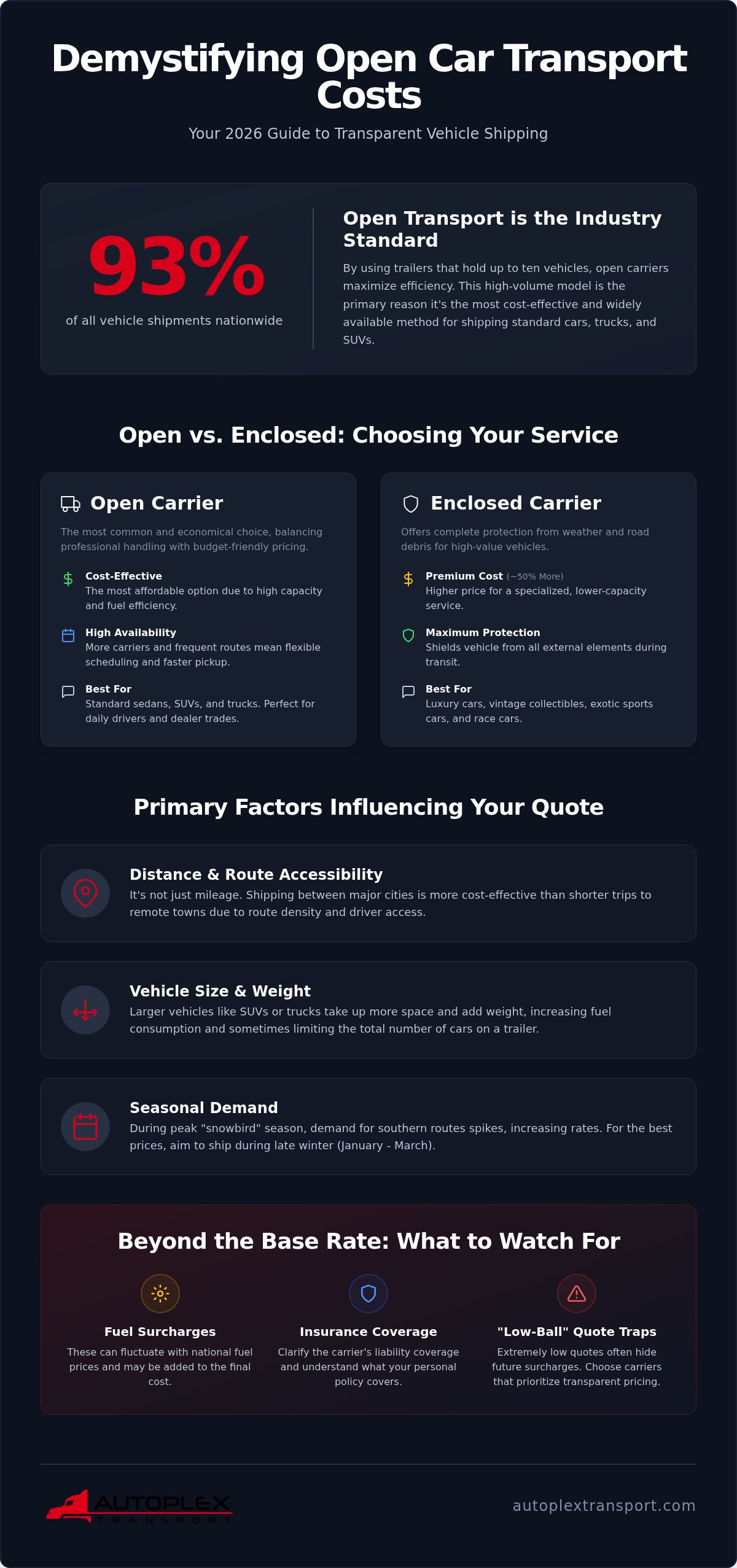
Open transport is the backbone of the vehicle logistics industry. It accounts for approximately 93% of all vehicle shipments nationwide. By using long, two-level trailers that can hold up to ten vehicles at once, carriers maximize efficiency on every trip. This high volume is the primary reason why the open car transport cost remains significantly lower than other specialized methods. For most daily drivers, this shared-space model provides the most logical balance between professional handling and budget management.
The Mechanics of Open-Air Shipping
The design of an open or enclosed car carrier dictates much of the pricing structure. Open trailers are structurally simpler, lacking the heavy walls and hydraulic lift gates required for enclosed units. This reduced weight allows for better fuel efficiency across the fleet, a savings that’s passed directly to the consumer. Additionally, every carrier operating in the United States must adhere to strict safety standards set by the Federal Motor Carrier Safety Administration (FMCSA). These regulations ensure that even though your vehicle is exposed to the elements, it’s secured using professional-grade tie-downs and handled by licensed experts who understand the physics of multi-car distribution.
When to Choose Open Carrier Over Enclosed
Deciding between transport methods often comes down to a simple assessment of your vehicle’s needs versus your budget. Enclosed shipping typically costs about 50% more than open carrier services. While that extra protection is vital for vintage collectibles or high-end luxury cars, modern automotive finishes are remarkably resilient. Standard sedans, SUVs, and trucks are designed to withstand road debris and weather every day. Choosing an open carrier doesn’t mean compromising on safety; it means you aren’t paying for a level of environmental shielding that your vehicle doesn’t strictly require.
Availability also plays a major role in your logistical planning. Because open carriers are the industry standard, they’re much easier to schedule. You’ll find more frequent routes and flexible pickup windows across the national interstate network. This high volume of active trailers creates a competitive environment that keeps the open car transport cost stable for consumers. When you prioritize a reliable, door-to-door service for a standard vehicle, the open-air method is almost always the most pragmatic choice.
Primary Factors Influencing Your Open Carrier Shipping Quote
Calculating the open car transport cost for a move involves more than a simple mileage calculation. While distance is a foundational element, the specific logistics of your route and the characteristics of your vehicle play equally significant roles. Professional carriers look at how a shipment fits into their existing schedule and trailer capacity to determine a fair rate. Understanding these drivers helps you avoid confusion when comparing quotes from different providers.
Distance vs. Route Accessibility
It’s a common misconception that every mile costs the same. Shipping between major metropolitan hubs is often more cost-effective than a shorter trip to a remote rural town. This is due to route density. Carriers prefer staying on major interstate corridors where they can easily pick up and drop off multiple vehicles. When a driver has to deviate from these high-traffic paths, they consume more fuel and time, which increases the quote. For those concerned about their consumer rights in auto transport, it’s helpful to know that while door-to-door service adds a layer of convenience, it requires a trailer to navigate local streets that may have weight or height restrictions.
Seasonal shifts also create pricing fluctuations. During the “snowbird” season, demand for routes toward warmer climates spikes significantly. This causes rates to rise due to limited trailer space. Conversely, shipping during the late winter months, specifically between January and March, often yields more competitive pricing. If you’re looking for a reliable partner to navigate these variables, exploring interstate vehicle transportation options with an established carrier can provide the stability you need.
Vehicle Specifications and Equipment Needs
The physical attributes of your vehicle are just as important as the destination. Larger vehicles like full-sized SUVs or pickup trucks occupy more real estate on a trailer and add significant weight. This increased mass directly impacts the carrier’s fuel consumption and may even prevent them from carrying a full load of ten cars due to federal weight limits. Consequently, heavier vehicles naturally command a higher rate than compact sedans. Your open car transport cost will also reflect any specialized handling requirements.
- Inoperable Vehicles: If a car doesn’t run, it requires specialized equipment like a winch to load and unload, adding to the logistical complexity.
- Modified Vehicles: Lift kits, large tires, or low-profile spoilers can change how a vehicle must be positioned on the rack, sometimes requiring a specific spot on the trailer.
By providing accurate details about your car’s condition and dimensions, you ensure that the quote you receive is realistic and free from last-minute adjustments at the time of pickup.
Beyond the Base Rate: Recognizing Additional Charges and Fees
A transparent quote is only the beginning of a successful transport experience. While your initial estimate covers the core logistics of moving a vehicle from point A to point B, several secondary factors can influence the final open car transport cost. In the 2026 logistical landscape, fuel surcharges remain a dynamic component of the total price. These fees typically account for 8% to 12% of the overall cost, fluctuating alongside the global energy market. Understanding these variables upfront prevents the “sticker shock” that often occurs when working with less transparent brokers.
Insurance and Liability Protection
Safety is the cornerstone of professional transport, and verifying your coverage is a critical step before any vehicle is loaded onto a trailer. Most reputable carriers include a baseline of comprehensive insurance within their standard fees, but it’s vital to confirm the specific liability limits. A recent Forbes Advisor analysis of car shipping costs highlights that while standard coverage is usually sufficient for daily drivers, high-value assets might require an additional insurance rider.
The claims process itself relies heavily on the Bill of Lading. The Bill of Lading is the primary legal contract between shipper and carrier. This document serves as your official receipt and a detailed record of the vehicle’s condition at both pickup and delivery. You should never sign this document without a thorough inspection, as it’s the primary evidence used if a claim needs to be filed. Ensuring this paperwork is handled correctly is the best way to protect your investment throughout the interstate journey.
Timing and Delivery Windows
Your schedule has a direct impact on the final invoice. Flexibility is one of the most effective tools for reducing your open car transport cost. By providing a 3 to 5 day pickup window, you allow carriers to optimize their routes, which can result in savings of 10% to 20% compared to rigid scheduling. Conversely, if you require an expedited pickup or a “First-Off” delivery request, you should expect to pay a premium for that prioritized trailer space.
Planning around the 2026 peak seasons is also essential for budget management. The summer months from May through August see the highest demand due to national relocations, while the fall “snowbird” migration creates surge pricing on routes toward warmer climates. For the most competitive rates, aim for the shipping window between January and March, when demand typically hits its annual low. Balancing your timing needs with these market trends ensures you secure a reliable service without overpaying for convenience.
Strategic Planning: How to Secure the Most Competitive Shipping Rates
Securing a competitive rate requires a proactive approach. While market conditions fluctuate, your level of preparation remains a constant you can control. Booking your shipment at least two to four weeks in advance is the industry sweet spot. This lead time gives carriers the opportunity to fit your vehicle into an optimized route, often resulting in a more favorable open car transport cost. Last-minute bookings often force you into whatever trailer space is left, which rarely works in your financial favor.
Preparing Your Vehicle for Transport
Carriers operate under strict federal weight limits. Every extra pound in your trunk increases the total weight of the trailer, which can lead to higher fuel consumption and potential fines for the driver. To avoid weight-related surcharges, you should remove all personal belongings from the interior. Additionally, keeping your fuel level at approximately a quarter tank is the standard recommendation. It’s enough for loading and unloading but light enough to keep the carrier’s load manageable. For a full breakdown of these steps, see our How to prepare a car for transport guide.
Comparing Quotes Methodically
When you begin gathering quotes, the lowest price on the list is often a red flag. Many brokers use “low-ball” estimates to capture your attention, only to raise the price later when they can’t find a carrier willing to take the job for that amount. A legitimate quote should be all-inclusive, covering insurance and fuel surcharges. This transparency is the only way to accurately predict your final open car transport cost. Always verify a company’s Department of Transportation (DOT) and Motor Carrier (MC) numbers to ensure they’re authorized to operate.
Identifying red flags in contracts often starts with the deposit. Legitimate carriers typically don’t require a payment until a driver is officially assigned to your order. If a company demands a large upfront fee before providing carrier details, it’s a sign they may be more interested in your commission than your vehicle’s safe arrival. Working with established national providers ensures you’re dealing with a team that owns their logistics process and values their reputation.
Choosing an experienced partner is the best way to ensure a smooth, professional experience. If you’re ready to experience a transparent approach to logistics, you can start by exploring our nationwide transportation services to see how we prioritize your vehicle’s safety.
Why AutoPlex Transport Provides the Best Value for Open Shipping
Choosing a partner for vehicle logistics is about more than finding the lowest number on a screen. It’s about finding a company that understands the intricacies of the national infrastructure and prioritizes the safety of your asset. We position ourselves as a dedicated logistics partner rather than a distant broker. We focus on providing a open car transport cost that is both transparent and all-inclusive. Our nationwide interstate transportation network allows us to maintain consistent service quality across the country, ensuring your vehicle is handled by professionals from pickup to delivery.
Our standard service model includes door-to-door transportation as a foundational offering. We believe that you shouldn’t have to navigate busy shipping terminals or arrange secondary transport to get your car home. Instead, our expert coordinators manage every milestone of the journey. They work with you to identify accessible pickup and delivery points that accommodate large multi-car trailers while respecting local regulations. This hands-on management style ensures that logistical hurdles are solved before they become delays.
The AutoPlex Commitment to Safety
Trust in this industry is built through rigorous standards and clear communication. Every carrier within our open transport network undergoes a comprehensive vetting process. We don’t just check for active authority; we verify insurance certificates, historical safety ratings, and driver performance. This meticulous approach ensures that your open car transport cost covers more than just fuel; it covers the peace of mind that comes with professional handling. For a deeper look at our operational standards, explore The Comprehensive Guide to Open Transport Car Shipping in 2026. We also provide real-time updates throughout the move, so you’re always informed about your vehicle’s progress.
Requesting Your Professional Quote
Precision is the key to a stress-free move. To provide an accurate quote, we rely on detailed vehicle data, including any modifications that might affect the car’s weight or clearance. Whether you have a factory-standard sedan or a modified SUV, providing these details upfront ensures that we assign the right equipment for the job. This prevents the last-minute price adjustments that often plague “estimate-only” services from unverified brokers.
Working with a dedicated logistics partner means you’re investing in a reliable outcome. We focus on providing a realistic budget that reflects the current market while maintaining the highest service levels. When you’re ready to experience a more transparent approach to vehicle moves, you can request your professional vehicle shipping quote from AutoPlex Transport. Our team is ready to guide you through the process with the professional care your vehicle deserves.
Securing Your Vehicle’s Journey with Confidence
Navigating the logistics of moving a vehicle across the country doesn’t have to be a source of anxiety. By understanding the specific drivers behind your open car transport cost, you’ve gained the tools to identify realistic quotes and avoid the common pitfalls of hidden surcharges. You now know that strategic booking windows and proper vehicle preparation are your best assets for managing your budget effectively while ensuring a smooth transit process.
Real value in transportation comes from combining cost-efficiency with professional reliability. Our nationwide interstate delivery network is built on a foundation of fully insured and bonded carriers, ensuring your investment is protected at every mile. We prioritize your convenience by including door-to-door service as a standard part of our logistical process, removing the stress of terminal drop-offs. This comprehensive approach ensures that your vehicle arrives safely and on schedule.
Get a transparent, professional quote for your vehicle transport today and experience the peace of mind that comes with a dedicated logistics partner. We look forward to helping you move forward with absolute security and professional care.
Common Questions About Open Car Transport
How much does it cost to ship a car cross country in 2026?
The total price for a cross-country move is primarily determined by total mileage, the specific route accessibility, and current seasonal demand. While short-distance trips have a lower total price, long-haul interstate moves often benefit from a lower per-mile rate. Factors such as the current price of fuel and the availability of carriers on high-volume highway corridors will also influence your quote. We recommend providing accurate vehicle details to receive a transparent, all-inclusive estimate.
Why is open car transport cheaper than enclosed shipping?
Open car transport is more cost-effective because it utilizes multi-car trailers that can carry up to ten vehicles simultaneously. This allows the carrier to distribute operational expenses, such as fuel and labor, across several customers. Additionally, open trailers are lighter and more aerodynamic than enclosed units, which improves fuel efficiency. Because open carriers represent the vast majority of the national fleet, their high availability creates a competitive market that keeps rates lower for daily drivers.
Does the size of my vehicle affect the open transport cost?
Yes, your vehicle’s dimensions and total weight are critical factors in calculating the open car transport cost. Larger vehicles like full-sized SUVs or pickup trucks take up more physical space on the trailer and add significant weight, which can limit the carrier’s total capacity due to federal safety regulations. Heavier loads also increase the truck’s fuel consumption. Consequently, shipping a compact sedan is generally more affordable than transporting a heavy, oversized vehicle.
Are there hidden fees I should look for in an auto transport quote?
A professional quote should be all-inclusive, but you should always verify if fuel surcharges or insurance fees are bundled into the initial estimate. Some brokers provide “low-ball” quotes that omit these essential costs, leading to unexpected charges at delivery. You should also check for fees related to inoperable vehicles or expedited pickup requests. Our team prioritizes transparency by providing upfront logistics fees that cover the entire journey without the surprise add-ons often found elsewhere.
How does the time of year impact national car shipping rates?
Car shipping rates fluctuate based on seasonal demand cycles. The summer months are the busiest time for relocations, which often leads to higher rates due to limited trailer availability. Similarly, the “snowbird” migration in the fall increases demand on specific routes toward warmer climates. To secure the most competitive pricing, we suggest planning your move between January and March, when national shipping volume typically reaches its lowest point for the year.
Is insurance included in the open car transport cost?
Yes, comprehensive insurance coverage is typically included in the standard fees for professional open car transport cost. This coverage protects your vehicle against damage during loading, unloading, and transit. It’s essential to review the carrier’s specific liability limits and understand the role of the Bill of Lading in the claims process. For high-value assets, you may want to discuss additional riders to ensure your investment is fully protected throughout its interstate journey.
How do fuel prices affect the cost of shipping a vehicle?
Fuel prices are a dynamic component of the transportation industry, often accounting for 8% to 12% of the total shipping fee. When global energy prices fluctuate, carriers adjust their fuel surcharges to maintain operational viability. These surcharges are usually updated regularly to reflect the current market conditions. By working with a transparent logistics provider, you’ll receive a quote that accurately reflects these real-time costs rather than an estimate based on outdated fuel data.
Can I ship personal items in my car to save on moving costs?
Carriers generally discourage shipping personal items inside a vehicle because they add unregulated weight to the trailer. Federal weight limits for multi-car carriers are strictly enforced, and extra weight can lead to fines or higher fuel costs. Additionally, personal belongings are not covered by the carrier’s cargo insurance. To ensure a smooth process and avoid potential surcharges, it’s best to remove all personal items and keep your fuel tank at a quarter tank before pickup.