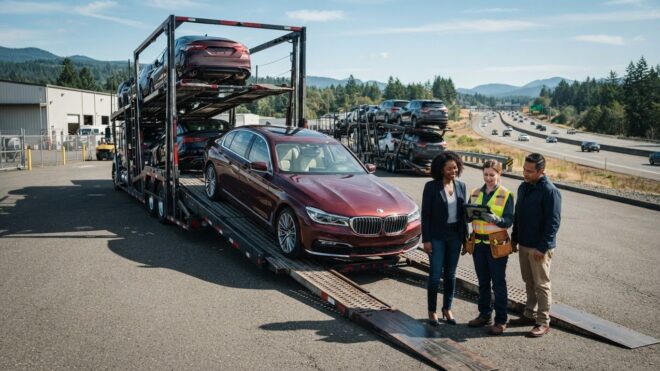
Can you legally move a vehicle across state lines when you don’t actually hold the title? If you’re researching how to ship a leased car, that question is likely keeping you up at night. Because a financing institution technically owns the vehicle, relocating it involves specific contractual requirements and relocation clauses that traditional car owners never have to face.
It’s completely natural to worry about hidden lease violation fees, annual mileage limits, and minor wear that could jeopardize your security deposit at turn-in. Transporting your vehicle shouldn’t mean risking your lease equity or paying unexpected penalties. In this complete guide, you’ll learn how to legally, safely, and cost-effectively transport your leased vehicle without violating your lease agreement or facing return penalties. We’ll walk through every phase of the process, from securing written lienholder clearance and selecting the proper carrier type to documenting pre-transport condition for total peace of mind.
Key Takeaways
- Review your contract’s relocation clause and secure written lienholder permission to ensure full compliance before booking.
- Discover the essential steps for how to ship a leased car safely, including pre-transport inspections and Bill of Lading verification.
- Compare open carrier car transportation with enclosed transport services to protect your vehicle against turn-in wear charges.
- Eliminate long-distance road wear and avoid expensive excess mileage penalties by moving your vehicle on a carrier.
- Coordinate seamless door-to-door interstate vehicle transportation with an experienced nationwide partner to protect your lease equity.
Can You Ship a Leased Car? Reviewing Your Lease Agreement Rules
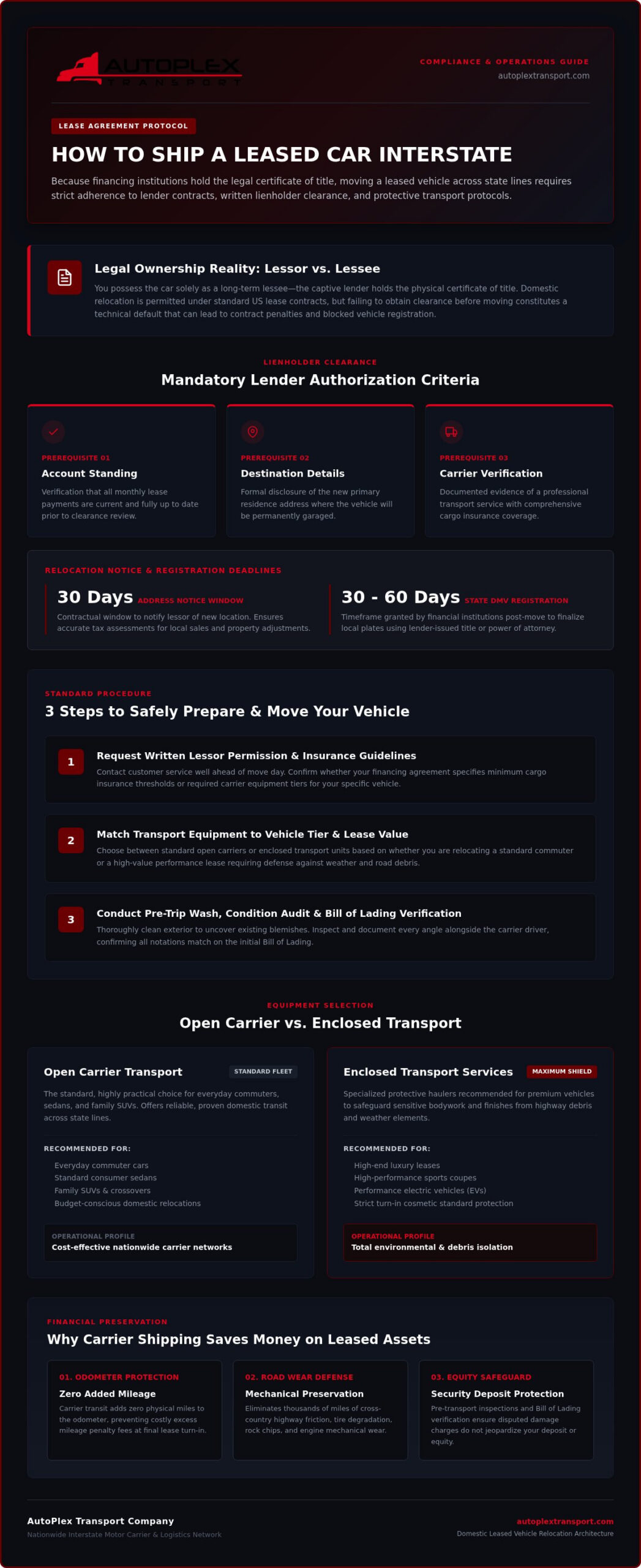
The short answer is yes, you can legally ship a leased vehicle. Most standard automotive lease contracts explicitly allow domestic relocation within the United States using licensed motor carriers. However, understanding how to ship a leased car successfully begins with one fundamental legal reality: you are not the vehicle’s owner. In traditional vehicle leasing arrangements, the financing institution or captive auto lender holds the actual certificate of title. Because you possess the car solely as a long-term lessee, moving that asset across state boundaries requires strict adherence to your contract’s terms.
Failing to notify your lender before transit can lead to technical contract defaults. If a vehicle is registered or permanently garaged in a new state without lienholder clearance, the lender can charge non-compliance fees or refuse to issue the documentation needed to register your car at your destination.
Understanding Lienholder Title Ownership and Transport Permissions
Because the lessor remains the legal owner, you must request formal, written authorization before scheduling an interstate auto carrier. To secure this permission, contact your lender’s lease customer service department. They will typically ask for specific items before issuing an official clearance letter:
- Current account status: Verification that your monthly lease payments are up to date.
- Destination details: Your new primary residence address where the car will be garaged.
- Carrier verification: Evidence that you are using a professional transporter that provides comprehensive cargo insurance coverage.
Navigating Permanent Relocation Clauses and State Registration Rules
Your lease contract contains a relocation clause detailing your reporting duties when moving permanently. Most financing institutions require you to report a new address within 30 days of relocating. This notice ensures tax compliance, as state sales tax assessments and local property taxes often adjust based on where the vehicle is garaged.
Additionally, state departments of motor vehicles require the physical title or an official power of attorney from the lienholder to issue local license plates. Understanding how to ship a leased car means requesting this paperwork from your lender well in advance. Most financial institutions grant lessees between 30 and 60 days post-move to finalize out-of-state vehicle registration changes, preventing unwanted administrative headaches.
Step-by-Step Guide: How to Prepare and Ship a Leased Car
Shipping a leased vehicle requires far greater operational discipline than relocating an owned car. Because you must eventually return the car for a comprehensive end-of-term inspection, any oversight during transit can lead to out-of-pocket charges. Following a methodical, multi-step process ensures you protect your financial equity while remaining fully compliant with contract terms.
Step 1: Contact Your Leasing Company for Written Authorization
Initiate contact with your lessor well before your target relocation date. Inform customer service of your planned interstate move and request an official permission letter. The Federal Trade Commission outlines these contractual distinctions in its guide on leasing a car consumer information, reminding drivers that lessors set explicit operational boundaries. Ask the representative whether your financing agreement requires minimum cargo insurance thresholds or specific transport methods for your vehicle tier.
Step 2: Choose Between Open and Enclosed Auto Transport
Select a transit method that aligns with your vehicle’s value and lease obligations:
- Open carrier car transportation: The standard, practical choice for everyday commuters, sedans, and family SUVs, offering reliable transit across the country.
- Enclosed transport services: Recommended for high-end luxury leases, sports coupes, or performance electric vehicles, shielding sensitive finishes from highway debris and weather.
If you need expert guidance on equipment options, consulting an experienced team like AutoPlex Transport Company helps match your specific lease obligations to the right carrier setup.
Step 3: Document Vehicle Condition and Complete Carrier Paperwork
Thorough preparation safeguards you against disputed damage claims upon lease turn-in. Clean the vehicle inside and out so all existing blemishes are visible, and follow these essential preparation steps:
- Conduct a pre-trip wash: Remove road grime and brake dust to expose any minor surface imperfections.
- Take date-stamped photographs: Photograph every exterior panel, the windshield, rocker panels, alloy wheels, and the odometer reading.
- Reduce fuel levels: Keep approximately a quarter tank of fuel to decrease transport weight while ensuring basic operational mobility.
- Remove toll tags and personal items: Transponders can trigger automated toll charges on open highway routes, while loose cargo inside the cabin is not covered under carrier cargo policies.
- Execute the Bill of Lading: Carefully review the carrier’s initial condition report alongside the driver at pickup. When mastering how to ship a leased car, remember to repeat this thorough inspection at delivery before signing off on final acceptance.
Open vs. Enclosed Transport: Protecting Your Leased Vehicle Condition
Lease agreements enforce strict standards when you return a vehicle. Independent inspection agencies evaluate every square inch of the exterior, penalizing drivers for scratches larger than a credit card, windshield stone chips, and alloy wheel curb rash. If your car shows damage exceeding standard wear-and-tear allowances, the financing institution deducts those repairs directly from your security deposit or bills you for reconditioning fees. Deciding how to ship a leased car requires choosing a carrier method that keeps the vehicle inside those tight contractual parameters.
The Benefits of Open Carrier Transport for Standard Leases
Open carrier car transportation serves as the primary backbone of the auto shipping industry, handling approximately 95% of all automobile shipments in the United States. It’s the most practical, cost-effective choice for standard commuter sedans, family crossovers, and light trucks under common retail leases.
On an open trailer, vehicles travel on exposed multi-car decks secured by eight-point tie-down straps anchored directly through the wheels. Because the tires absorb transit vibrations without loading the vehicle’s suspension components, this method prevents mechanical fatigue. Carriers typically maintain cargo insurance limits between $100,000 and $250,000 per shipment to cover road risks. To learn more about standard carrier operations, read the comprehensive guide to open transport car shipping in 2026.
When Enclosed Carrier Transport Is Essential for Leased Luxury Cars
Premium sports cars, exotic convertibles, and high-tier electric vehicles face unforgiving lease-end appraisals. Many high-line finance contracts include clauses that trigger substantial penalties for minor clear-coat micro-abrasions or paint degradation. For vehicles valued above $50,000, enclosed transport services provide vital protection against airborne road grit, highway debris, construction gravel, and severe weather.
Hard-sided trailers feature hydraulic liftgates that load low-clearance sports cars horizontally, preventing front bumper scuffs and underbody damage. Inside, vehicles ride in an enclosed environment away from salt, diesel exhaust soot, and industrial fallout. These specialized carriers back high-value cargo with expanded coverage limits ranging from $250,000 to over $1,000,000. Review our enclosed car transport buying guide to determine if your vehicle tier requires this added layer of protection before planning how to ship a leased car.
Mileage Limits and Lease-End Inspections: Why Shipping Saves Money
Driving a leased car across several states might initially seem like an easy road-trip solution, but the financial fallout often appears months later at the dealership turn-in desk. Contractual mileage limits are rigid, and exceeding them triggers immediate penalty fees that can quickly add up. Understanding how to ship a leased car allows you to bypass these penalties entirely, because transit aboard a professional car carrier adds zero miles to the odometer.
Calculating Excess Mileage Charges vs. Professional Shipping Costs
Lease agreements establish strict annual driving allotments, typically ranging from 10,000 to 15,000 miles. When you exceed that agreed ceiling, financing companies assess a fee for every additional mile driven, usually between fifteen and thirty cents per mile depending on the brand and model tier. A single 2,000-mile cross-country drive can swallow a huge chunk of your annual cushion in just a few days.
Driving long distances also brings substantial hidden expenses:
- Fuel and toll fees: Long highway stretches burn through premium fuel and multi-state highway tolls.
- Lodging and food expenses: Multi-day journeys require hotel reservations and dining on the road.
- Mechanical depreciation: Prolonged road trips burn down tire tread depth, wear brake pads, and consume engine oil life.
- Lost personal time: Spending several days behind the wheel pulls you away from family or professional responsibilities.
Passing the Final Lease-End Wear-and-Tear Inspection
During lease-end evaluations, independent inspectors apply rigorous scrutiny to cosmetic integrity. Most leasing companies utilize the industry standard Credit Card Test to evaluate vehicle exterior flaws. If an exterior scratch, door ding, or paint chip exceeds the length or width of a standard credit card, or if chips penetrate directly to the metal or primer, you face mandatory reconditioning charges.
Cross-country highway driving exposes low bumpers to flying gravel, construction grit, and runaway road debris that can easily cause spider-cracked windshields and pitted front fascias. Following proven preparation guidelines, such as those detailed in our guide on how to prepare a car for transport, preserves factory paint and protects your vehicle equity. When evaluating how to ship a leased car safely, partnering with a dependable team protects your wallet at lease turn-in; request a transport quote to secure professional door-to-door transit for your vehicle.
Booking Nationwide Auto Transport for Your Leased Vehicle
Relocating an asset owned by a financial institution requires dependable operational support. Working with an experienced auto transport logistics partner removes uncertainty, ensuring carrier operations align with lienholder standards and return inspection expectations. A professional partner coordinates every milestone, maintaining open communication from initial dispatch to your destination drop-off.
Selecting a Reliable Auto Transport Partner with Comprehensive Coverage
Vetting carriers for leased vehicles demands stricter verification than standard shipments. Before assigning your vehicle to any carrier, confirm that the logistics provider maintains rigorous standards across three key areas:
- Vetted carrier network: Confirm that the motor carrier complies with all Federal Motor Carrier Safety Administration regulations and holds active operating authority.
- Included cargo protection: Verify that comprehensive cargo insurance is included with carrier assignments, providing adequate financial coverage for your vehicle’s market value.
- Door 2 Door transportation: Opt for door-to-door interstate vehicle transportation to eliminate intermediate staging yards, where extra handling increases the chance of cosmetic scuffs.
Transport specialists provide hands-on route planning, matching your delivery window to carrier schedules so you avoid rental car expenses or extended travel delays.
Receiving Your Vehicle and Executing the Delivery Sign-Off
When the carrier arrives at your new address, conduct the final inspection methodically. Plan delivery during daylight hours so you can inspect every panel clearly. If the truck arrives after dusk, utilize high-powered flashlights to examine the bodywork.
Walk the perimeter of the vehicle alongside the driver. Compare its condition against your initial photo records and the original Bill of Lading generated at pickup. Confirm that the odometer reading matches the intake record and that glass, wheels, and lower valances remain pristine. In the rare event of transit damage, write detailed descriptions directly onto the driver’s delivery receipt before signing your name. Taking these simple precautions ensures complete financial protection.
Securing reliable transport is the most dependable way to complete your move while keeping lease agreements intact. For expert assistance on how to ship a leased car safely across state lines, connect directly with AutoPlex Transport Company to reserve nationwide transportation services tailored to your vehicle’s specific requirements.
Safeguard Your Lease Investment During Your Move
Relocating across the country doesn’t have to mean compromising your lease terms or absorbing painful end-of-term penalties. Securing written authorization from your financing institution, documenting pre-trip exterior condition, and selecting the right carrier method ensure your vehicle remains completely protected from pickup to delivery. Knowing how to ship a leased car correctly protects your odometer reading, preserves your security deposit, and eliminates moving stress.
AutoPlex Transport Company delivers reliable nationwide door-to-door service across the United States, providing comprehensive cargo insurance coverage with every vetted carrier assignment. Our experienced coordinators understand lienholder standards and the specialized handling required for leased sedans, SUVs, and luxury vehicles alike. Ready to plan your interstate move with total confidence? Request a free leased car shipping quote from AutoPlex Transport today and enjoy a smooth, worry-free relocation.
Frequently Asked Questions
Do I need permission from my leasing company to ship my car?
Yes, you must obtain written permission from your leasing company before shipping. Because the financing bank or automotive lessor holds the vehicle’s legal title, transporting it across state lines without their authorization can violate your lease agreement. Contact customer support to request an official relocation clearance letter, which confirms your account is current and approves out-of-state garaging.
Will shipping my leased car add miles to the odometer?
No, shipping your car on a commercial carrier will not register any miles on the odometer. The vehicle remains completely stationary on the transport trailer throughout transit. Eliminating long road trips is one of the biggest advantages when evaluating how to ship a leased car, as it prevents costly per-mile excess penalties and protects your contractual driving allotment.
What happens if my leased vehicle is damaged during auto transport?
If transit damage occurs, the assigned carrier’s cargo insurance policy covers the necessary repairs. You must carefully inspect the vehicle upon arrival and write down every blemish on the delivery receipt before signing. Submitting time-stamped pickup photographs alongside the final Bill of Lading ensures prompt processing, allowing authorized factory repairs that satisfy your lessor’s strict turn-in standards.
Can I ship a leased car out of state if I am moving permanently?
Yes, you can ship your leased car out of state during a permanent relocation, provided you complete required administrative updates. You must inform your lessor of your new garaging address, typically within 30 days of arrival. The leasing institution will adjust monthly local sales tax rates accordingly and send the title documentation needed to register the car in your new home state.
Should I choose open or enclosed transport for a leased vehicle?
Choose your carrier based on the market value and cosmetic requirements of your vehicle. Open carrier transport is a secure, economical option that works well for standard daily sedans and crossovers. For high-tier luxury models, sports cars, or exotics where minor paint blemishes trigger steep lease-end turn-in penalties, enclosed transport services offer full protection against flying debris and rough weather.
Can I pack personal items inside my leased car during transport?
You should not pack personal belongings or household goods inside your leased vehicle during shipping. Commercial carrier cargo insurance policies only cover the vehicle itself, leaving personal property completely unprotected against loss or transit damage. Excess interior weight can also cause transport issues at highway weigh stations, so keep the cabin and trunk empty.
What documents do I need to provide when shipping a leased car?
When arranging how to ship a leased car, you need to provide your carrier with your current vehicle registration, proof of personal auto insurance, and a government-issued photo ID. You should also retain your leasing company’s written transport clearance letter and keep a completed copy of the inspection Bill of Lading handy during both pickup and delivery sign-offs.