
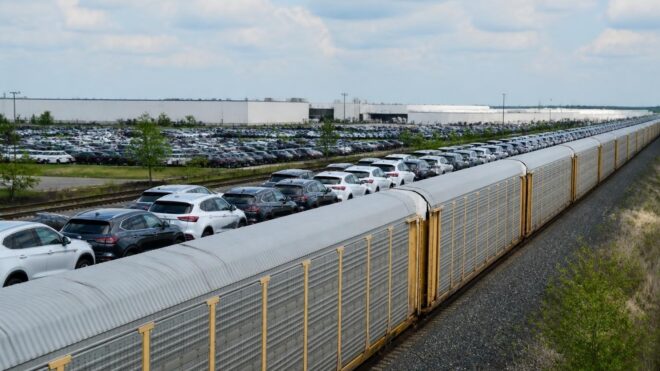
Moving vehicles across vast distances requires efficient, cost-effective solutions that protect valuable cargo while maintaining tight delivery schedules. Vehicle transportation by train has long served as a cornerstone of the automotive industry's distribution network, moving millions of new and used cars annually across North America. This comprehensive method offers unique advantages for manufacturers, dealers, and specialized transport companies seeking alternatives to traditional trucking routes. Understanding how rail transport integrates with broader auto shipping strategies helps businesses and consumers make informed decisions about their vehicle transport needs.
The Role of Rail in Modern Vehicle Distribution
The automotive industry relies heavily on freight rail networks to move finished vehicles from manufacturing plants to regional distribution centers and dealerships nationwide. Vehicle transportation by train represents one of the most efficient methods for mass vehicle movement, particularly for manufacturers shipping hundreds or thousands of units simultaneously.
Freight rail plays a critical role in the automotive sector, with specialized autorack cars designed specifically for safe, efficient vehicle transport. These multi-level railcars protect vehicles from weather and road debris while maximizing the number of units per train.
How Autorack Technology Works
Modern autoracks feature sophisticated engineering that accommodates various vehicle sizes and types:
- Tri-level autoracks carry up to 18 standard sedans or 12 SUVs
- Bi-level configurations handle larger trucks and specialty vehicles
- Enclosed autoracks provide complete protection from environmental exposure
- Adjustable decking systems adapt to different vehicle dimensions
The industry has evolved significantly since the first autoracks appeared in the 1960s. Today's railcars incorporate advanced securing systems, damage prevention features, and efficiency improvements that reduce transportation costs while maintaining vehicle quality.
Comparing Rail Transport to Traditional Auto Shipping Methods
Businesses and consumers evaluating transportation options must weigh the distinct advantages and limitations of different methods. Vehicle transportation by train offers compelling benefits in specific scenarios while traditional trucking excels in others.
| Transport Method | Best For | Average Cost | Transit Time | Capacity |
|---|---|---|---|---|
| Rail (Autorack) | High-volume shipments, long distances | Lower per unit | 7-14 days | 12-18 vehicles per car |
| Open Carrier Truck | Regional delivery, flexibility | Moderate | 1-7 days | 7-10 vehicles |
| Enclosed Truck | Luxury/classic cars, final mile | Higher | 1-7 days | 2-6 vehicles |
| Single-vehicle Trailer | Specialized transport | Highest | 1-5 days | 1 vehicle |
Rail transport dominates the initial distribution phase when automakers ship vehicles from assembly plants to regional hubs. From these hubs, trucks typically complete the final delivery segment to dealerships or individual customers. This intermodal approach optimizes both cost efficiency and delivery speed.
Cost Efficiency at Scale
The economic advantages of vehicle transportation by train become most apparent with large-volume shipments. A single freight train can transport 1,200 to 1,500 vehicles in one trip, dramatically reducing per-unit costs compared to trucking.
For businesses requiring vehicle transport services across multiple states, understanding when rail makes financial sense versus direct trucking helps optimize logistics budgets. Manufacturers typically reserve rail for long-haul routes exceeding 500 miles, where fuel savings and driver hour regulations make rail more competitive.
The Operational Process Behind Rail Vehicle Transport
Understanding how vehicle transportation by train actually works reveals the complexity and coordination required to move thousands of vehicles safely across the continent. The process involves multiple stakeholders, precise timing, and specialized facilities.
Terminal Operations and Loading Procedures
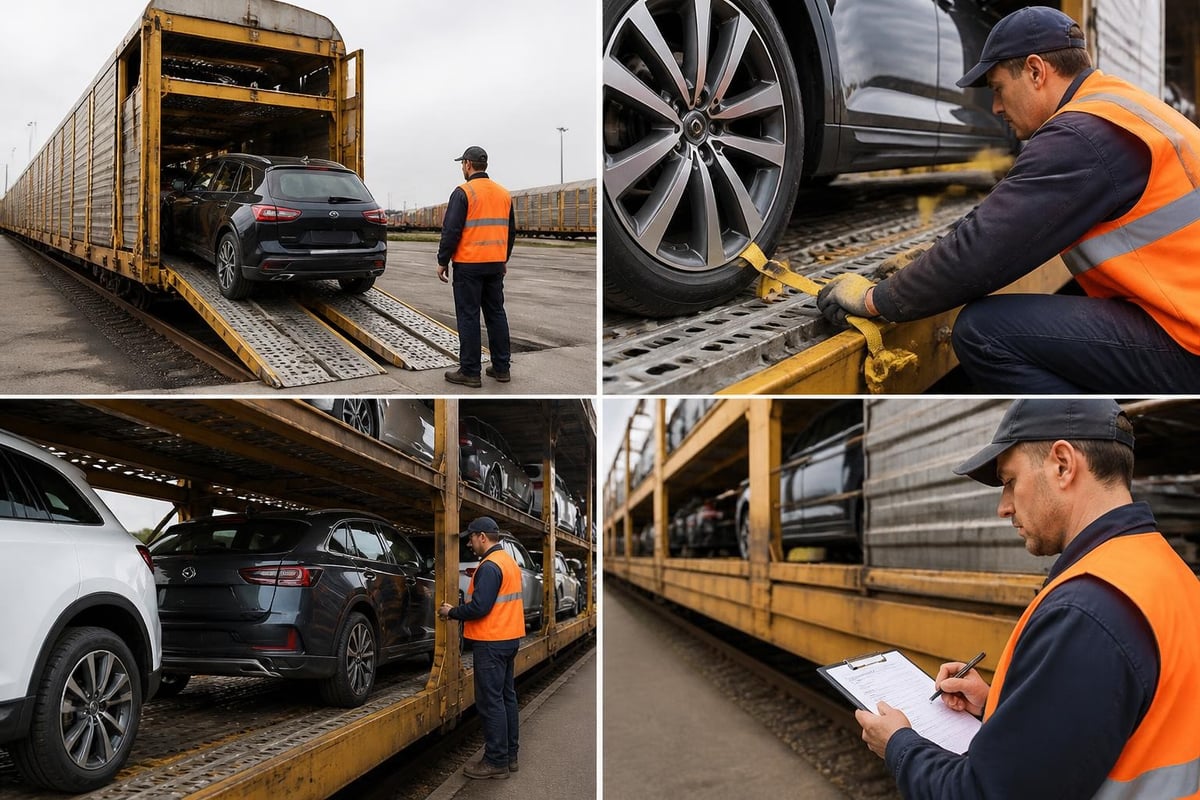
Rail terminals dedicated to automotive transport feature sophisticated infrastructure designed for efficient vehicle handling. These facilities include:
- Staging areas where vehicles await loading, organized by destination
- Ramping systems that drive vehicles directly onto autorack levels
- Inspection stations for pre-loading condition documentation
- Securing equipment to properly fasten vehicles during transit
- Quality control checkpoints ensuring proper loading procedures
The AAR Terminal Guide provides detailed specifications for terminal operations, covering everything from ramp angles to securing protocols that prevent damage during transport.
Professional drivers trained specifically in rail terminal operations carefully position each vehicle on the autorack. They document existing condition, secure vehicles with specialized equipment, and verify proper weight distribution across the railcar.
Tracking and Visibility Solutions
Modern technology has transformed how companies monitor vehicles during rail transit. VIN-level tracking for rail shipments provides real-time visibility previously unavailable in the industry.
Key tracking capabilities include:
- GPS location updates at major rail yards
- Estimated arrival times based on current position
- Exception alerts for delays or route changes
- Integration with dealer management systems
- Historical data for performance analysis
This enhanced visibility helps dealerships plan inventory arrival, schedule prep work, and communicate accurate delivery windows to customers. While rail transport takes longer than direct trucking, predictable schedules and reliable tracking mitigate concerns about extended transit times.
Regional Considerations for Rail-Based Vehicle Transport
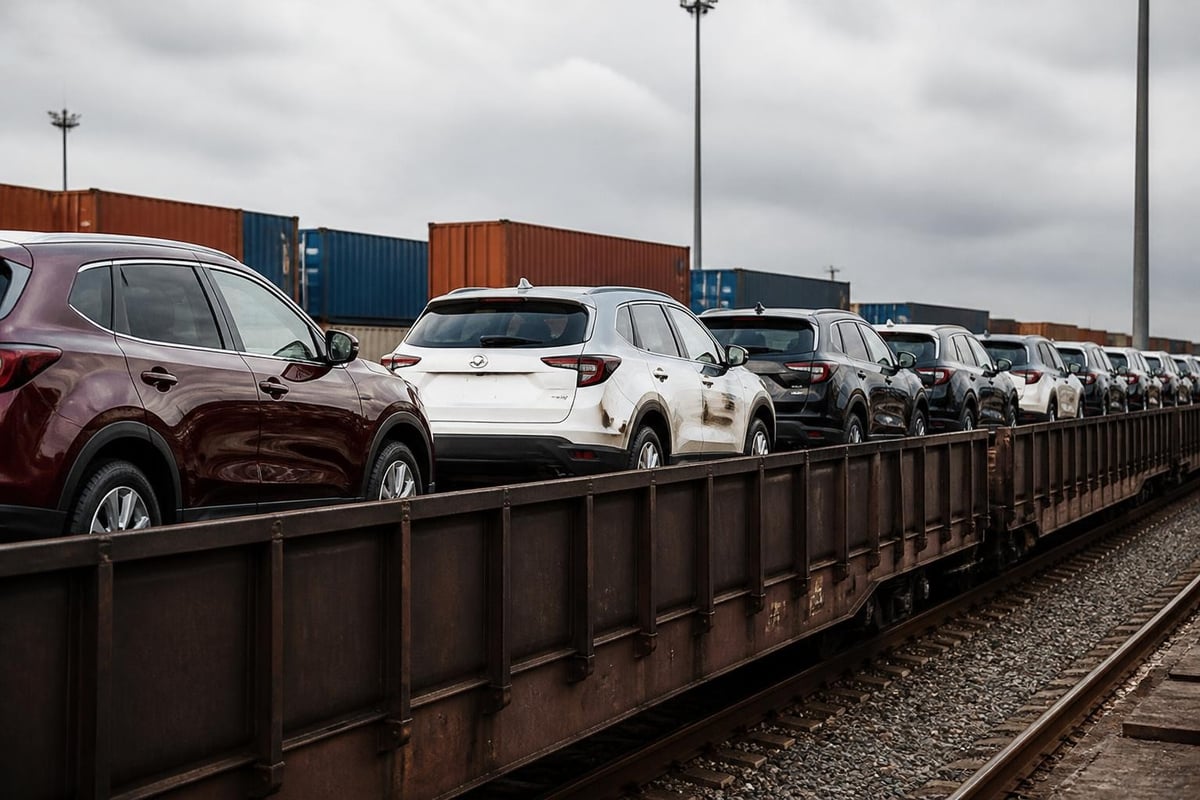
Geography plays a significant role in determining when vehicle transportation by train makes practical sense. Rail networks serve some regions better than others, influencing transportation strategy for businesses across the country.
Major Automotive Rail Corridors
The United States maintains extensive rail infrastructure connecting key automotive manufacturing and distribution centers. Primary corridors include:
- Midwest to Southeast: Detroit, Toledo, and Chicago to Atlanta, Charlotte, and Florida markets
- West Coast routes: California assembly plants to Pacific Northwest and Southwest destinations
- Cross-country lines: Transcontinental routes connecting coastal manufacturing to heartland markets
- Texas distribution: Houston and Dallas serving as major intermodal hubs for southern distribution
Companies like AutoPlex Transport often coordinate with rail providers for the long-haul segment while handling final delivery via truck. This hybrid approach combines the cost efficiency of rail with the door-to-door convenience customers expect.
For vehicles destined to major metropolitan areas like Los Angeles, Chicago, or Austin, rail networks provide direct connections to regional distribution centers where local transport companies complete final delivery.
Terminal Accessibility and Last-Mile Delivery
One limitation of vehicle transportation by train involves terminal locations. Rail yards typically sit outside urban cores, requiring additional transport for final delivery. This creates opportunities for specialized auto transport companies to provide complementary services.
The last-mile segment often determines overall customer satisfaction. While rail efficiently moves vehicles across states, professional transport companies ensure vehicles reach their final destination safely. Services like enclosed transport become particularly valuable for luxury vehicles completing their journey from rail terminals to high-end dealerships or private buyers.
Safety and Risk Management in Rail Vehicle Transport
Safety represents a paramount concern throughout the vehicle transportation industry, and rail transport maintains impressive safety records despite the complexity of moving thousands of vehicles simultaneously. Understanding risk factors and mitigation strategies helps businesses evaluate transportation options appropriately.
Damage Prevention Protocols
Rail carriers implement multiple safeguards to prevent vehicle damage during transit:
Loading phase protections:
- Wheel chocks and tire straps preventing movement
- Protective padding between vehicles on multi-level racks
- Door locks and window closures verified before departure
- Fuel level restrictions (typically quarter-tank maximum)
Transit security measures:
- Enclosed autoracks shielding from weather and debris
- Regular inspections at classification yards
- Speed restrictions through sensitive track sections
- Coupling systems designed to minimize jolt forces
Unloading verification:
- Condition inspection comparing to pre-loading documentation
- Photographic evidence of any transit damage
- Immediate reporting protocols for claims processing
The Federal Railroad Administration maintains comprehensive safety data that tracks incidents involving freight rail, including autorack movements. Industry statistics show damage rates for rail transport remain consistently low, particularly compared to the exposure risk of open-highway trucking.
Insurance and Liability Considerations
Professional transport operations maintain appropriate insurance coverage for vehicles in transit. For vehicle transportation by train, liability typically follows a tiered structure:
| Coverage Layer | Responsible Party | Typical Coverage |
|---|---|---|
| Primary carrier liability | Railroad company | $100,000+ per vehicle |
| Supplemental cargo insurance | Shipper or transport company | Market value |
| Terminal operations | Terminal operator | Loading/unloading damage |
| Final delivery | Last-mile carrier | Door-to-door completion |
Businesses utilizing rail for vehicle distribution should verify coverage levels and understand which party bears responsibility at each transport phase. Reputable companies providing transport services maintain comprehensive insurance throughout the entire journey, regardless of which transportation mode handles each segment.
Integration with Broader Auto Transport Strategies
Vehicle transportation by train rarely functions as a standalone solution. Instead, it integrates with comprehensive logistics strategies that leverage multiple transportation modes to optimize cost, speed, and service quality.
Intermodal Transportation Planning
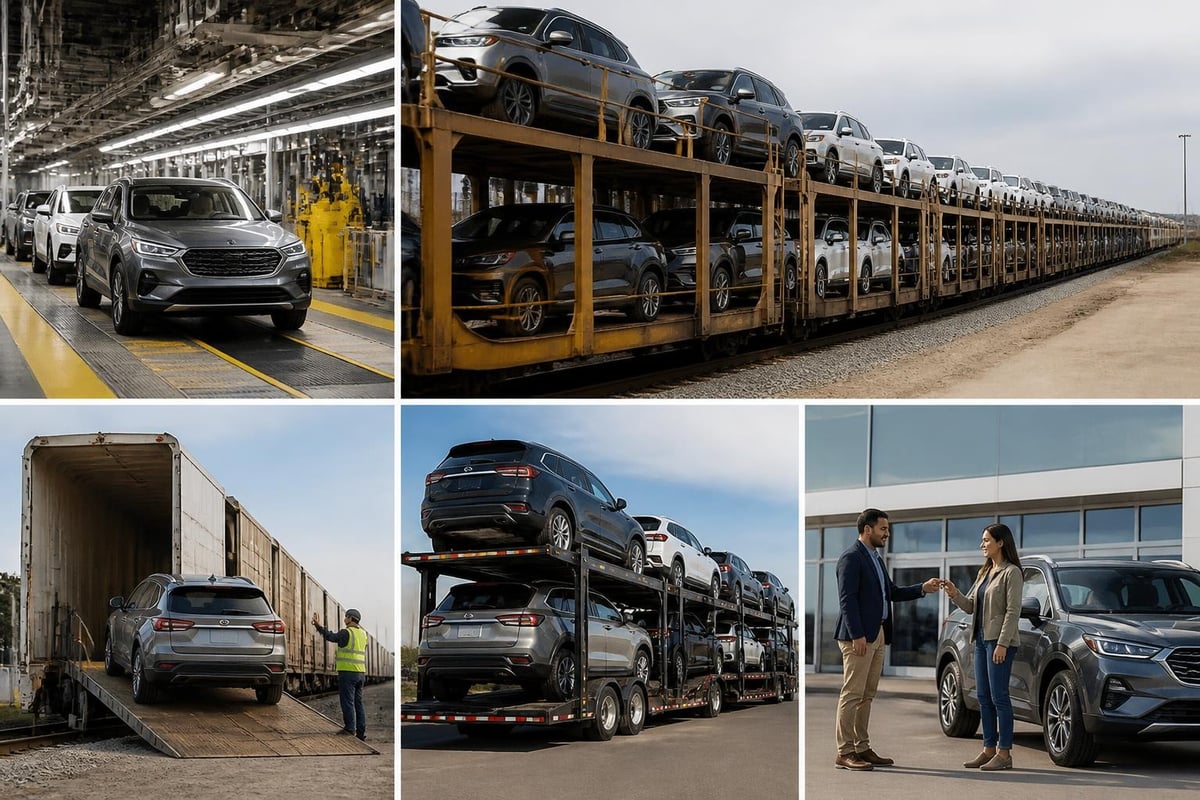
Modern automotive logistics typically employ intermodal strategies combining rail's long-haul efficiency with trucking's flexibility. A typical flow might include:
- Manufacturing to rail terminal: Short truck transport from assembly plant
- Long-haul rail segment: Cross-country movement to regional distribution center
- Terminal to local staging: Truck transport to metropolitan staging facility
- Final delivery: Individual transport to dealership or customer
This layered approach maximizes each method's strengths while minimizing weaknesses. Rail handles the distance-intensive middle segment where its cost advantages shine, while trucks provide door-to-door connectivity that rail infrastructure cannot match.
Choosing the Right Method for Your Needs
Selecting between rail and direct trucking depends on multiple factors unique to each shipment. Consider these decision points:
Rail makes sense when:
- Moving multiple vehicles to the same general region
- Distance exceeds 500-700 miles
- Delivery timeline allows 10-14 days
- Vehicles originate near major rail terminals
- Cost optimization outweighs speed requirements
Direct trucking proves better for:
- Single vehicle shipments
- Time-sensitive deliveries
- Remote destinations without rail access
- High-value vehicles requiring enclosed transport
- Customer preference for faster service
Companies specializing in open carrier transportation often maintain relationships with rail providers, offering clients hybrid solutions that balance various priorities. This flexibility allows businesses to select the optimal method for each specific shipment rather than forcing all vehicles through a single transportation channel.
Environmental Considerations and Sustainability
As environmental consciousness grows across industries, transportation methods face increasing scrutiny regarding their carbon footprint and sustainability. Vehicle transportation by train offers notable environmental advantages that appeal to manufacturers and consumers prioritizing green logistics.
Fuel Efficiency and Emissions Comparisons
Rail transport demonstrates superior fuel efficiency compared to highway trucking when measured per vehicle-mile. Trains can move one ton of freight approximately 470 miles on a single gallon of fuel, compared to roughly 150 miles for heavy trucks.
Environmental benefits include:
- Lower per-vehicle emissions for long-distance transport
- Reduced highway congestion from fewer trucks on interstate routes
- Decreased tire particulate pollution compared to equivalent truck movements
- Energy efficiency from steel-wheel-on-steel-rail friction advantages
For businesses committed to sustainability reporting, incorporating rail into vehicle distribution strategies provides measurable carbon reduction metrics. This becomes particularly relevant for manufacturers shipping thousands of vehicles annually, where emission differences compound significantly.
Future Sustainability Initiatives
The rail industry continues investing in technologies that further improve environmental performance. Emerging developments include hybrid locomotives, increased use of biodiesel blends, and improved aerodynamic designs for both locomotives and autoracks.
These initiatives align with broader automotive industry sustainability goals, creating synergy between vehicle production and distribution environmental strategies. Companies can demonstrate comprehensive sustainability by considering not only vehicle emissions during use but also the environmental impact of distribution networks.
Specialized Applications and Niche Markets
While vehicle transportation by train primarily serves new vehicle distribution from manufacturers, several specialized applications demonstrate the method's versatility beyond traditional automotive logistics.
Classic and Collector Vehicle Transport
High-value collector vehicles occasionally utilize rail transport when moving between auction houses, private collections, or restoration facilities located near major rail corridors. Enclosed autoracks provide excellent protection for vintage vehicles during long-distance moves.
However, the lack of door-to-door service means most collector car owners prefer specialized enclosed transport services that eliminate handling transitions and provide single-carrier accountability throughout the journey.
Fleet Relocations and Corporate Transfers
Companies relocating fleet vehicles between regional offices sometimes leverage rail transport for cost efficiency. When moving 10 or more vehicles simultaneously across significant distances, rail can substantially reduce transportation costs compared to individual truck shipments.
This application requires coordination with local transport providers for terminal delivery and pickup, adding complexity but potentially delivering significant savings for large fleet movements.
Regulatory Framework and Industry Standards
Vehicle transportation by train operates within a comprehensive regulatory framework governing safety, operations, and industry practices. Understanding these regulations helps businesses ensure compliance and select qualified transportation partners.
Federal Oversight and Safety Regulations
The Federal Railroad Administration (FRA) maintains jurisdiction over freight rail safety, including autorack operations. Regulations cover track maintenance standards, equipment specifications, crew training requirements, and incident reporting protocols.
Key regulatory areas include:
- Autorack design and maintenance standards
- Loading and securing procedure requirements
- Track safety and inspection protocols
- Crew qualification and training mandates
- Hazardous materials restrictions (affecting fuel levels in transported vehicles)
These regulations create a safety framework that all rail carriers must follow, regardless of size or market focus. Businesses utilizing rail transport benefit from this standardized regulatory oversight.
Industry Self-Regulation and Best Practices
Beyond federal requirements, industry associations establish additional standards and best practices. The Association of American Railroads (AAR) publishes technical specifications for autoracks, terminal operations, and handling procedures that exceed minimum regulatory requirements.
Companies providing comprehensive vehicle transport services stay current with both regulatory requirements and industry best practices to ensure consistent, high-quality service regardless of which transportation mode handles each shipment segment.
Cost Structure and Pricing Considerations
Understanding the economics of vehicle transportation by train helps businesses budget appropriately and identify when rail offers genuine cost advantages versus alternative methods.
Factors Affecting Rail Transport Pricing
Multiple variables influence the cost of moving vehicles by rail:
- Distance: Longer routes generally reduce per-mile costs
- Volume: Shipping multiple vehicles reduces per-unit pricing
- Route availability: Direct routes cost less than those requiring classification yard transfers
- Seasonal demand: Peak shipping seasons command premium pricing
- Fuel surcharges: Variable based on diesel fuel costs
- Accessorial services: Terminal storage, expedited handling, special securing
| Cost Component | Typical Range | Notes |
|---|---|---|
| Base rail rate | $0.30-$0.60 per mile | Volume-dependent |
| Terminal fees | $75-$150 per vehicle | Loading/unloading |
| Fuel surcharge | 5-15% of base rate | Fluctuates with diesel prices |
| Insurance | $25-$100 per vehicle | Based on declared value |
| Last-mile delivery | $100-$400 per vehicle | Distance from terminal to destination |
For perspective, transporting a vehicle from Detroit to Los Angeles via rail might cost $600-$900 total when combining all fees, compared to $800-$1,200 for direct truck transport. The price advantage increases with volume, making rail particularly attractive for dealerships receiving multiple vehicles.
Hidden Costs and Considerations
While rail transport often appears cheaper initially, businesses should account for complete door-to-door costs including terminal delivery on both ends. Additionally, extended transit times may create inventory carrying costs that partially offset direct transport savings.
Professional transport companies serving markets like Houston or Philadelphia can provide detailed cost comparisons showing total landed costs for rail versus direct truck transport, helping businesses make informed decisions based on complete financial pictures rather than simple rate quotes.
Vehicle transportation by train continues serving as a vital component of automotive distribution networks, offering unmatched efficiency for high-volume, long-distance shipments while integrating seamlessly with last-mile delivery services. Whether you need a single vehicle moved across the country or require comprehensive logistics solutions combining multiple transportation modes, AutoPlex Transport delivers reliable, professional service tailored to your specific requirements. Contact our experienced team today to discuss how we can optimize your vehicle transportation strategy with the right combination of rail coordination, open carrier, and enclosed transport options.
