
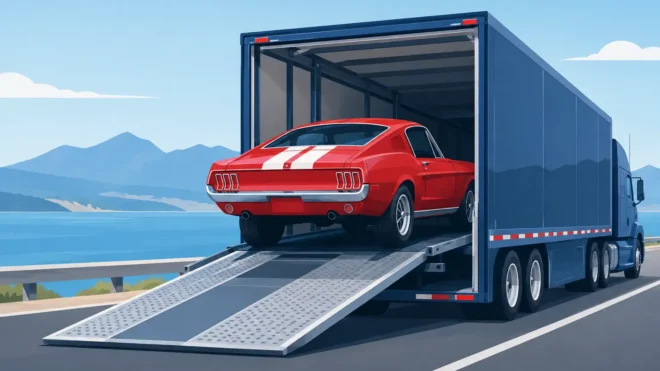
A 1967 Mustang fastback purchased from a private seller in Arizona needs to reach its new owner in North Carolina. The buyer could fly out and drive it more than 2,000 miles, but that would add road wear, fuel costs, weather exposure, and unnecessary risk to a vehicle with original trim and a freshly restored paint finish. This collector car shipping example shows how a professionally planned move can protect the vehicle while making the process easier for both buyer and seller.
The owner chooses enclosed, door-to-door transport. The car is collected near the seller’s home, secured inside a covered trailer, and delivered to the buyer’s residence after a coordinated cross-country trip. The shipment is not complicated because the car is rare. It is successful because the details are handled before pickup.
Collector Car Shipping Example: Arizona to North Carolina
The Mustang is operable, low to the ground, and valued well above an average daily driver. Its owner wants to avoid rain, road debris, and the added mileage that comes with a long road trip. Enclosed auto transport is the right fit because it provides the highest level of protection during transit.
Before booking, the customer provides the year, make, model, pickup ZIP code, delivery ZIP code, vehicle condition, and preferred dates. They also mention the car’s low front valance and limited ground clearance. That information matters. A carrier needs to know whether special loading care, a liftgate, or ramps with a gentler angle may be needed.
The transport advisor explains the service level, expected pickup window, delivery coordination, and what the customer should do before the carrier arrives. Instead of trying to manage a cross-country drive, the buyer has one clear plan: prepare the vehicle, stay available for updates, and inspect the car at delivery.
Why Enclosed Transport Fits This Shipment
Open carrier shipping is a dependable and cost-effective option for many vehicles. It is commonly used for relocations, dealership inventory, and standard cars that can safely travel on an open trailer. For this Mustang, though, the trade-off favors enclosed transport.
An enclosed trailer shields the vehicle from rain, dust, road spray, and loose debris. It also offers more privacy for a collector vehicle that may attract attention at fuel stops or loading areas. That extra protection generally costs more than open transport, but many classic and premium vehicle owners find the added peace of mind worthwhile.
The right option still depends on the vehicle, budget, route, and owner priorities. A well-maintained collector car headed a few states away may be suitable for open transport if the owner is comfortable with normal highway exposure. A concours-quality restoration, exotic car, or vehicle with delicate exterior finishes often calls for enclosed service.
The Booking Details That Prevent Problems
A smooth shipment starts with accurate information. In this case, the seller lives on a residential street with limited room for a large carrier to turn around. Rather than risk a difficult pickup, the advisor arranges a nearby meeting point with open access. The seller can drive the Mustang a short distance to meet the driver, while the buyer receives the location and timing details in advance.
The customer also confirms that the vehicle runs, steers, and brakes normally. If the car did not operate, the carrier would need to plan for non-running vehicle equipment and may charge more for the additional loading work. Being upfront avoids delays and last-minute changes.
Timing deserves the same attention. Auto transport works around real-world variables such as route demand, traffic, weather, carrier availability, and safe driving limits. A pickup window is more realistic than promising an exact hour days in advance. Once the carrier is assigned, communication becomes more specific, and the driver typically coordinates directly as pickup and delivery approach.
For owners working around an auction date, a closing date, or a car show, expedited vehicle transport may be worth considering. It can shorten the planning window, though it usually comes at a higher price. When the schedule is flexible, standard scheduling often provides more carrier options.
Preparing the Mustang for Pickup
The seller does not need to perform a major service before transport, but a few simple steps make loading and inspection safer. The car is cleaned well enough for its condition to be visible, and the seller takes dated photos from all sides. Close-up photos of the bumpers, wheels, windshield, paint, and interior create a useful record.
Personal items are removed from the cabin and trunk. Carriers generally discourage shipping household goods inside a vehicle because loose items can shift, cause damage, or create compliance issues. The seller leaves only necessary vehicle-related items, such as a spare tire and factory tools, if approved in advance.
The fuel level is kept low, usually around one-quarter of a tank or less. The battery is secure, the tires are properly inflated, and any known operational quirks are shared with the driver. The seller also makes sure the key, alarm instructions, and any starting procedure are ready at pickup.
What Happens at Pickup
When the enclosed carrier arrives at the meeting point, the driver and seller inspect the Mustang together. They document its visible condition on the bill of lading, the paperwork used at pickup and delivery. Existing paint chips, minor scratches, and any other marks are recorded before loading.
This is not a rushed formality. The condition report is one of the most useful protections in auto shipping. The seller should read it, compare it with the vehicle, ask questions when something is unclear, and keep a copy. If the driver notes a condition that does not match the car, it should be addressed before the vehicle is loaded.
Because the Mustang has low clearance, the driver uses a careful loading approach suited to the trailer and vehicle. Once inside, the car is secured for transit. A professional carrier treats securement as more than simply getting the vehicle on board. The goal is to keep it stable throughout changing road conditions while protecting the body and mechanical components.
During Transit and Delivery
The buyer does not need to chase down every mile of the route. They do need to remain reachable. If weather, traffic, or another operational issue affects timing, clear communication helps the delivery stay coordinated. The buyer should also prepare a delivery location with enough space for the carrier or arrange a nearby meeting point if neighborhood access is tight.
At delivery in North Carolina, the buyer meets the driver during daylight when possible. They inspect the Mustang carefully before signing the final paperwork. The buyer compares the car with the pickup condition report and the photos taken before shipment. They check the exterior, glass, wheels, lower body areas, and interior, then start the vehicle if appropriate.
If there is any concern, the buyer should document it on the bill of lading before the driver leaves and take clear photos. Most deliveries go as planned, but prompt and accurate documentation is the right step if an issue needs to be reviewed.
What This Example Means for Your Vehicle
The Mustang arrives without added road miles, interstate wear, or a demanding multi-day drive. The buyer can focus on registering, detailing, and enjoying the car instead of recovering from a cross-country trip. The seller has a defined pickup plan, and both parties know what paperwork and preparation are expected.
That is the value of a well-managed collector vehicle shipment. The service is not just about moving a car from one state to another. It is about matching the right carrier, protection level, route plan, and communication process to the vehicle in your care.
AutoPlex Transport can help you coordinate enclosed or open transport based on your vehicle, timeline, and budget. Request a quote with your pickup and delivery locations, vehicle details, and preferred dates, then speak with an advisor about the safest practical plan. A little preparation before pickup can make the moment your collector car arrives feel exactly as it should: exciting, not stressful.
