
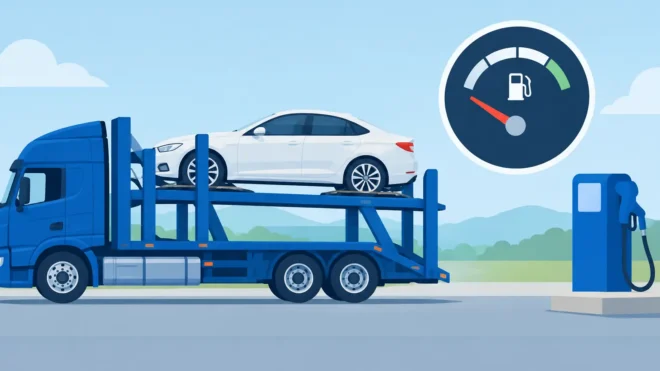
A nearly empty tank can leave a driver unable to load your vehicle, while a full tank adds unnecessary weight to the carrier. Getting the car shipping fuel level right is a small but meaningful part of a safe, worry-free transport experience. For most vehicles, leaving about one-quarter tank of gas is the practical target.
That amount gives the carrier enough fuel to drive the vehicle onto and off the trailer, reposition it if needed, and complete delivery without creating extra weight or safety concerns. Before pickup, take a moment to check your fuel gauge along with the rest of your vehicle’s shipping preparations.
Why Car Shipping Fuel Level Matters
Your vehicle is not simply parked on a truck for the entire trip. At pickup and delivery, the driver needs to start it, move it into position, and carefully load or unload it using ramps. Depending on the carrier configuration and the order in which vehicles are loaded, a car may also need to be repositioned during transit.
Fuel is necessary for those normal operating steps. However, a full tank is not helpful. Gasoline adds weight, and every pound matters on a multi-car carrier that must stay within legal weight limits. Extra fuel can also increase risk if there is a leak or an unexpected issue during transport.
A quarter tank strikes the right balance. It is enough for handling and delivery without asking the carrier to transport unnecessary fuel. This is why many auto shipping companies recommend keeping your tank between one-quarter and one-half full, with one-quarter generally preferred.
How Much Fuel Should You Leave for Car Shipping?
For standard open or enclosed auto transport, plan to leave approximately one-quarter tank of fuel in the vehicle. In most cases, that is all the driver needs.
The exact amount can depend on your vehicle, pickup conditions, and delivery location. A large truck or SUV may use more fuel while loading than a compact sedan, especially if pickup or delivery involves a steep driveway, a narrow residential street, or an alternate meeting location. If your vehicle has a very small fuel tank or lower-than-normal fuel efficiency, slightly more than one-quarter tank may make sense.
On the other hand, do not fill the tank before shipping just because the vehicle will be traveling a long distance. Your vehicle is being transported, not driven across the country. The fuel is for loading, unloading, and brief local movement only.
If you are unsure about the right amount for your shipment, ask your transport advisor before pickup. Clear communication is always better than guessing, particularly for specialty vehicles, inoperable vehicles, or shipments with specific pickup restrictions.
Why a Full Tank Is Not Recommended
A full tank may seem convenient, but it creates avoidable complications. Gasoline is heavy. A full tank in a larger SUV or pickup can add well over 100 pounds compared with a quarter tank. Across several vehicles, that additional weight can affect carrier capacity and compliance.
There is also no benefit to paying to transport fuel you will not use. If you are moving for the season, buying a car online, or sending a vehicle to a family member, it is usually better to arrive with enough fuel to get started rather than a completely full tank.
Full tanks can also raise concerns for classic, collector, or older vehicles with aging fuel lines, seals, or tanks. Enclosed transport provides added protection from weather and road exposure, but it does not change the basic recommendation to avoid overfilling the tank.
Why You Should Not Ship With an Empty Tank
Shipping with an empty or near-empty tank can be just as inconvenient. The driver may not be able to load the vehicle safely, and the vehicle could require fuel before delivery. That can create delays at the very moment you want your shipment to move smoothly.
A vehicle that runs out of fuel on a loading ramp is not a simple problem. Loading requires careful control, and carriers need vehicles that can move reliably under their own power unless arrangements have been made for an inoperable shipment. Leaving a quarter tank helps prevent last-minute issues and keeps pickup on schedule.
Fuel Guidance for Different Vehicle Types
The quarter-tank recommendation works for most cars, trucks, SUVs, and crossovers. Still, a few vehicle types deserve additional attention.
For diesel trucks, leave enough diesel for normal loading and unloading, but avoid topping off the tank. Diesel fuel is heavier than gasoline, so a full tank can add significant weight. This is especially relevant for heavy-duty pickups with large factory or auxiliary tanks.
For classic cars, exotics, and collector vehicles, follow any instructions provided by the transport company and consider the condition of the fuel system. These vehicles are often shipped in enclosed carriers, where careful handling and protection are the priority. If the car has a known fuel leak, starting issue, or special operating procedure, tell the carrier before the scheduled pickup.
For electric vehicles, the question is not fuel level but battery charge. A moderate charge is generally best, often around 30% to 50%, unless your carrier gives different instructions. A fully charged battery is usually unnecessary, while a very low charge can make loading and unloading more difficult. Plug-in hybrids should also have sufficient fuel or battery power for safe movement.
For inoperable vehicles, fuel level may matter less if the vehicle cannot be driven onto the trailer. Still, you should disclose the vehicle’s condition accurately. Special equipment, such as a winch, may be required, and the carrier needs to plan for it before arrival.
Prepare Your Vehicle Beyond the Fuel Gauge
Fuel is only one item on a good shipping checklist. A few minutes of preparation can help protect your vehicle and make the inspection process easier for everyone involved.
Before the carrier arrives, take care of these essential items:
- Remove personal belongings, loose electronics, and valuable items from the cabin and trunk.
- Wash the exterior enough to make existing scratches, dents, and paint marks visible.
- Take clear, time-stamped photos of all sides of the vehicle, wheels, windshield, and interior if relevant.
- Check for fluid leaks, low tires, warning lights, or mechanical concerns and report them in advance.
- Remove toll tags or disable them so they are not charged while the vehicle is transported.
The pickup inspection is your opportunity to document the vehicle’s condition with the driver. Review the bill of lading carefully and make sure existing damage is noted before loading begins. At delivery, inspect the vehicle again before signing the final paperwork. This straightforward process helps create clarity from pickup through delivery.
What to Tell Your Auto Transport Provider
Let your transport provider know if there is anything unusual about your vehicle or location. A low-clearance sports car, oversized truck, modified suspension, dead battery, fuel-system issue, or difficult residential street can affect the loading plan.
The same applies if you need expedited shipping or have a narrow delivery window. Your advisor can help coordinate a practical pickup location, explain the best transport option, and make sure the assigned carrier has the details needed to handle the job properly. Open carrier transport is a dependable choice for many standard vehicles, while enclosed transport can offer added protection for high-value, classic, or premium cars.
With AutoPlex Transport, the goal is to make each step clear before the carrier arrives. Providing accurate vehicle details, leaving the right amount of fuel, and staying available during the pickup window helps keep your shipment moving without unnecessary delays.
A Simple Step Before a Safer Shipment
The right car shipping fuel level does not need to be complicated. Aim for about one-quarter tank, avoid filling up just before pickup, and let your carrier know about any condition that could affect loading. That small bit of preparation gives the driver what they need to handle your vehicle safely and helps you start the shipping process with greater confidence.
If you are scheduling a cross-country move, buying a vehicle out of state, or sending a car to a seasonal home, ask your transport advisor about pickup requirements before your date is confirmed. A clear plan from the start makes delivery feel much more predictable.
