
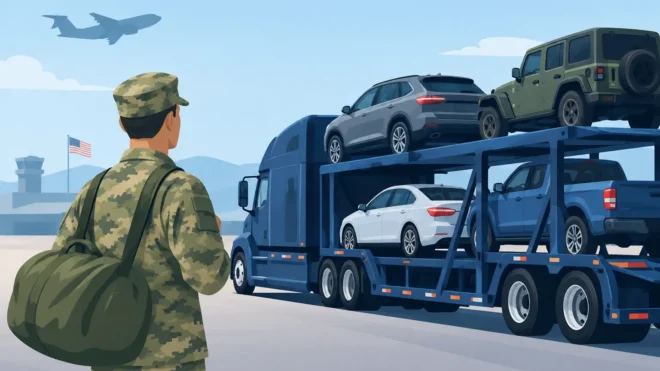
A PCS move can put your schedule under pressure fast. Orders, housing, family travel, reporting dates, and paperwork all compete for attention. Military car shipping gives service members and military families a practical way to move a personal vehicle without adding days of long-distance driving, mileage, fuel costs, and road fatigue to an already demanding relocation.
For many moves, shipping a vehicle is not simply about convenience. It is about arriving at a new duty station with one less major task to manage. The right transport plan should fit your reporting window, vehicle type, pickup access, and desired level of protection.
When Military Car Shipping Makes Sense
Driving can be a reasonable choice for a short move when you have time, a reliable vehicle, and a route that works for your family. A cross-country PCS is different. Long drives can mean hotel stays, meals, fuel, unexpected repairs, added wear, and the challenge of coordinating multiple vehicles.
Military car shipping is often a strong option when one spouse needs to travel separately, a family has more vehicles than drivers, or a service member must report before the household can fully relocate. It can also help when you are moving with children, pets, or a vehicle that you would rather not expose to thousands of highway miles.
The best approach depends on the route and timeline. Major metro-to-metro routes generally offer more carrier availability than rural routes. A flexible pickup window can also make scheduling easier, while a fixed report date may call for earlier planning or expedited service.
Choose the Right Carrier for Your Vehicle
Most customers choose between open carrier and enclosed transport. Both can be safe, professional methods of moving a vehicle. The difference is primarily the level of exposure and the cost.
Open carrier transport
Open transport is the standard option for most cars, trucks, and SUVs. Your vehicle travels on a multi-car trailer, similar to the carriers commonly seen delivering vehicles to dealerships. It is typically the most cost-effective choice and is widely available for nationwide routes.
Because the vehicle is exposed to normal weather and road conditions, it may arrive with road dust or rain residue. That is not damage, but it is worth planning for if you need the vehicle to look its best immediately after delivery.
Enclosed transport
Enclosed transport places the vehicle inside a covered trailer. It is a good fit for classic cars, luxury vehicles, high-value trucks, custom builds, and vehicles with low ground clearance. This option provides additional protection from weather and road debris during transit.
Enclosed service usually costs more and may have fewer available carriers on certain routes. For owners who place a high value on added protection, that trade-off can be worthwhile.
Plan Around Orders, Not the Last Minute
PCS dates can change, and no transport provider can control every military schedule adjustment. Still, early planning gives you more options and more time to coordinate a pickup window that works with your move.
As soon as you have a general departure timeframe, request a shipping quote and discuss the route with a transport advisor. You do not need every detail finalized to begin planning. An advisor can explain likely transit timing, pickup considerations, and whether your route is better suited for open or enclosed service.
Avoid assuming pickup and delivery will happen at an exact hour. Vehicle transport works within reasonable windows because drivers must account for traffic, weather, loading schedules, road restrictions, and other customer stops. A dependable company communicates clearly, confirms the carrier assignment, and keeps you informed as the shipment progresses.
If you have a hard deadline, such as a flight or report date, say so early. Expedited vehicle transport may be available for qualifying moves, but it can cost more. The more notice you provide, the better the chance of finding a solution without unnecessary pressure.
How Door-to-Door Delivery Works Near a Base
Door-to-door service means the carrier picks up and delivers as close to your requested locations as safely and legally possible. It does not always mean a large trailer can enter every neighborhood, apartment complex, or military installation.
Many bases restrict commercial vehicle access, and narrow streets, low branches, parked cars, or tight gates can limit where a carrier can safely operate. In these cases, the driver may arrange a nearby meeting point, such as a large shopping center, wide public lot, or another accessible location close to the base.
This is a normal part of the process, not a sign that service has changed. A good coordinator will help set realistic expectations before pickup. Choose a location with room for a large truck to turn around, and make sure the person releasing or receiving the vehicle can be reached by phone.
Prepare Your Vehicle for Transport
A few simple steps help prevent delays and make inspection easier. Clean the exterior enough to see the vehicle’s condition, then take clear, dated photos from several angles. Include close-ups of any existing scratches, dents, cracked glass, or other visible issues.
Remove personal belongings, important documents, toll tags, loose accessories, and anything that could shift during loading. Transport regulations and carrier insurance generally do not cover household items left inside a vehicle. Keeping the interior clear also helps avoid weight concerns and inspection disputes.
Leave about a quarter tank of fuel in the vehicle. It is enough for loading and unloading without adding unnecessary weight. Check the battery, tire pressure, fluid levels, and parking brake. Let the carrier know in advance if the vehicle has mechanical issues, special starting instructions, an alarm, modified suspension, or unusually low clearance.
At pickup, you and the driver will review the vehicle condition and complete an inspection report, often called a bill of lading. Read it carefully before signing. Repeat the inspection at delivery before final acceptance, and document any concerns immediately while the driver is present.
What Affects Military Car Shipping Costs
There is no single flat rate for moving a vehicle across the country. Pricing changes based on distance, route popularity, vehicle size, season, carrier availability, service type, and the pickup and delivery locations.
A full-size truck or oversized SUV generally costs more to move than a compact sedan because it takes more trailer space and adds weight. Enclosed transport costs more than open carrier shipping. Remote locations, short-notice requests, and difficult-access pickup points can also affect the quote.
The lowest quote is not always the best value. Ask what service is included, whether the company can explain the pickup process, and how you will receive updates. Clear coordination matters when you are balancing a relocation schedule and may not be available for repeated calls or last-minute changes.
Keep Communication Simple During Your Move
A PCS often involves multiple decision-makers. One person may be traveling ahead, another may be packing the home, and a relative may need to meet the driver. Decide early who will be the primary contact and who is authorized to release or accept the vehicle.
Share reliable phone numbers, keep your voicemail available, and provide a backup contact if you may be in transit or out of service. If orders change or your address changes, notify the transport coordinator as soon as possible. Fast communication gives the carrier more room to adjust the plan.
AutoPlex Transport helps customers coordinate nationwide vehicle shipping with service options based on their route, vehicle, timeline, and protection needs. A direct conversation before booking can clarify the details that matter most for your PCS move.
Your vehicle should not become another source of uncertainty during a military relocation. Start the shipping conversation early, prepare the vehicle carefully, and choose a transport plan that leaves you free to focus on arriving ready for what comes next.
