
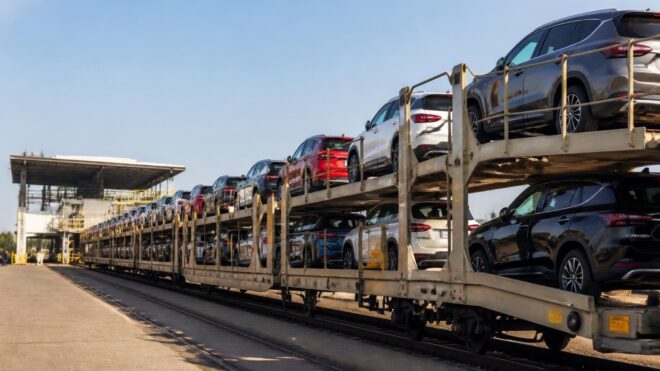
Moving a vehicle across the country presents numerous logistical challenges, and many people don't realize that rail transport offers a viable alternative to traditional truck-based auto shipping. When you transport car by train, you're tapping into a freight network that moves millions of vehicles annually with remarkable efficiency. This method combines the reliability of scheduled rail service with specialized equipment designed specifically for automobile shipment, offering unique advantages for certain shipping scenarios. Understanding how rail transport works, when it makes sense, and what to expect can help you make informed decisions about your vehicle shipping needs.
How Rail Transport Works for Automobiles
The process to transport car by train involves specialized railcars called autoracks, which are multi-level carriers designed exclusively for vehicle transportation. These massive railcars can accommodate up to 20 vehicles depending on their size and configuration, stacking automobiles on two or three levels within an enclosed or open framework.
Major automotive manufacturers have relied on rail transport for decades to move new vehicles from assembly plants to distribution centers nationwide. According to freight rail statistics from the Association of American Railroads, motor vehicles and parts represent a significant commodity category in the rail freight sector, demonstrating the industry's capacity and experience with automobile shipping.
The Loading and Unloading Process
Rail terminals equipped for automobile handling feature specialized ramps and platforms that allow vehicles to be driven directly onto autorack cars. Professional drivers carefully position each vehicle in designated spots, securing them with wheel chocks and tie-down straps to prevent movement during transit.
The loading sequence follows strict protocols:
- Initial inspection documents the vehicle's condition before loading
- Strategic positioning places vehicles according to size and destination
- Securing procedures apply multiple restraint systems
- Final verification ensures all vehicles are properly fastened
- Documentation completion records car placement and serial numbers
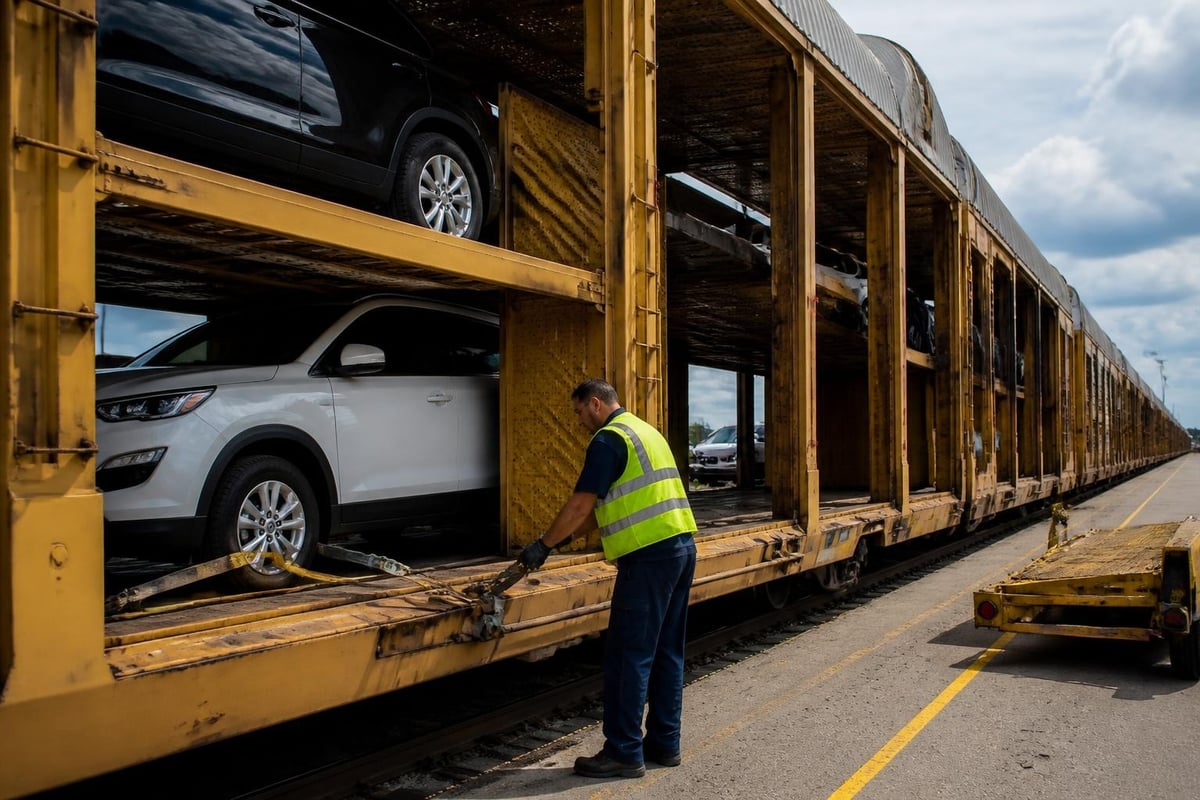
Once loaded, autorack cars join freight trains heading to destination terminals across the country. The journey involves minimal handling compared to truck transport, as vehicles remain secured in the same position from origin to destination terminal.
Advantages of Shipping Vehicles by Rail
Choosing to transport car by train offers several compelling benefits that make this option attractive for specific shipping situations. The most significant advantage centers on environmental impact, as rail transport generates substantially lower carbon emissions per vehicle mile compared to truck-based shipping.
Research from the International Council on Clean Transportation demonstrates that freight rail produces fewer greenhouse gas emissions than highway transport, making it an increasingly important component of sustainable logistics strategies. For environmentally conscious consumers and businesses pursuing carbon reduction goals, rail shipping represents a greener alternative.
Cost Efficiency for Bulk Movements
Rail transport becomes particularly cost-effective when moving multiple vehicles along the same route. Dealerships receiving shipments of new inventory, auction houses transporting purchased vehicles, and fleet operators relocating company cars can achieve significant savings through rail consolidation.
| Transport Mode | Vehicles per Trip | Fuel Efficiency | Environmental Impact | Typical Transit Time |
|---|---|---|---|---|
| Single Truck Carrier | 1-2 | Moderate | Higher emissions | 3-5 days cross-country |
| Multi-Car Hauler | 7-10 | Better | Moderate emissions | 5-7 days cross-country |
| Rail Autorack | 15-20 | Best | Lowest emissions | 7-14 days cross-country |
The economies of scale inherent in rail transport mean that the per-vehicle cost decreases as more automobiles share the same autorack. This makes rail particularly attractive for commercial operations moving inventory between locations.
When Rail Transport Makes Sense
Not every vehicle shipment scenario benefits equally from rail transport. Understanding when to transport car by train versus other methods helps optimize both cost and timing for your specific needs.
Ideal scenarios for rail transport include:
- Long-distance moves exceeding 1,000 miles where transit time is flexible
- Multiple vehicles traveling to the same general destination region
- New vehicle inventory shipments from manufacturers or importers
- Seasonal relocations where precise delivery dates are not critical
- Budget-conscious moves where saving money outweighs speed
Conversely, rail may not suit situations requiring door-to-door service, expedited delivery, or shipments to areas without rail terminal access. Most car transport services utilize truck-based carriers for residential pickup and delivery, as rail terminals are concentrated in major metropolitan and industrial areas.
Geographic Considerations
The United States rail network covers extensive territory, but terminal locations determine accessibility. Major freight corridors connecting manufacturing centers in the Midwest to population centers on both coasts see high volumes of automobile rail traffic, while rural or remote areas may lack convenient rail access.
Using the Freight Analysis Framework data, shippers can analyze freight flow patterns and modal share statistics to understand which routes and corridors best support rail-based vehicle transport. This federal data resource provides valuable insights into commodity movements across different transportation modes.
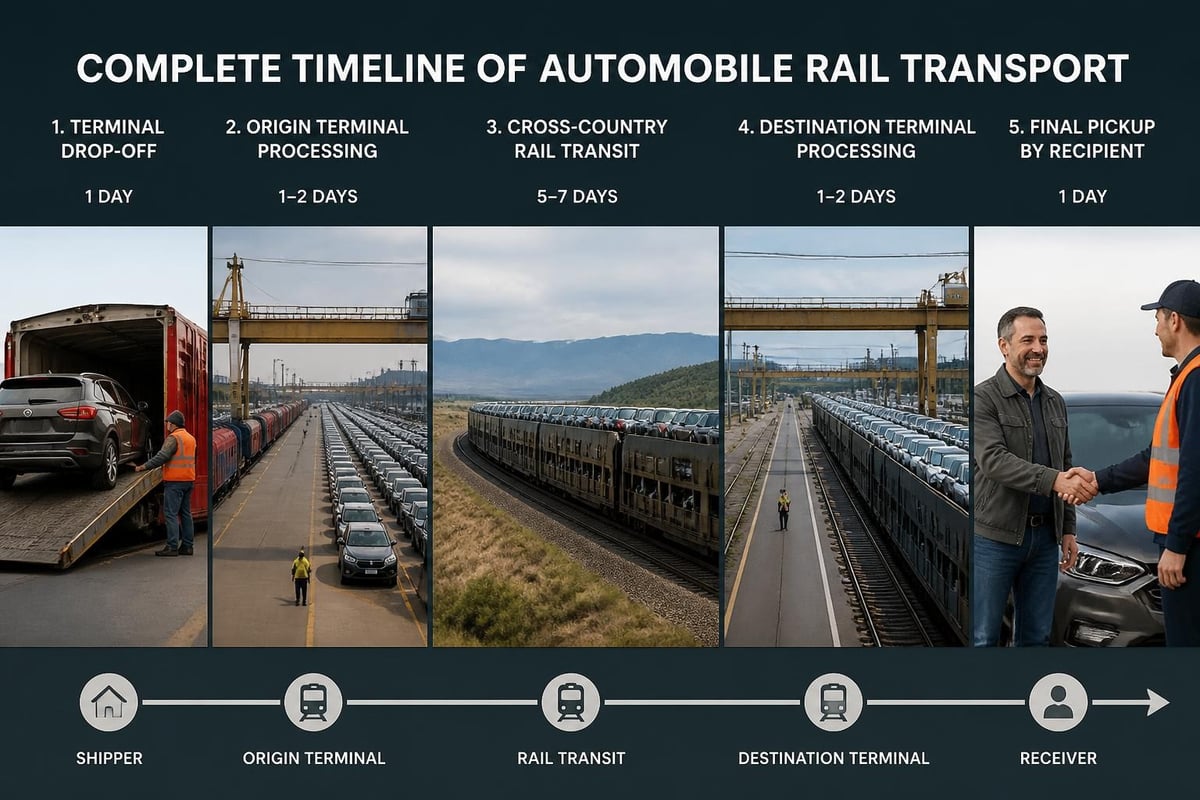
The Rail Transport Process Step by Step
When you decide to transport car by train, understanding the complete process helps set realistic expectations and ensures smooth coordination. Unlike direct truck transport where a single carrier handles pickup and delivery, rail shipping typically involves intermodal coordination.
Initial Terminal Delivery
Most private vehicle owners cannot directly access rail terminals, so the first step involves transporting your car to the origin rail facility. This typically happens through:
- Personal drop-off at the terminal facility
- Short-haul truck transport from your location to the railyard
- Coordination with an auto transport broker offering rail shipping options
Commercial shippers with fleet vehicles often maintain relationships directly with rail carriers, streamlining the terminal delivery process through dedicated logistics teams.
Transit and Tracking
Once your vehicle joins an autorack train, transit times depend on distance, route priority, and scheduling. Rail freight operates on fixed schedules with trains making multiple stops at classification yards where cars are sorted and reassembled into new train configurations heading to different destinations.
Modern rail carriers provide tracking systems that allow shippers to monitor their autorack car's progress, though real-time location updates may be less granular than GPS-enabled truck tracking. Expect transit times of one to two weeks for cross-country shipments when you transport car by train.
Safety data from the Federal Railroad Administration’s incident reporting system demonstrates that autorack movements maintain strong safety records, with incidents involving vehicle damage remaining relatively rare given the volume of automobiles shipped annually.
Cost Factors and Pricing Structure
Pricing to transport car by train differs from traditional auto shipping quotes due to the unique characteristics of rail freight. Several variables influence the final cost, and understanding these factors helps in budgeting and comparison shopping.
Primary cost determinants include:
- Distance between origin and destination terminals (longer routes cost more)
- Vehicle size and weight (larger vehicles occupy more space and add weight)
- Enclosed versus open autorack service (enclosed costs premium)
- Seasonal demand fluctuations (peak moving seasons increase rates)
- Additional drayage charges (truck transport to/from terminals)
Base rail rates typically start lower than equivalent truck transport for long distances, but drayage fees for getting vehicles to and from terminals can offset these savings for individual car owners. Commercial shippers moving multiple vehicles simultaneously see the greatest cost advantages.
Comparing Rail to Truck Transport Costs
For a typical cross-country shipment from California to New York, rail transport might quote $600-$900 for the rail portion alone, while door-to-door truck transport ranges from $1,200-$1,800 for the same route. However, adding drayage on both ends could bring total rail costs to $1,000-$1,300, narrowing the gap.
The calculation becomes more favorable for rail when shipping multiple vehicles or when time flexibility allows taking advantage of off-peak rates. Some regions served by specialized car transport services may have better truck availability than rail access, affecting comparative pricing.
Preparing Your Vehicle for Rail Transport
Proper preparation ensures your automobile arrives at its destination in the same condition it left. While rail transport involves less handling than some other shipping methods, specific preparation steps minimize risk and facilitate smooth processing.
Pre-Shipping Checklist
Before delivering your vehicle to the rail terminal, complete these essential tasks:
- Clean your vehicle thoroughly inside and out for accurate condition documentation
- Remove all personal belongings as carriers are not responsible for loose items
- Document existing damage with photos from multiple angles
- Check fluid levels and ensure no leaks that could affect other vehicles
- Reduce fuel level to approximately one-quarter tank as required by most carriers
- Disable alarm systems to prevent activation during transport
- Secure or remove aftermarket accessories like spoilers or custom antennas
Terminal inspection staff will document your vehicle's condition upon receipt, creating a bill of lading that serves as the official record. This documentation becomes crucial if you need to file a damage claim later.

Insurance Considerations
When you transport car by train, understanding insurance coverage protects your investment. Rail carriers maintain cargo insurance covering vehicles in their custody, but coverage limits and deductibles vary by carrier and service level.
Review your existing auto insurance policy to determine whether it provides any coverage during transport. Many standard policies exclude coverage while the vehicle is in commercial carrier custody, making the carrier's insurance your primary protection.
Consider purchasing supplemental transport insurance for high-value vehicles, classics, or exotic cars. The additional premium often proves worthwhile for peace of mind, especially on long-distance shipments.
Terminal Operations and Logistics
Rail terminals serving automobile shipments operate as specialized facilities with unique infrastructure requirements. Understanding terminal operations helps shippers coordinate timing and logistics more effectively.
Major automotive rail terminals feature multiple loading tracks, inspection facilities, and secure storage yards where vehicles await loading or pickup after arrival. These facilities typically operate during standard business hours on weekdays, requiring advance scheduling for both drop-off and retrieval.
Coordination with Terminal Staff
Professional terminal operations require precise coordination:
- Advance appointment scheduling for vehicle drop-off (walk-ins rarely accepted)
- Proper documentation including title, registration, and shipping authorization
- Valid identification for vehicle release at destination terminal
- Payment verification before releasing vehicles to recipients
Some terminals serve specific rail carriers exclusively, while others function as multi-carrier facilities handling various freight types. Knowing which terminal your autorack departs from and arrives at prevents confusion and delays.
International Considerations and Regulations
While this article focuses primarily on domestic U.S. rail transport, understanding international context provides valuable perspective. The European Commission’s sustainable mobility strategy emphasizes modal shift toward rail freight, including vehicle transport, as part of broader decarbonization goals.
International vehicle shipments crossing borders involve additional regulatory complexity beyond the scope of standard domestic rail transport. However, the principles of autorack loading, securing, and transit remain consistent across rail systems worldwide.
For customers in border regions considering cross-border vehicle transport, rail options may exist through coordinated international rail services, though customs clearance and documentation add complexity compared to domestic shipments.
Alternative Auto Transport Options
While rail transport offers specific advantages, most vehicle owners find truck-based carriers more practical for individual car shipping needs. Understanding how to transport car by train helps in making informed comparisons, but recognizing when traditional auto transport better serves your needs is equally important.
Truck transport advantages include:
- True door-to-door service from your home or business
- Faster transit times with direct routing
- Greater flexibility in pickup and delivery scheduling
- Wider geographic coverage including rural and suburban areas
- Simpler coordination with a single carrier handling the entire move
Services like those offered by AutoPlex Transport provide comprehensive truck-based shipping with both open and enclosed carrier options, serving customers throughout regions like Dutchess County and beyond.
Hybrid Solutions
Some auto transport companies offer hybrid solutions combining rail's long-haul efficiency with truck transport's door-to-door convenience. In this model, trucks handle pickup and delivery to/from your location, while rail moves the vehicle across the country's midsection.
This intermodal approach attempts to capture the best of both methods, though coordination complexity and multiple handoffs can introduce timing uncertainty. Evaluate whether the potential cost savings justify the added logistics when considering hybrid transport options.
Making the Right Choice for Your Shipment
Deciding whether to transport car by train ultimately depends on your specific circumstances, priorities, and constraints. Create a decision matrix weighing factors most important to your situation.
| Priority Factor | Rail Transport | Truck Transport | Winner for Most Individuals |
|---|---|---|---|
| Lowest Cost (single vehicle) | Moderate | Moderate | Depends on distance/route |
| Environmental Impact | Excellent | Fair | Rail |
| Transit Speed | Slower | Faster | Truck |
| Door-to-Door Convenience | No | Yes | Truck |
| Multiple Vehicle Efficiency | Excellent | Good | Rail |
| Geographic Flexibility | Limited | Extensive | Truck |
For most individual vehicle owners, the convenience and speed of professional truck-based auto transport outweighs potential rail cost savings. However, commercial operations, fleet managers, and situations involving multiple vehicles on similar routes may find rail transport delivers superior value.
Research carriers thoroughly regardless of transport mode selected. Verify licensing, insurance coverage, and customer reviews before committing to any auto transport service. Request detailed quotes breaking down all charges to make accurate cost comparisons.
Understanding how to transport car by train expands your options when shipping vehicles across long distances, particularly for commercial operations or multiple-vehicle moves. While rail transport may not suit every shipping scenario, its environmental benefits and potential cost efficiencies make it worth considering for the right circumstances. Whether you choose rail, truck, or hybrid transport, AutoPlex Transport provides reliable auto shipping services with door-to-door convenience, enclosed and open carrier options, and the expertise to ensure your vehicle arrives safely at its destination across the USA.
