
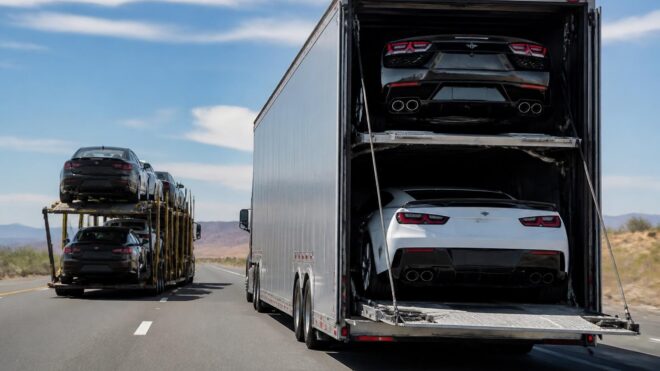
When transporting a high-value vehicle across the country, the choice between open and enclosed transport becomes critical. Enclosed car carriers represent the premium tier of vehicle transportation, offering complete protection from weather, road debris, and prying eyes. While open carriers dominate the auto transport industry due to lower costs, enclosed options provide unmatched security for vehicles that demand special care. Whether you're moving a vintage collector car, a luxury sedan, or a custom-built exotic, understanding the benefits and considerations of enclosed transport ensures your investment arrives in pristine condition.
Understanding Enclosed Car Carriers and Their Advantages
Enclosed car carriers are specialized trailers that fully enclose vehicles within protective walls and a roof during transport. These carriers shield automobiles from environmental hazards that open trailers cannot prevent.
The primary advantage lies in comprehensive protection. Rain, snow, hail, and intense sunlight pose significant risks during multi-day journeys. An enclosed trailer eliminates these concerns entirely. Road debris presents another substantial threat-gravel, tire fragments, and other materials kicked up by passing vehicles can chip paint or crack windshields on open carriers.
Types of Enclosed Carrier Configurations
Transport companies utilize several enclosed carrier designs to accommodate different needs:
- Hard-sided enclosed trailers: Aluminum or steel walls providing maximum protection
- Soft-sided enclosed carriers: Vinyl or canvas covers offering weather protection at lower cost
- Single-vehicle enclosed trailers: Dedicated transport for ultra-high-value automobiles
- Multi-car enclosed carriers: Transporting 2-7 vehicles simultaneously with individual securing
The Consumer Reports guide to shipping a car emphasizes how enclosed transport reduces damage risk, making it the preferred choice for luxury and classic vehicles.
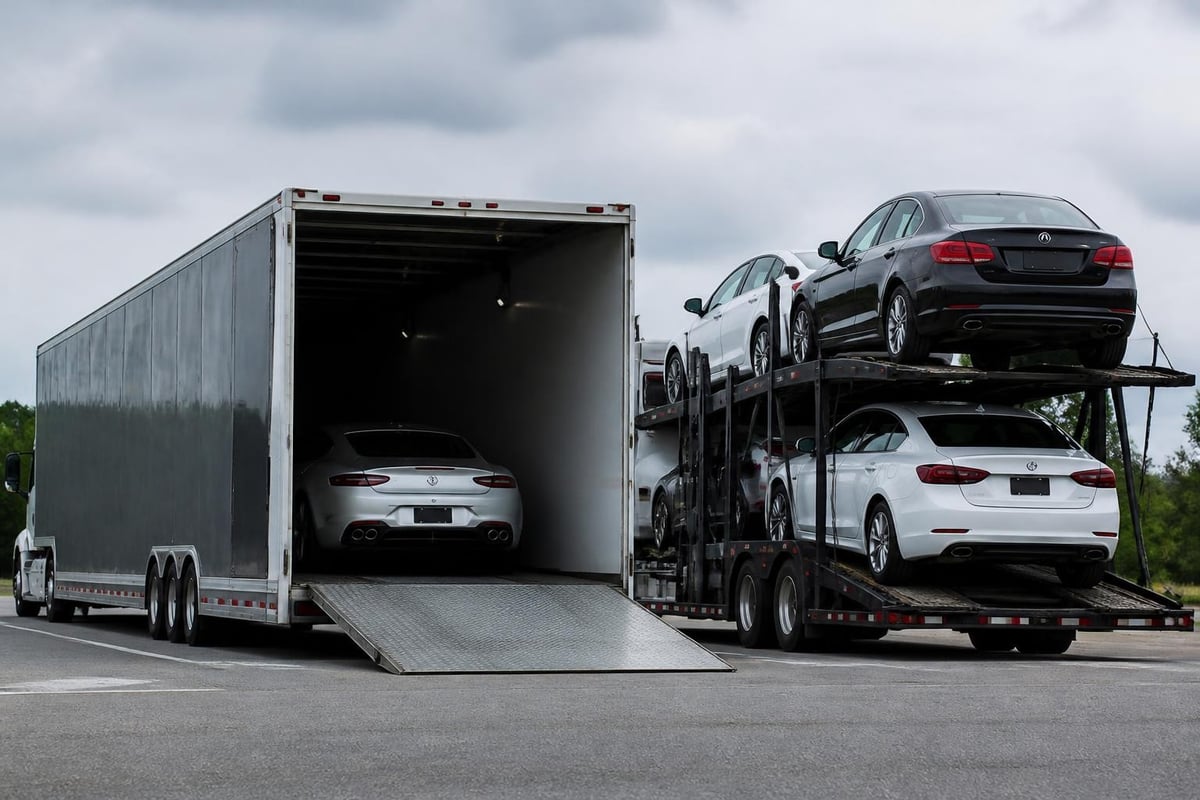
Hard-sided trailers represent the gold standard. These fully enclosed units feature climate control options and hydraulic lift gates for low-clearance vehicles. Soft-sided alternatives cost less but provide limited protection against determined thieves or severe weather events.
When Enclosed Car Carriers Make Financial Sense
Cost considerations often determine transport method selection. Enclosed car carriers typically cost 40-60% more than open transport, but this premium proves worthwhile in specific circumstances.
Vehicle value serves as the primary decision factor. Automobiles worth more than $75,000 generally justify the enclosed premium. The potential cost of repairing paint damage, replacing a windshield, or addressing weather-related issues often exceeds the transport price difference.
Calculating Your Break-Even Point
| Vehicle Type | Replacement/Repair Risk | Enclosed Premium | Recommended Choice |
|---|---|---|---|
| Economy/Standard Cars | $500-$1,500 | $400-$600 | Open transport |
| Luxury Sedans ($50k-$100k) | $2,000-$5,000 | $600-$900 | Enclosed transport |
| Exotic/Supercars ($100k+) | $5,000-$20,000 | $900-$1,500 | Enclosed transport |
| Classic/Collector | $3,000-$15,000 | $600-$1,200 | Enclosed transport |
For those transporting vehicles to or from urban areas, services like car transport in Nassau County often see higher demand for enclosed options due to vehicle values in metropolitan regions.
Insurance considerations also factor prominently. The IIHS research on auto insurance demonstrates how insurers assess transport risks. Enclosed transport typically receives better rates and more comprehensive coverage terms because the reduced exposure lowers claim probability.
Technical Standards and Safety Protocols
Professional enclosed car carriers must adhere to rigorous safety standards during loading, securing, and transport operations. These protocols protect both the vehicle and ensure compliance with federal transportation regulations.
The VDI Guideline 2700 on load securing provides internationally recognized best practices for vehicle transporters. Updated in 2024, these technical specifications detail proper lashing techniques, securing point requirements, and weight distribution standards.
Critical Safety Components
Enclosed carriers employ multiple securing mechanisms:
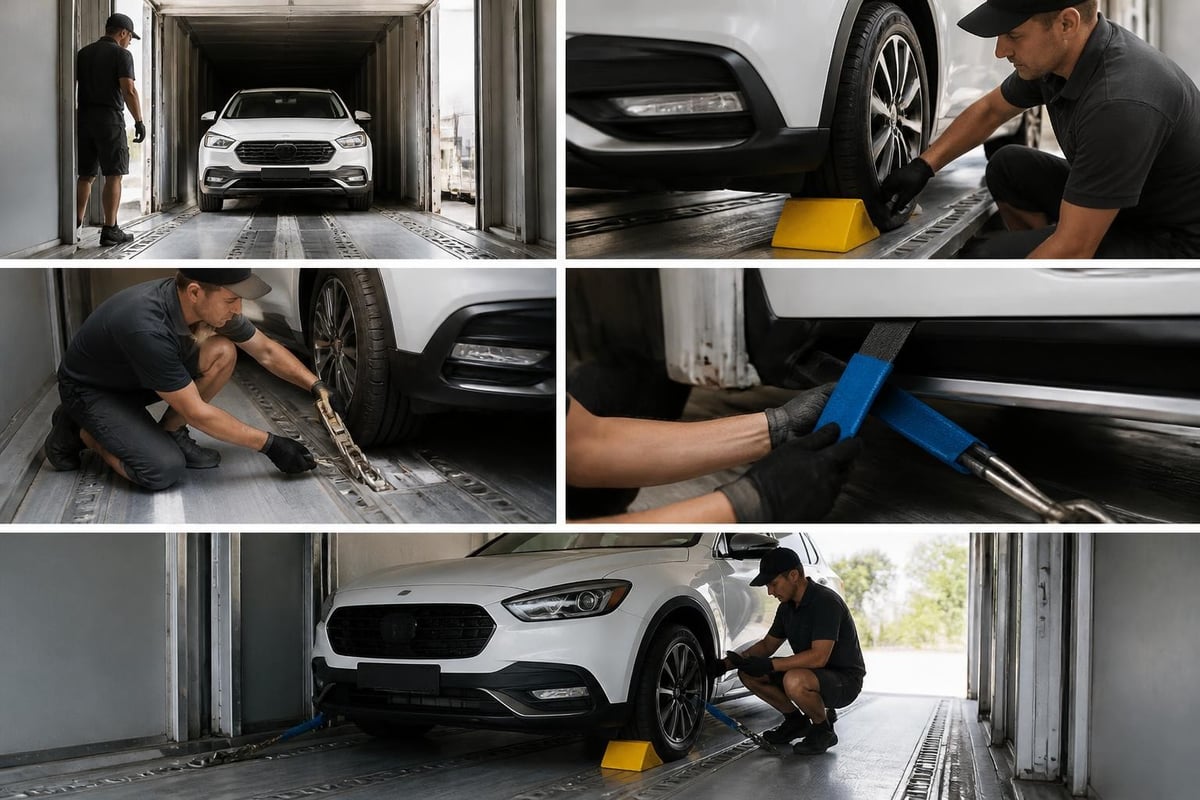
- Wheel chocks and tire straps prevent forward and backward movement
- Ratchet tie-downs secure the chassis at manufacturer-approved points
- Soft ties protect painted surfaces and delicate components
- Air-ride suspension minimizes vibration and road shock transmission
The SAE J684 standard governs trailer couplings, hitches, and safety equipment. Compliance with these specifications ensures the carrier itself meets safety requirements for highway transport.
Professional operators inspect securing points before departure and at regular intervals during transit. This redundancy catches any loosening before it becomes problematic. For classic cars with fragile components or modified suspensions, these precautions prove invaluable.
Choosing Between Single and Multi-Car Enclosed Transport
Enclosed car carriers come in configurations holding anywhere from one to seven vehicles. Your selection impacts cost, transit time, and protection level.
Single-vehicle enclosed trailers provide ultimate security. The carrier dedicates an entire trailer to one automobile, eliminating any risk of damage from adjacent vehicles. These units often include:
- Climate control systems maintaining optimal temperature and humidity
- Air-ride suspension with additional shock absorption
- Direct transport without intermediate stops
- Full insurance coverage with minimal deductibles
This option suits vehicles valued above $150,000 or automobiles with extreme sensitivity to environmental conditions. Concours-level classic cars and rare exotics typically demand this service level.
Multi-Car Enclosed Carrier Economics
Multi-car enclosed carriers offer significant cost savings while maintaining superior protection compared to open transport. These trailers stack vehicles on two levels using hydraulic lifts, maximizing efficiency.
The operational differences between configurations create varying value propositions:
| Feature | Single-Car Enclosed | Multi-Car Enclosed | Open Carrier |
|---|---|---|---|
| Average Cost (1,000 miles) | $2,000-$3,500 | $1,200-$1,800 | $700-$1,000 |
| Transit Time | 2-4 days | 3-7 days | 3-7 days |
| Weather Protection | Complete | Complete | None |
| Theft/Vandalism Protection | Maximum | High | Minimal |
| Loading Risk | Minimal | Low | Moderate |
For customers using car transport services across different regions, multi-car enclosed carriers provide the optimal balance between protection and affordability. These carriers make multiple pickups and deliveries along routes, creating some schedule flexibility but reducing direct transport speed.
Seasonal Considerations and Route Planning
Weather patterns and seasonal conditions significantly influence enclosed car carrier demand and pricing. Understanding these fluctuations helps optimize transport timing and budget.
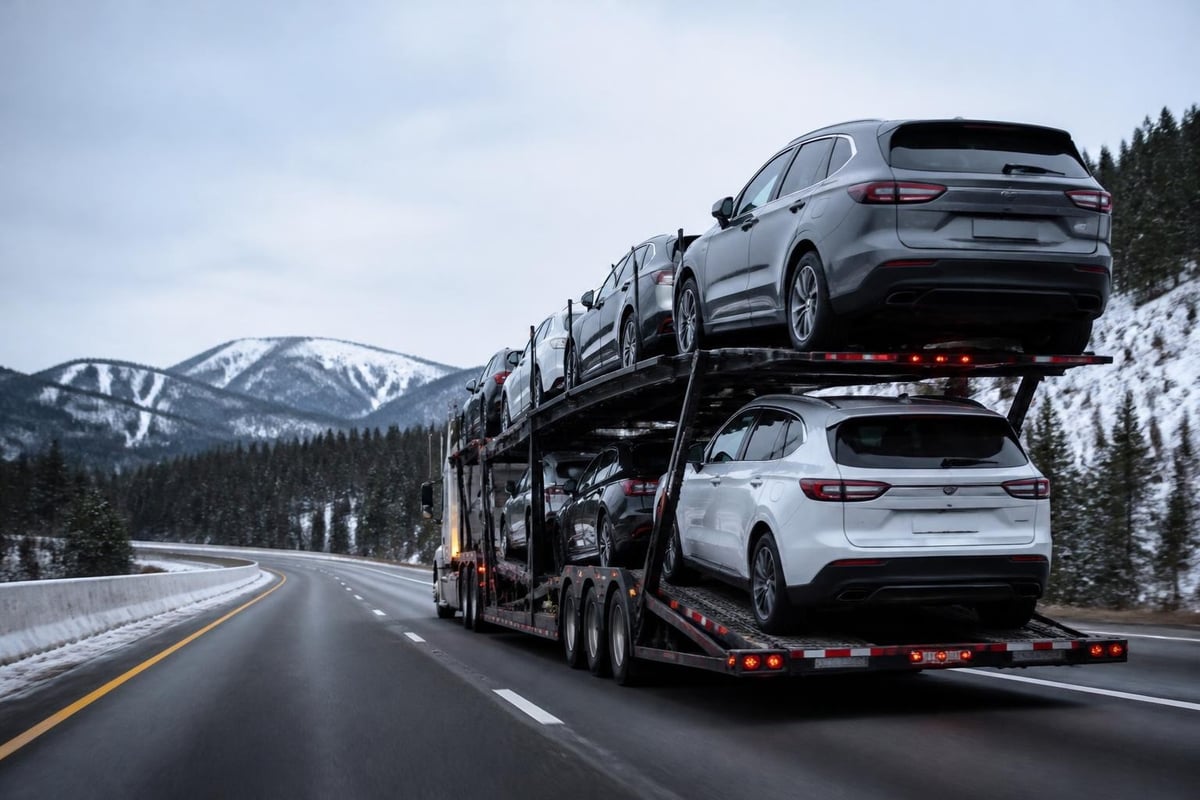
Winter transport represents peak season for enclosed carriers. Snow, ice, and road salt create substantial risks for vehicles on open trailers. Salt exposure causes corrosion that develops over time, particularly affecting classic cars and exotic vehicles with aluminum components. Enclosed transport eliminates this exposure entirely.
The FreightWaves analysis of open vs. enclosed shipping documents how seasonal demand affects availability. Between November and March, enclosed carrier bookings increase 35-45% in northern states. This surge creates scheduling challenges and premium pricing.
Regional Route Optimization
Certain routes experience higher enclosed carrier traffic due to demographic and economic factors:
- California to Florida: Snowbird seasonal migration drives luxury vehicle transport
- Detroit to Arizona: Classic car auctions create bidirectional flow
- New York to Texas: Corporate relocations increase executive vehicle shipping
- Colorado to California: Ski season generates high-end SUV transport demand
Services providing car transport in Erie County or Bronx County often coordinate with cross-country routes to optimize carrier utilization and reduce customer costs.
Summer months offer advantages for enclosed transport scheduling. Greater carrier availability and reduced demand create opportunities for negotiated pricing. However, extreme heat in southern routes necessitates climate-controlled options for vehicles with sensitive interiors or temperature-affected components.
Insurance Coverage and Liability Considerations
Insurance represents a critical component of enclosed car carrier services. Understanding coverage types, limits, and exclusions protects your financial interests during transport.
All licensed auto transport carriers must maintain cargo insurance meeting federal minimums. However, these baseline requirements rarely suffice for high-value vehicles. Professional enclosed carrier operators typically carry policies with $250,000 to $500,000 coverage per vehicle.
Comprehensive Protection Strategies
Verify these insurance elements before booking:
- Cargo coverage limits: Minimum $250,000 for vehicles over $75,000
- Deductible amounts: Who pays-carrier or customer?
- Coverage exclusions: Pre-existing damage, mechanical failures, normal wear
- Claims process: Documentation requirements and resolution timeline
- Gap insurance: Supplemental coverage for vehicles exceeding policy limits
Request certificates of insurance (COI) directly from the carrier's insurance provider. Third-party verification ensures policy validity and prevents fraudulent documentation. Reputable companies readily provide current COIs without hesitation.
Your personal auto insurance policy may include transport coverage. Contact your insurer to determine if your comprehensive coverage extends during professional transport. Some policies offer gap protection covering the carrier's deductible, eliminating out-of-pocket expenses if damage occurs.
Door-to-Door vs. Terminal Delivery Options
Enclosed car carriers offer flexible delivery models affecting convenience, cost, and timeline. Selecting the appropriate option depends on your location, schedule, and accessibility requirements.
Door-to-door service provides maximum convenience. The carrier picks up your vehicle at your specified location and delivers it directly to your destination address. This eliminates the need for additional transportation arrangements and reduces handling.
However, physical constraints sometimes prevent direct access. Enclosed trailers measure 75-80 feet in length, requiring wide streets, adequate turning radius, and overhead clearance. Urban areas with narrow streets, low-hanging trees, or restricted commercial vehicle access may necessitate alternative arrangements.
Terminal Delivery Logistics
Terminal delivery reduces costs by 15-25% compared to door-to-door service. Customers drop off and retrieve vehicles at designated facilities, typically located near major highways or transportation hubs.
This model suits several scenarios:
- Properties with access restrictions preventing large trailer entry
- Customers living in remote areas with limited carrier route coverage
- Time-flexible transport where convenience ranks below cost savings
- Commercial transport where facilities already accommodate large vehicles
For those utilizing car transport services in Kings County or other dense urban areas, hybrid arrangements often work best. Carriers meet customers at accessible locations near (but not at) the final address, balancing convenience with practical logistics.
Preparing Your Vehicle for Enclosed Transport
Proper vehicle preparation ensures smooth pickup, transport, and delivery. These steps protect your automobile and streamline the carrier's operations.
Pre-Transport Checklist
Complete these tasks before the carrier arrives:
- Document existing condition: Photograph all angles, noting any pre-existing damage
- Remove personal items: Carriers prohibit loose objects that could shift during transport
- Disable alarms: Prevent battery drain from activated security systems
- Reduce fuel level: Quarter tank minimizes weight while ensuring drivability
- Check tire pressure: Properly inflated tires prevent flat spots during extended transport
- Secure loose components: Antennas, spoilers, and aftermarket accessories need proper fastening
- Provide keys and documentation: Include all necessary access keys and special instructions
Classic and modified vehicles require additional considerations. Inform the carrier about:
- Low ground clearance requiring specific loading techniques
- Non-functional components affecting securing point selection
- Delicate trim or bodywork needing extra caution
- Specialty tires or suspension with unique handling requirements
Transparent communication prevents surprises during pickup and ensures the carrier brings appropriate equipment. Professional operators appreciate detailed information enabling proper preparation.
Selecting a Qualified Enclosed Carrier Provider
The enclosed car carrier industry includes both exceptional professionals and substandard operators. Thorough vetting protects your vehicle and ensures reliable service.
Federal licensing provides the foundation. All interstate auto transporters must register with the Federal Motor Carrier Safety Administration (FMCSA) and maintain a valid Motor Carrier (MC) number. Verify this registration through the FMCSA website, checking for safety violations or enforcement actions.
Evaluation Criteria for Provider Selection
| Factor | Minimum Acceptable | Preferred Standard |
|---|---|---|
| Years in Business | 3+ years | 10+ years |
| Insurance Coverage | $100,000 per vehicle | $250,000+ per vehicle |
| Customer Reviews | 4.0+ stars (100+ reviews) | 4.5+ stars (500+ reviews) |
| FMCSA Safety Rating | Satisfactory | Satisfactory with no violations |
| Specialization | General enclosed transport | Luxury/exotic specialization |
Request references from previous customers who transported similar vehicles. Reputable carriers maintain relationships with satisfied clients willing to share experiences. Be cautious of companies refusing to provide verifiable references.
Industry certifications indicate professionalism and expertise. Organizations like the Better Business Bureau (BBB) and National Association of Small Trucking Companies (NASTC) vet members, though certification alone doesn't guarantee quality. Combined with other factors, these affiliations support overall credibility assessment.
Cost Factors Affecting Enclosed Car Carrier Pricing
Enclosed car carrier rates vary significantly based on multiple variables. Understanding these factors enables accurate budgeting and identifies opportunities for cost optimization.
Distance represents the primary cost driver. Most carriers price by mileage, with rates decreasing per mile as total distance increases. A 500-mile transport might cost $2.00 per mile ($1,000 total), while a 2,000-mile journey averages $1.20 per mile ($2,400 total).
Dynamic Pricing Components
Additional factors creating price variations include:
- Route popularity: High-traffic corridors cost less than remote routes
- Seasonal demand: Winter months command 20-40% premiums in snow regions
- Vehicle specifications: Oversized, modified, or non-running vehicles increase costs
- Delivery timeline: Expedited service adds 30-50% to standard pricing
- Fuel prices: Significant fluctuations trigger surcharge adjustments
Geographic location substantially impacts pricing. Transporting a vehicle from New York County to California costs differently than the same distance traveled between less populated regions. Carrier availability, return-load opportunities, and regional operating costs all influence final quotes.
Booking timing affects availability and pricing leverage. Last-minute reservations limit options and reduce negotiating power. Scheduling 2-4 weeks ahead provides optimal selection and competitive pricing. However, extreme advance booking (60+ days) offers minimal additional benefit due to market volatility.
Specialty Applications for Enclosed Car Carriers
Beyond standard luxury and classic car transport, enclosed carriers serve specialized niches requiring unique expertise and equipment.
Motorcycle transport frequently utilizes enclosed carriers despite vehicles' smaller size. Premium motorcycles justify the protected environment, and many enclosed carriers include custom-built cradles and securing systems designed specifically for two-wheeled vehicles. Multi-motorcycle shipments share trailer space efficiently, distributing costs across multiple units.
Racing and Show Vehicle Transport
Professional racing teams rely exclusively on enclosed transport. Race cars require climate-controlled environments preventing fluid temperature variations and protecting specialized components from contamination. The sealed environment also maintains confidentiality around competitive vehicle developments.
Show cars demand similar precautions. Concours d'Elegance competitors invest thousands of hours achieving perfect presentation. Any transport-related damage-however minor-compromises competition eligibility and destroys months of preparation work. Enclosed carriers provide the only acceptable risk profile for these applications.
Modified and custom vehicles present unique challenges. Lowered suspensions, widebody kits, and aftermarket components require specialized loading equipment and securing techniques. Experienced enclosed carrier operators maintain relationships with custom car communities, understanding the specific needs these vehicles demand.
Enclosed car carriers deliver unmatched protection for high-value, classic, and specialty vehicles during transport. The investment in enclosed service proves worthwhile when vehicle value, irreplaceable components, or pristine condition justify premium protection against weather, debris, and handling risks. Whether you're relocating a luxury sedan, transporting a collector car to auction, or moving an exotic vehicle across the country, AutoPlex Transport provides reliable enclosed carrier services with comprehensive insurance, experienced handling, and door-to-door convenience throughout the USA.
