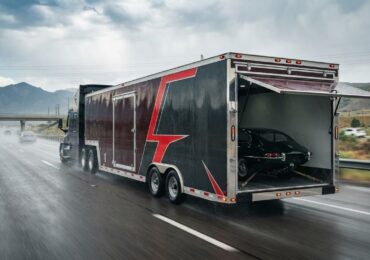
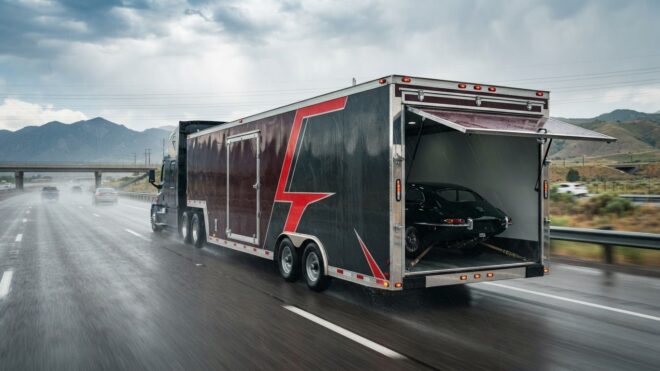
What if the carrier protecting your car from hail and road debris still can’t shield it from every risk in transit? An enclosed transport vehicle can reduce direct exposure to rain, dust, and flying debris, which may offer added reassurance when shipping a classic, luxury, or carefully maintained car. But enclosed shipping doesn’t guarantee protection from every possible issue.
If your vehicle’s condition or value makes exposure a concern, it helps to know what an enclosed carrier can protect against, where its limits are, and whether it suits your car and route better than open transport.
This guide covers the practical differences, questions to ask about equipment and coverage, and ways to document your vehicle before pickup. AutoPlex Transport Company offers both enclosed and open-carrier transportation, so you can compare the options against your priorities.
Key Takeaways
- An enclosed transport vehicle can reduce direct exposure to rain, hail, road debris, and dust, but it doesn’t automatically provide climate control or eliminate every transit risk.
- Compare enclosed and open transport based on your vehicle’s condition, value, sensitivity, and your priorities. Neither option is automatically right for every shipment.
- Ask the provider to confirm the trailer configuration and explain applicable coverage terms and exclusions before booking.
- Prepare for pickup by removing personal items, following access instructions, and taking dated photos of your vehicle’s condition.
- Share your vehicle details and route, then confirm enclosed-service availability and pickup arrangements for that shipment.
What Does an Enclosed Transport Vehicle Protect Your Car From?
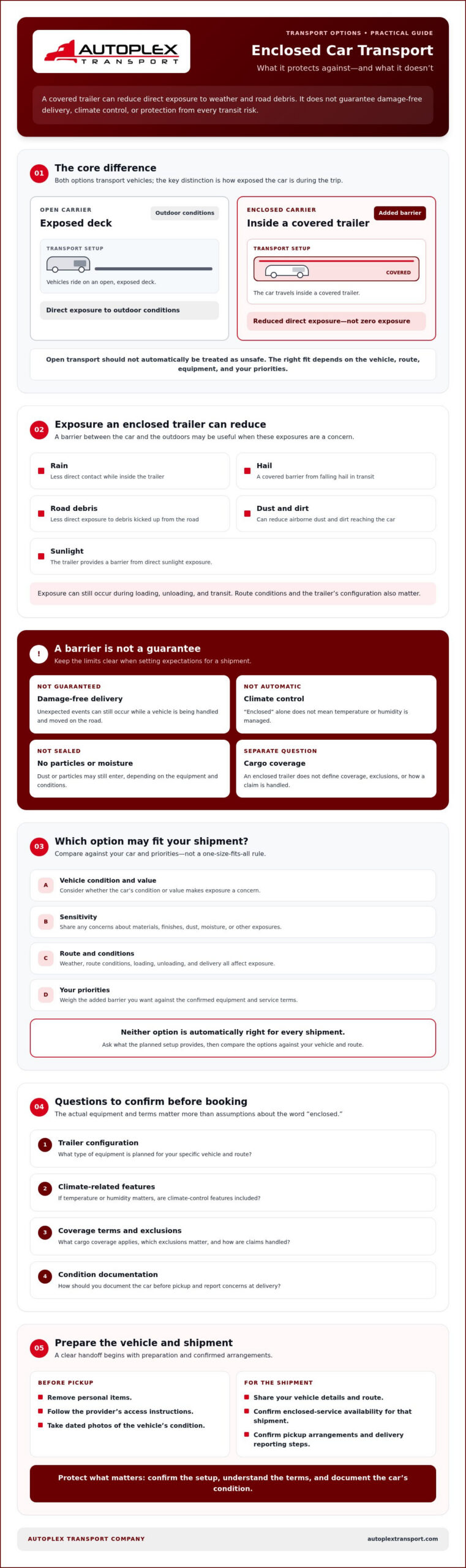
An enclosed transport vehicle carries a car inside a covered trailer. With open-carrier transport, vehicles ride on an exposed deck. An enclosed trailer reduces direct contact with weather and road conditions, but configurations can vary. Confirm what equipment is planned for your shipment rather than assuming every trailer has the same features.
Car carrier trailers can be open or enclosed. This overview of enclosed car carrier trailers explains that enclosed designs use walls to provide more protection from the elements. It offers general context, but your provider is the one to confirm the actual equipment for your shipment.
Which weather and road exposures can enclosed shipping reduce?
Because the vehicle travels inside a trailer rather than on an open deck, it has less direct exposure to rain, hail, and debris kicked up from the road. For example, if hail is forecast along the route, an enclosed trailer provides a barrier between the car and falling hail while the vehicle is inside. It can also reduce the amount of airborne dust and dirt reaching the vehicle.
Reduced exposure doesn’t mean the trailer is sealed or climate-controlled. Depending on the equipment and conditions, dust or particles may still enter during loading, unloading, or transit. If dust, moisture, or another specific exposure is a concern, ask the provider how the planned setup addresses it.
What does enclosed vehicle transport not guarantee?
Enclosed shipping can reduce exposure, but it can’t guarantee damage-free delivery or prevent every incident. The vehicle still needs to be handled and moved on the road, where unexpected events can occur. Enclosed service also shouldn’t be assumed to provide climate control or protection from every source of moisture, dust, or impact.
Weather protection and damage-claim coverage are separate questions. A car being inside an enclosed trailer doesn’t explain what coverage applies, what exclusions may exist, or how a claim would be handled. Before booking, ask the provider to clarify:
- What type of equipment is planned for your vehicle and route.
- What cargo coverage applies and which terms or exclusions matter.
- How to document the car’s condition before pickup and report concerns at delivery.
These details help you make an informed choice. If your vehicle’s condition or value makes exposure a concern, explain your priorities and route to the provider. Then compare enclosed and open transport based on the protection you want and the terms confirmed for your shipment.
How Enclosed Vehicle Transport Limits Weather Exposure During Transit
An enclosed carrier changes how weather reaches your car. Instead of traveling on an exposed deck, the vehicle is carried inside a trailer. That barrier can reduce direct contact with rain, hail, sunlight, dust, and road debris. It doesn’t eliminate every possible exposure, and it doesn’t mean the trailer controls temperature or humidity.
Shielding reduces direct exposure; it doesn’t guarantee protection from every condition or incident. Keep that distinction in mind when setting expectations. An enclosed transport vehicle may suit an owner seeking an added barrier from the elements, but the protection depends in part on the equipment used and how the shipment is handled.
Enclosed trailers versus open carriers in changing weather
With open transport, vehicles are exposed to outdoor conditions during the trip. An enclosed trailer limits that direct exposure, which may matter if the forecast includes heavy rain or hail, or if the route involves dusty roads and traffic that can throw up debris. Both methods transport vehicles, but they involve different levels of exposure. Open transport shouldn’t automatically be treated as unsafe.
Conditions can change along a route, and pickup, loading, unloading, and delivery affect when a vehicle is outside the trailer. The trailer’s configuration matters too. For more context on open-carrier shipping, see this open transport car shipping guide. Ask the provider to confirm the equipment planned for your vehicle and route.
Why enclosed does not automatically mean climate-controlled
A covered trailer provides a barrier from direct weather exposure, but “enclosed” alone doesn’t tell you whether temperature or humidity is managed. If your vehicle has materials, finishes, or other sensitivities that make those conditions important, ask directly whether climate-control features are included. Don’t assume they’re part of the service unless the provider confirms them.
Route, weather, trailer configuration, and handling all shape the exposure a car may experience. Before scheduling, describe your concerns and ask what protection the confirmed equipment provides, as well as what it doesn’t. AutoPlex offers enclosed transport services. You can discuss your vehicle and route when comparing transport options.
For general preparation context, the Federal Maritime Commission’s prepare your vehicle for shipment guidance addresses overseas vehicle shipping. It isn’t a substitute for instructions for a domestic enclosed shipment, so confirm preparation requirements with your transport provider.
Is Enclosed Vehicle Transport Worth Choosing for Your Car?
The right transport method depends on more than a vehicle’s price. Consider its current condition, finish, sensitivity to exposure, route, and how much added protection matters to you. An enclosed transport vehicle can reduce direct exposure to outdoor conditions, but it doesn’t guarantee a damage-free trip. Not every vehicle needs enclosed shipping to be transported safely.
Use this comparison to identify your priorities, then verify the shipment details with the provider:
| Factor | Enclosed transport | Open transport | What to ask |
|---|---|---|---|
| Weather and road exposure | Reduces direct exposure to the elements | Vehicle travels exposed to outdoor conditions | What equipment is planned for this shipment? |
| Practical fit | May suit vehicles with sensitive finishes or owners seeking an added barrier | May fit owners comfortable with greater exposure | How do my vehicle’s condition and route affect the choice? |
| Protection expectations | Doesn’t guarantee against every incident | Also requires clear expectations about transit and coverage | What coverage terms and exclusions apply? |
Which vehicles may benefit from reduced weather exposure?
An owner of a classic, exotic, luxury, restored, or newly finished vehicle may consider enclosed transport, especially when preserving its current condition is a priority. But vehicle value alone doesn’t settle the decision. A high-value car with a durable finish and an owner comfortable with outdoor exposure may have different needs from a recently restored vehicle traveling through weather that concerns its owner.
For specialist considerations, see this classic car transport guide. For a broader look at choosing a service, consult the enclosed car transport buying guide.
When might open transport meet your needs?
Open transport may be a reasonable option if your vehicle is in typical condition and you’re comfortable with direct exposure during transit. It isn’t automatically unsafe; it simply involves different conditions. Compare options based on your priorities, not on the assumption that every car requires an enclosed trailer.
Ask for shipment-specific details, including equipment, coverage terms, and exclusions. You can also review the Federal Motor Carrier Safety Administration regulations for general regulatory information, while confirming transport arrangements directly with your provider. AutoPlex offers both open-carrier and enclosed transport services. Discuss your vehicle and route to compare available options and request a route-specific quote.
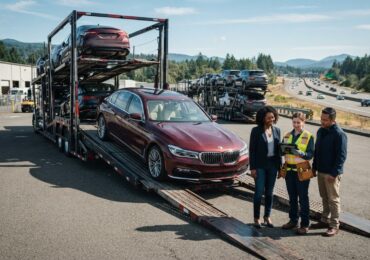
How to Prepare a Vehicle for Enclosed Shipping
A careful handoff starts before pickup. Preparing your car and recording its condition gives you a clear reference for the carrier inspection and helps you raise questions while the vehicle is still with you. These steps support clear documentation, but they don’t eliminate damage risk or change the transport provider’s coverage terms.
Document the vehicle’s condition before pickup
Take dated photos in good lighting before the carrier arrives. Clean the exterior enough to make existing marks easier to see, then photograph all sides, the roof, wheels, glass, and any visible damage. Keep the original images together so you can refer to them later.
At pickup, use the carrier’s inspection process to record the vehicle’s visible condition and odometer reading. Review the report before signing, and ask how to note a concern if you think something has been missed. The car transport preparation checklist offers a fuller walkthrough.
Confirm shipment instructions before the carrier arrives
Instructions can vary by provider and shipment. Confirm requirements directly rather than relying on general advice, especially if the vehicle has unusual access needs or is not operable. Before pickup, work through this checklist:
- Clean and inspect the car. Make its exterior condition visible and note existing damage so you can compare it with the inspection report.
- Take dated photographs. Include every side, the wheels, glass, roof, and visible marks. Keep the odometer reading with your condition notes.
- Remove personal items. Ask the provider about personal-item restrictions and remove belongings unless the transport instructions say otherwise.
- Confirm keys and fuel guidance. Ask how many keys to provide and what fuel level is required. Don’t assume the same instructions apply to every shipment.
- Share access details. Explain relevant pickup constraints, provide clear directions, and confirm whether the vehicle must be operable for the planned service.
- Clarify the paperwork process. Request written instructions for the inspection, how to report a concern, and how damage claims are handled.
Keep copies of your photos and shipment documents after pickup. An enclosed transport vehicle can reduce direct exposure to outdoor conditions, but preparation is about creating a clear record and following confirmed instructions, not guaranteeing a particular outcome.
Before scheduling, contact AutoPlex to discuss your vehicle and pickup instructions and confirm the details for your route.
How to Arrange Enclosed Vehicle Transport With Confidence
A clear booking conversation helps you decide whether enclosed transport fits your shipment before committing. An enclosed transport vehicle can reduce direct exposure during transit, but equipment, coverage, and scheduling details need to be confirmed for your specific vehicle and route. Review the written terms before agreeing to the shipment.
Questions to ask before booking enclosed transport
Start with the information a provider needs to assess the shipment: the vehicle’s make, model, year, condition, and any features that could affect transport, along with the pickup and delivery locations. Then ask which enclosed service and equipment are planned. The word “enclosed” alone doesn’t tell you exactly how the vehicle will be transported.
- How will the vehicle’s condition be documented? Ask how the inspection works at pickup and delivery, and how to record existing damage or raise a concern.
- What coverage applies? Request the applicable coverage terms and exclusions in writing. Confirm how to report a concern and what steps apply if you need to make a claim.
- What should I expect during scheduling? Confirm pickup details, what scheduling information to expect, and how updates will be communicated.
- Is enclosed service available for my exact route and vehicle? Availability can depend on the shipment details, so verify it before making plans around a particular transport method.
Read the written terms and shipment documents carefully before committing. If any description of the equipment, inspection process, coverage, or pickup arrangement is unclear, ask for clarification rather than relying on an assumption.
Request a route-specific enclosed transport quote
Have the pickup and delivery locations, vehicle details, condition, and preferred timing ready when requesting a quote. Share any particular exposure concerns or handling questions too. This gives the provider a clearer picture of the shipment and helps them confirm whether enclosed service is available for that route.
Quote details and service availability depend on the information provided, so confirm the proposed arrangements before scheduling. AutoPlex Transport Company offers enclosed transport, open-carrier transport, and door-to-door transportation. If you’re comparing methods, explain your priorities and ask what is confirmed for your vehicle and route.
When you’re ready, request an enclosed vehicle transport quote for your shipment. A clear discussion of the vehicle, route, equipment, terms, and pickup details can help you choose with greater confidence.
Choose the Right Protection for Your Shipment
An enclosed transport vehicle can reduce direct exposure to weather and road debris, but it doesn’t remove every transit risk or automatically provide climate control. The right choice depends on your car’s condition and sensitivity, the route, and how much added protection from exposure matters to you.
Before arranging transport, confirm the equipment, service availability, written coverage terms, and pickup details for your shipment. Clear, dated photos and a careful condition report also give you a useful record of the vehicle before it leaves your care.
AutoPlex offers enclosed and open-carrier transportation, along with door-to-door service and nationwide and interstate vehicle transportation. Share your vehicle details, route, and protection priorities to find out which options may fit your needs. Request a quote for your enclosed vehicle shipment and take the next step with a clear understanding of what to expect.
Frequently Asked Questions
Does enclosed vehicle transport protect a car from hail?
Enclosed transport can reduce a car’s direct exposure to hail by carrying it inside a covered trailer rather than on an open deck. This can be useful if hail is forecast along the route, but it isn’t a guarantee against damage or every transit incident. Ask the provider to confirm the planned trailer configuration and explain which protections and coverage terms apply to your shipment.
Is an enclosed transport vehicle completely weatherproof?
No. An enclosed transport vehicle reduces direct exposure to outdoor conditions, but “enclosed” doesn’t necessarily mean sealed or climate-controlled. Dust, moisture, or other particles may still be a concern during handling or transit, depending on the equipment and conditions. If your vehicle is sensitive to temperature or humidity, ask whether those conditions are controlled and request details about the planned equipment.
Can rain or snow damage a car during enclosed transport?
Enclosed transport limits direct exposure to rain and snow while the car is inside the trailer, but it can’t guarantee the vehicle will remain untouched by moisture throughout the shipment. Pickup, loading, unloading, and delivery may involve outdoor exposure, and transport still carries other risks. Ask how the provider handles weather-related concerns and document your car’s condition before pickup.
Is enclosed vehicle transport better than open transport?
Neither method is automatically the better choice for every car. Enclosed transport reduces direct exposure to weather and road debris, while open transport carries the vehicle on an exposed deck. Consider your car’s condition, finish, route, and comfort with exposure. Ask providers to explain equipment, coverage terms, and availability so you can compare the options for your shipment.
Which vehicles should be shipped in an enclosed transport vehicle?
Owners of classic, exotic, luxury, restored, or newly finished vehicles may prefer the added barrier from weather and road debris. Still, a vehicle’s value alone doesn’t determine the right method. Consider its current condition, finish sensitivity, route concerns, and your own risk tolerance. Discuss those details with the provider and verify that enclosed service is available for your vehicle and route.
How should I prepare my car for enclosed transport?
Clean the vehicle enough to make existing marks visible, then take dated photos of all sides, the roof, glass, wheels, and any damage. Remove personal belongings, and ask the provider about keys, fuel level, loose accessories, and pickup access. At handoff, review the carrier’s condition report and odometer record. Confirm preparation instructions directly, since requirements can differ by shipment.
Does enclosed transport include insurance for weather damage?
Don’t assume enclosed transport automatically includes specific coverage for weather damage. Protection from direct exposure and cargo coverage are separate matters, and applicable terms, limits, and exclusions depend on the shipment. Before booking, request coverage information in writing and ask how to document the vehicle, report a concern, and follow the claims process. Keep your inspection report and dated photos.
Is enclosed vehicle transport available for every route?
Not necessarily. Availability depends on the vehicle and the specific pickup and delivery route, so confirm it before making plans. AutoPlex Transport Company offers enclosed transport as well as nationwide and interstate vehicle transportation, but enclosed-service availability should be verified for your shipment. Share your locations, vehicle details, and preferred timing when requesting a quote, then confirm pickup arrangements and written terms.