
Military families face unique challenges when relocating, and understanding the intricacies of military shipping car services ranks among the most critical aspects of a successful permanent change of station (PCS) move. Service members stationed across the globe need reliable, secure transportation for their personal vehicles, whether moving from one continental United States (CONUS) base to another or shipping vehicles overseas for OCONUS assignments. The 2026 military transportation landscape offers enhanced digital tools, streamlined processes, and expanded options for those navigating vehicle shipment during relocation orders.
Understanding Military Vehicle Shipping Entitlements
Active-duty service members receive specific entitlements for military shipping car services as part of their PCS benefits package. The Department of Defense authorizes one privately owned vehicle (POV) shipment per eligible member when relocating to OCONUS duty stations, though specific entitlements vary based on assignment location and dependency status.
Eligibility Requirements and Documentation
Military personnel must meet several criteria to qualify for government-sponsored vehicle shipping. Active-duty status, valid PCS orders, and proper vehicle documentation form the foundation of eligibility. Each service member needs current vehicle registration, proof of ownership, and insurance documentation before initiating the shipping process.
Key eligibility factors include:
- Active-duty status or qualifying civilian DOD employee designation
- Authentic PCS orders to an authorized OCONUS location
- Vehicle ownership documentation dated before order receipt
- Compliance with destination country vehicle import regulations
- Current vehicle registration and insurance policies
The Military OneSource PCS moving FAQs provide comprehensive guidance on entitlement details, fuel tank requirements, and scheduling procedures that every service member should review before beginning the military shipping car process.
The PCSmyPOV System and Scheduling Process
The Department of Defense modernized military shipping car coordination through the PCSmyPOV digital platform, which streamlines vehicle scheduling, tracking, and delivery coordination. This centralized system replaced previous fragmented processes, offering service members a single portal for managing their POV shipment from start to finish.
Navigating the Digital Booking Platform
Service members access PCSmyPOV to schedule vehicle turn-in appointments at designated vehicle processing centers (VPCs) worldwide. The platform requires CAC authentication and validates PCS orders automatically, reducing paperwork and processing delays that plagued earlier systems.
PCSmyPOV functionality includes:
- Appointment scheduling for vehicle drop-off at departure VPC
- Real-time tracking of vehicle location during ocean transit
- Delivery coordination at destination port or VPC
- Documentation management for all shipping paperwork
- Direct communication with transportation office staff
The system requires service members to schedule appointments at least 10 business days before their desired drop-off date, though earlier scheduling provides greater flexibility. Vehicle processing centers operate at major military installations near shipping ports, and understanding their locations helps military families plan their departure timeline effectively.
Vehicle Preparation Standards and Requirements
Proper vehicle preparation ensures smooth processing and protects against damage during military shipping car operations. The Global POV Contract establishes specific standards that all vehicles must meet before acceptance at processing centers, and failure to comply results in rejected shipments and rescheduling delays.
Pre-Shipment Inspection Checklist
Thorough preparation begins weeks before the scheduled VPC appointment. Service members should address mechanical issues, complete necessary maintenance, and ensure their vehicle meets all shipping requirements well in advance of their drop-off date.
| Requirement Category | Specific Standards | Compliance Notes |
|---|---|---|
| Fuel Level | 1/4 tank or less | Safety regulation for ocean transport |
| Mechanical Condition | Operable, all fluids sealed | Non-running vehicles require special handling |
| Personal Items | None permitted inside vehicle | Customs and security requirement |
| Aftermarket Equipment | Documented and photographed | Proof for potential damage claims |
| Exterior Condition | Clean, photographed pre-shipment | Baseline for delivery inspection |
Professional car transport services like those offered by AutoPlex Transport understand these military-specific requirements and can assist families coordinating both official military shipping car services and supplemental private transport needs for additional vehicles.
OCONUS Shipping Routes and Transit Times
Geographic factors significantly impact military shipping car timelines, with ocean transit representing the longest phase of OCONUS vehicle shipment. The Department of Defense maintains contracts with commercial shipping lines that operate regular routes between continental United States ports and overseas military installations.
Major Shipping Lanes and Duration Estimates
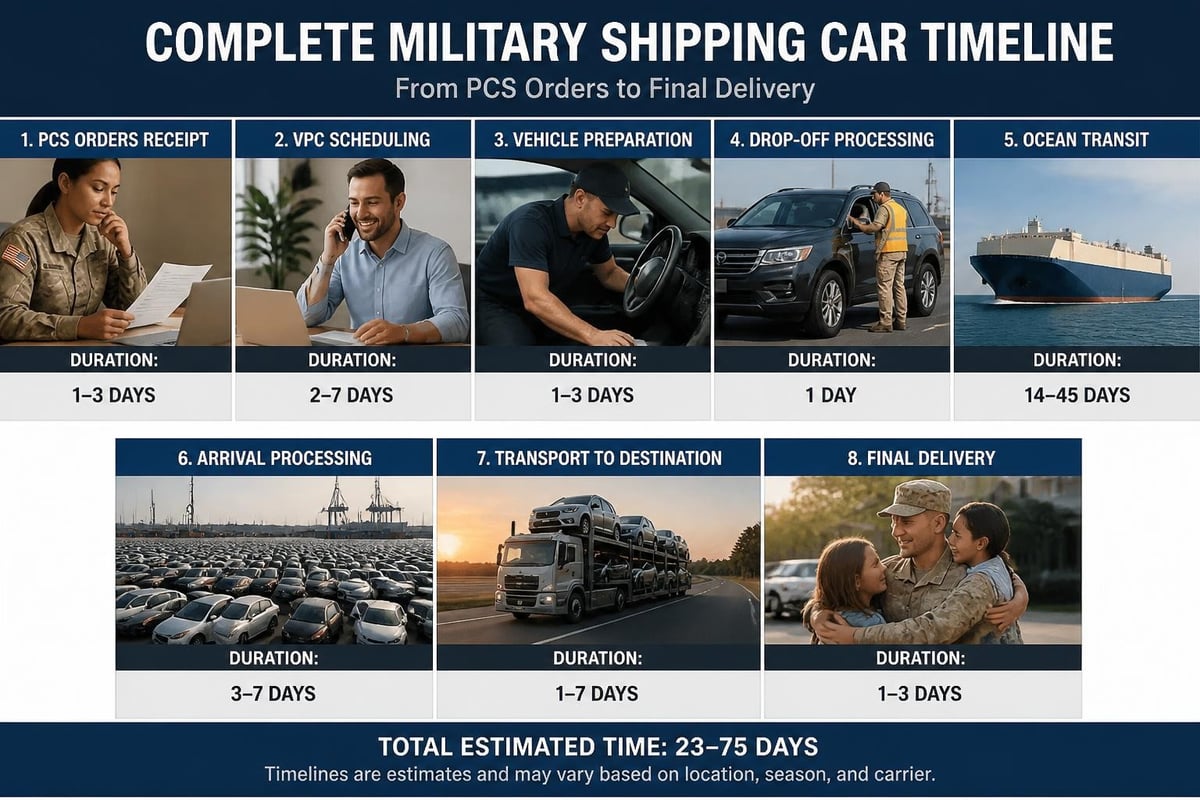
Pacific assignments typically involve longer transit periods than European destinations. Service members shipping vehicles to Japan, South Korea, or Hawaii should anticipate 4-8 weeks of ocean transit, while European destinations average 3-6 weeks depending on departure and arrival ports.
Typical transit timelines by region:
- Europe (Germany, Italy, UK): 30-45 days total, 21-35 days ocean transit
- Pacific (Japan, South Korea): 45-60 days total, 28-42 days ocean transit
- Hawaii: 21-35 days total, 14-21 days ocean transit
- Alaska: 14-28 days total, 7-14 days ocean transit
Processing time at both departure and arrival VPCs adds 7-14 days to ocean transit periods. Service members should plan vehicle availability accordingly, particularly when arrival timing affects duty station commuting needs.
Cost Considerations and Financial Planning
Government-covered military shipping car services include standard POV transportation costs, but service members often encounter additional expenses throughout the process. Understanding which costs the military covers versus personal financial responsibility helps families budget appropriately for PCS moves.
Government Coverage Versus Personal Expenses
The Department of Defense covers ocean freight, basic vehicle processing, and standard handling under the Global POV Contract. However, several common expenses fall outside government coverage and require personal funds.
Government-covered services:
- Ocean freight on authorized shipping routes
- Standard vehicle processing at VPCs
- Basic liability coverage during shipment
- Delivery to destination VPC or port
Personal expense categories:
- Vehicle preparation and pre-shipment repairs
- Extended storage at departure or arrival VPCs beyond free periods
- Transport from residence to departure VPC
- Transport from arrival VPC to final residence
- Additional insurance coverage beyond basic liability
- Import duties or fees at certain OCONUS locations
Service members stationed near locations requiring private transport coordination can benefit from regional expertise offered by companies providing car transport service in Monroe County and other specialized areas.
Returning Vehicles from OCONUS Assignments
Tour completion triggers the reverse military shipping car process, with service members entitled to return shipment from OCONUS duty stations to CONUS destinations. The process mirrors outbound shipping but includes additional considerations regarding vehicle modifications, local purchases, and import compliance.
Import Compliance and Customs Clearance
Vehicles returning from overseas assignments must meet United States import regulations, even when originally shipped from American soil. Modified vehicles or those purchased abroad face additional scrutiny from customs officials, and understanding these requirements prevents costly delays or compliance issues.
The U.S. Customs and Border Protection vehicle import guidance outlines specific documentation, emissions standards, and safety compliance requirements that affect service members returning from OCONUS assignments. Vehicles purchased overseas must meet EPA emissions standards and DOT safety requirements before legal operation within the United States.
Return shipment considerations include:
- Original vehicle documentation proving prior CONUS registration
- Modification records for any alterations made overseas
- Purchase documentation for vehicles bought at OCONUS locations
- Compliance certification for emissions and safety standards
- Customs declaration forms completed accurately
Service members returning to installations near major metropolitan areas may coordinate commercial transport for final delivery, with options like car transport service in Erie County providing convenient solutions for the last leg of vehicle repatriation.
Alternative Vehicle Transport Options for Military Families
While official military shipping car programs handle one POV per assignment, many military families own multiple vehicles or face situations where private commercial transport offers advantages over government programs. Understanding when to utilize commercial auto transport services helps military personnel make informed decisions about vehicle logistics.
Commercial Transport for Additional Vehicles
Families owning multiple vehicles must arrange private shipping for any automobiles beyond their single government-authorized POV. Commercial auto transport companies specialize in door-to-door service, enclosed transport, and flexible scheduling that complements military relocation timelines.
| Transport Type | Military Program | Commercial Service | Best Application |
|---|---|---|---|
| Primary POV OCONUS | Government-funded | Not typically used | Standard PCS shipment |
| Additional vehicles | Personal expense | Primary option | Multi-car families |
| CONUS-to-CONUS PCS | Limited/no coverage | Common choice | Domestic relocations |
| Specialty/classic vehicles | Basic handling only | Enclosed transport available | High-value automobiles |
Many service members relocating within the continental United States choose commercial transport for its convenience and competitive pricing compared to driving vehicles cross-country. Regional specialists offering car transport service in Albany County and similar markets provide expertise in military-adjacent areas where many installations operate.

Vehicle Storage During Extended Deployments
Deployment scenarios create unique military shipping car challenges when service members deploy without families or face assignments where vehicle ownership proves impractical. Long-term vehicle storage, temporary shipping to family locations, or strategic vehicle disposition become relevant considerations.
Deployment Storage Strategies
Service members deploying for 6-12 months often arrange vehicle storage rather than shipping, particularly for single personnel or unaccompanied tours. Installation vehicle storage facilities offer secure options, though availability varies by location and typically incurs monthly fees after initial free periods.
Storage versus shipping analysis factors:
- Deployment duration: Longer deployments favor storage over shipping costs
- Vehicle value: High-value vehicles benefit from climate-controlled storage
- Family location: Shipping to family provides vehicle use during deployment
- Return assignment: Known return locations simplify storage decisions
- Maintenance access: Storage facilities offering periodic start service prevent mechanical issues
Commercial transport to family residences provides an alternative to on-base storage, particularly when family members need vehicle access during deployment periods. Services operating in military-dense regions like car transport service in Kings County understand these deployment-specific needs.
Managing Vehicle Damage Claims and Disputes
Despite careful handling, vehicle damage occasionally occurs during military shipping car operations. Understanding the claims process, documentation requirements, and dispute resolution mechanisms protects service members' financial interests and ensures appropriate compensation for shipping-related damage.
Documentation and Claims Procedures
Comprehensive photographic documentation before vehicle drop-off establishes condition baselines essential for successful claims. Service members should photograph all vehicle sides, distinctive features, existing damage, and aftermarket equipment before VPC processing.
Effective damage claim procedures:
- Document thoroughly at drop-off with timestamps and detailed photos
- Inspect carefully at delivery before signing acceptance paperwork
- Note all damage on delivery receipt, refusing to sign if significant issues exist
- File promptly through PCSmyPOV system within required timeframes
- Maintain records of all communication and documentation
The Global POV Contract limits carrier liability to specific amounts, and supplemental insurance purchased privately may prove worthwhile for high-value vehicles. Service members should review coverage limits and consider additional protection for luxury, classic, or extensively modified automobiles.
Coordinating Timelines with PCS Orders and Reporting Dates
Successful military shipping car coordination requires careful timeline management that aligns vehicle drop-off, transit periods, and delivery with PCS reporting dates and temporary lodging arrangements. Poor timing creates transportation gaps that complicate duty station transitions and family logistics.
Building Realistic Timeline Buffers
Experienced military families build substantial buffers into their vehicle shipping timelines, accounting for potential delays, weather disruptions, and processing variations. Planning vehicle availability 2-4 weeks after reporting dates prevents transportation emergencies while awaiting delivery.
Timeline coordination best practices include:
- Schedule VPC drop-off appointments 60-90 days before departure when possible
- Arrange temporary vehicle access through rentals or borrowed automobiles
- Coordinate with sponsors at gaining commands regarding local transportation
- Plan temporary lodging near public transportation or base shuttle routes
- Maintain flexibility for delivery date variations of plus or minus two weeks
Service members executing CONUS-to-CONUS PCS moves may find commercial transport timelines more predictable than military programs, with professional carriers providing guaranteed delivery windows. Options like car transport service in Columbia County offer precise scheduling for domestic relocations.
Special Considerations for High-Value and Modified Vehicles
Luxury automobiles, classic cars, and extensively modified vehicles require additional attention during military shipping car planning. Standard military transport programs provide basic handling appropriate for typical passenger vehicles, but special-interest automobiles may benefit from supplemental protection or alternative shipping arrangements.
Enhanced Protection Strategies
Service members owning high-value vehicles should evaluate whether standard military shipping car handling meets their needs or if commercial enclosed transport provides superior protection. The cost difference often proves worthwhile for automobiles worth $50,000 or more, rare collectibles, or vehicles with significant aftermarket investments.
| Vehicle Category | Military Shipping Risk | Recommended Approach | Additional Protection |
|---|---|---|---|
| Standard sedan/SUV | Low | Standard military shipping | None typically needed |
| Luxury ($50K-100K) | Moderate | Consider supplemental insurance | Full photo documentation |
| Classic/collectible | High | Evaluate commercial enclosed | Private insurance essential |
| Modified/custom | High | Document all modifications | Itemized valuation report |
Professional enclosed transport services minimize exposure to weather, road debris, and handling incidents during CONUS moves. Military families relocating within the continental United States can coordinate specialized transport through providers offering car transport service in Essex County and similar regions with military populations.
Environmental and Regulatory Compliance Across Borders
International military shipping car operations navigate complex environmental regulations, import restrictions, and destination-country vehicle standards. Service members shipping vehicles to OCONUS locations must verify their automobiles meet host-nation requirements for emissions, safety equipment, and registration procedures.
Host Nation Requirements and Restrictions
Each OCONUS duty location maintains specific vehicle import regulations that service members must research thoroughly before shipping. Some countries prohibit right-hand-drive vehicles, impose age restrictions, or require specific emissions certifications that American automobiles may not possess.
Common international compliance factors:
- Emissions standards: European Union countries enforce strict Euro emissions classifications
- Safety equipment: Some nations require specific headlight configurations or equipment
- Vehicle age limits: Certain locations prohibit vehicles exceeding age thresholds
- Registration procedures: Host nation licensing and inspection requirements vary significantly
- Prohibited modifications: Tinted windows, certain performance modifications may violate local laws
Installation transportation offices provide country-specific guidance documents outlining these requirements, and consulting these resources before shipping prevents situations where vehicles arrive but cannot legally operate at the duty station.
Leveraging Installation Resources and Transportation Offices
Every military installation maintains a transportation office staffed with specialists who understand military shipping car intricacies and provide personalized assistance to service members navigating the process. These resources prove invaluable for first-time PCS personnel or those facing complex shipping scenarios.
Maximizing Transportation Office Support
Transportation office personnel offer appointment scheduling assistance, documentation review, special circumstance guidance, and troubleshooting support when issues arise. Service members should initiate contact immediately upon receiving PCS orders rather than waiting until departure approaches.
Transportation office services include:
- PCS entitlement verification and explanation
- PCSmyPOV system navigation assistance
- Vehicle preparation requirement clarification
- Timeline planning and scheduling recommendations
- Special handling coordination for unique situations
- Claims process guidance and documentation support
Proactive engagement with transportation offices, combined with personal research through official resources, creates the knowledge foundation necessary for successful military shipping car operations. Service members benefit from asking questions early and thoroughly understanding their specific situation's requirements and options.
Military shipping car services represent a critical benefit for service members executing PCS moves, though navigating the process requires attention to detail, proper planning, and understanding of entitlements and requirements. Whether utilizing official military programs for OCONUS assignments or coordinating domestic relocations, professional vehicle transport ensures automobiles arrive safely at new duty stations. AutoPlex Transport specializes in supporting military families with additional vehicle transport needs, door-to-door service for CONUS relocations, and flexible scheduling that accommodates the unique demands of military life.
